'Breaking Bad' Meets 'Sex Education' in Netflix's 12-Part Comedy

Marli Messner is a passionate writer who has written for literary magazines, educational zines, and now, Collider. She earned her BA in English Literature with Minors in Creative Writing and Spanish Translation from Knox College. She has won awards for her poetry, creative nonfiction, and literary criticism. She served as Co-Editor-in-Chief for Knox College's Catch magazine. Marli is a letterpress hobbyist, former theatre kid, and current poet.
Her background in theory and literature lends a thoughtful edge to her writing. She loves convincing her friends that unexpected movies, like Predator, are "actually really sophisticated." She's interested in all things horror, sci-fi, and action. Her favorite film is Alien.
Starring comedian Mae Martin playing a version of themself, Feel Good is the funniest, most heartfelt show streaming on Netflix, and it's only 12 episodes long. Uptight formerly-straight woman, George (played by Charlotte Ritchie of Call the Midwife) falls hard for Mae Martin, who is recovering from a cocaine addiction. Martin's writing paints a witty, poignant portrait of addiction that somehow manages to be laugh-out-loud hilarious. The show tracks the development of Mae and George's relationship, finding the comedy in situations like coming out to homophobic loved ones, learning how to love without codependency, and reckoning with a difficult past. There's also a particularly gut-busting scene featuring a horny Alien reference (no spoilers—it's too good). Funnier than Friends or The Office, its runtime is under five hours, making Feel Good the best bang-for-your-buck comedy on streaming.
Despite the fact that you could binge the entire show in an afternoon, Feel Good tackles the complex intersection of love and addiction with clarity, compassion, and remarkable humor. Part of what makes the show so funny is that all the characters believe they are in a drama, experiencing high stakes at every turn. By allowing humor and drama to co-exist, Feel Good is able to transition seamlessly from pure comedy to pure disaster without any unpleasant whiplash. (Though there's pleasant whiplash aplenty.) The dual presence of comedy and drama speaks to the emotional heart of the show: in life, one can be grappling with impossibly difficult things and still find pleasure, joy, and humor. In fact, Feel Good posits that one can't always tell pain and pleasure apart.
'Feel Good' is Surprisingly Optimistic

Early in their relationship, it becomes clear that Mae has swapped one addiction (cocaine) for another (her new girlfriend, George). In Episode 2, George goes to a wedding without Mae. To keep from calling George constantly, Mae goes to great lengths to separate herself from her phone, eventually getting herself locked out of her apartment without any shoes on. This neurotic behavior serves to show how strong Mae's compulsions are when it comes to George. Mae says to her Narcotics Anonymous sponsor, "I love grapes. Sometimes I think I just love George, but I actually also love grapes." Mae and George are both keeping secrets: after 3 months dating, Mae hasn't told George about her addiction, and George hasn't come out to her friends or family.
To avoid talking about their problems, the pair engage in increasingly ridiculous sexual roleplay, which they are hilariously bad at. George admits to spending 300 pounds on a police uniform to roleplay with Mae, and when Mae only half-plays along with the fantasy, asking to speak to her lawyer, George responds, entirely horrified at what she's saying, that Mae's lawyer is taking personal time "because his kid's got ALS." In a landscape of pessimistic media that explores humanity's worst (see: BoJack Horseman, Breaking Bad, Black Mirror), Feel Good believes that people can get better, and there's a lot to laugh at while doing so.
Mae Martin's Writing Uses Tension Masterfully for Both Comedy and Drama

Every time Mae or George finds a way to come clean to the other about their shortcomings, even by accident or disaster, they grow closer. They stumble into the truth that hiding from pain only makes it stronger. The parts where they stumble are what makes the show funny, like any sitcom is funny. Shows like How I Met Your Mother and New Girl are built on idiot plots in which characters are rubber-banded closer to and further away from each other. It's not just the negative tension that's funny, however. Watching Feel Good is like riding a wave of tension, and the show is smart enough to manipulate that tension to produce both humor and anxiety, which often amplify each other.
Martin's writing is clever enough and the show's actors are charismatic enough that drawing closer together is also funny. In one scene, George ends up in the hospital, and finally comes out to her friends in spectacular fashion, proudly declaring to Mae, "I love you," before pulling a purple strap-on out of her purse. Everyone is shocked and embarrassed except for George and Mae, who finally get to be out in front of other people, including the old woman sharing a hospital room with George, who watches them make out once the doctor leaves. Tension creates comedy when pulling characters apart, but also when bringing them back together.
'Feel Good' Escapes the Trap of the Sitcom
The sitcom genre depends on everything staying the same. There can be infinite hijinks and gags if the world resets at the end of every episode. In The Office, Jim can put all of Dwight's things into the vending machine, but he has to give Dwight a bag of quarters to get them all back and reset for the next episode. The unchangeability of the sitcom is such an established rule that meta-inclined shows like Community play with this convention, recognizing it in-dialogue and then re-setting at the end of an episode anyway.
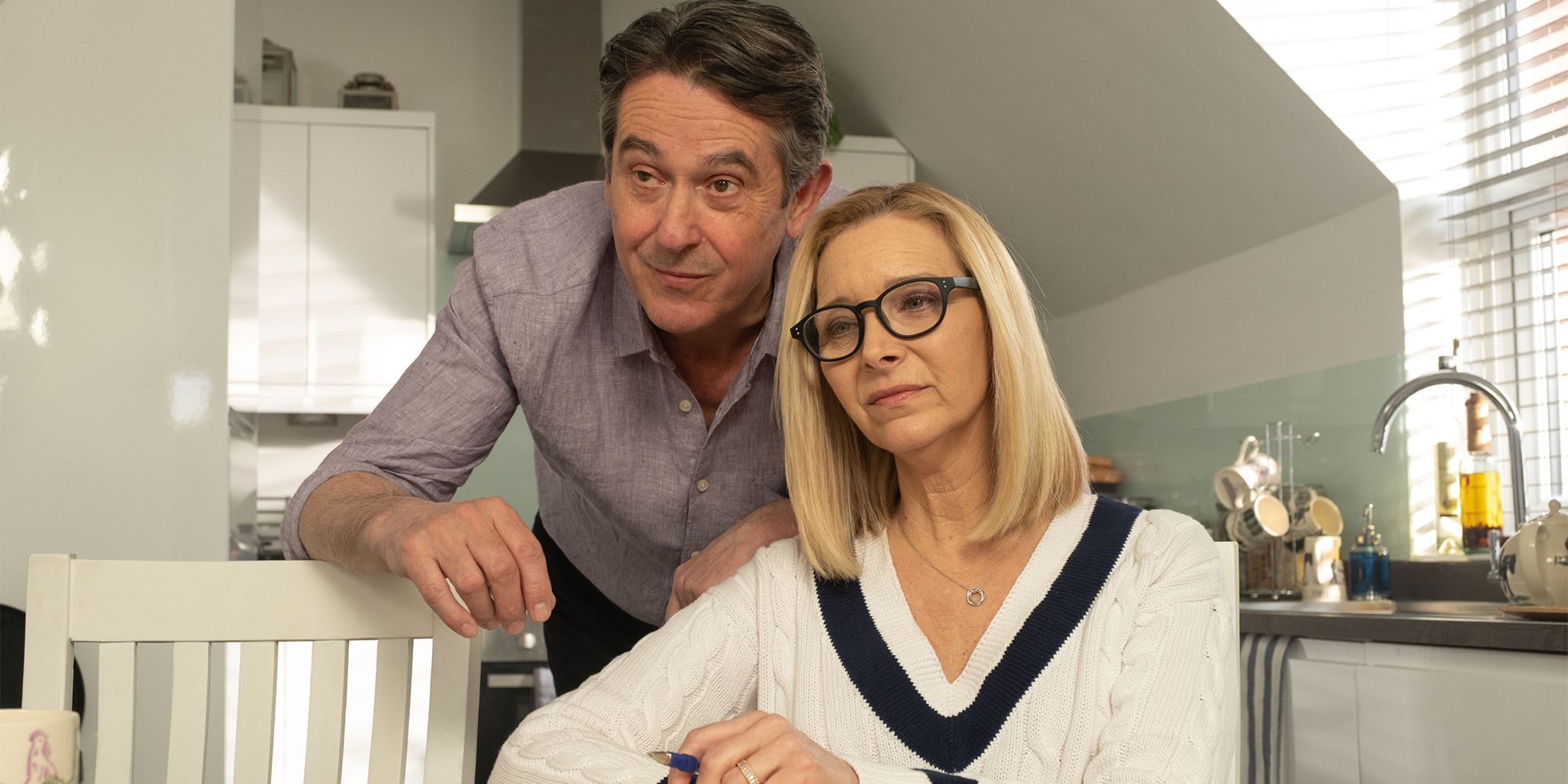
While Feel Good's comedy is very situational, it escapes the trap of the genre by allowing the characters to change. In a conversation with Mae's mom, played by Lisa Kudrow (Phoebe from Friends), Mae says "I just can't even remember what I used to think about before George." Over Skype, Mae's mom says, "Well, before George, you thought about Nicole, who was your true love. Before that, you thought about Caroline, who, oh yes, was also your true love. And before that it was drugs." Mae's mom may be direct and unforgiving in her assessment, but Mae does begin to recognize that her relationship with George follows the patterns of addiction, and that both she and George deserve better.
Growth certainly isn't linear, and viewers may question if Mae and George are even ultimately right for each other, but the characters do grow. In a climactic argument at the end of Season 1, Mae says to George, "I think you're right that I need to be okay on my own, because what I'm doing now is just jumping from thing to thing, and that's not healthy." The characters move from failure, to recognition of failure, to attempts at healing and amends. The traditional sitcom structure actually mirrors the cycle of addiction, in which tension rises and resolution is sought and nothing really changes. Feel Good seeks to break that cycle in the structure of the show as well as in the lives of its characters. With wit, heart, and an incredibly economical runtime, Feel Good is one comedy that no one should skip.

- Release Date
- 2020 - 2021-00-00
- Network
- Channel 4
- Directors
- Luke Snellin
- Writers
- Mae Martin
-

Adrian Lukis
Malcolm
-
Barry Ward
Arnie Rivers
-
Eve
Audrey
-
Paul Bazely
Clocky
KioskNews shows a cleaned-up reading view extracted from the publisher’s page — the original always lives on their site, not ours.