After Tai Po fire, children make slow but steady recovery through play therapy
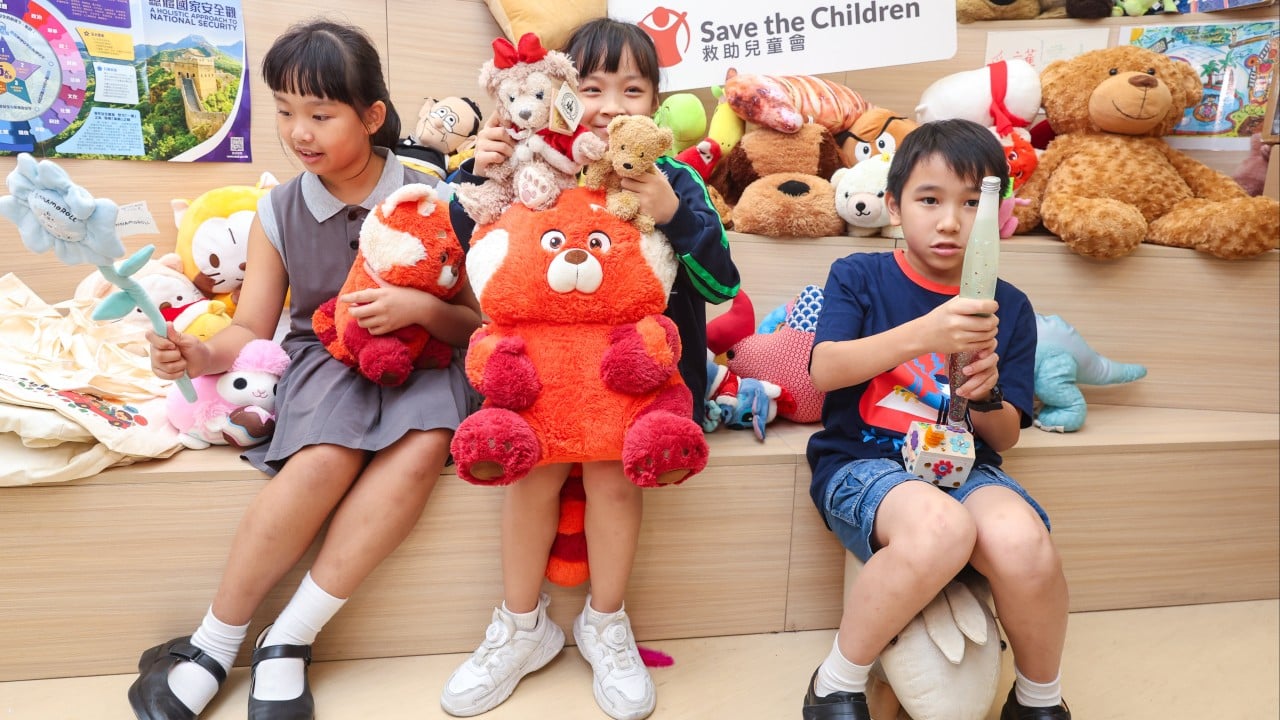
Almost a year after a catastrophic fire tore through Hong Kong’s Wang Fuk Court, 11-year-old Jackey* still remembers the home he lost.
“I sometimes think of Wang Fuk Court and the things I left behind there,” the Primary Six pupil said. “I wanted to go back and get them, including the gifts my mum gave me.”
Now living with his parents in a transitional housing flat, Jackey turns to the two calm-down bottles he made himself: transparent containers filled with water, glue and glitter. When distress builds, he shakes them and watches the glitter swirl and slowly settle.
“I shake them and watch them, which makes me calm down,” he said.
The psychological toll of the blaze still lingers.
The psychological toll of the blaze still lingers. The fire, which broke out at Wang Fuk Court in Tai Po on November 26 last year, raged for 43 hours. It killed 168 people, including a firefighter, and displaced nearly 5,000 residents.
Yet affected residents, including children, are finding ways to cope and rebuild their lives.
Siu Ting, principal of Tai Po Baptist Public School, said pupils and their parents had made progress in their recovery, with affected families taking part in school activities.
“They are actively trying to pull themselves together,” she said.
Jackey, who attends the school, made the bottles during trauma intervention therapies organised by Save the Children Hong Kong for those affected by the fire.
The NGO, together with a research team from Hong Kong Shue Yan University, has provided trauma-informed interventions to 153 affected children across seven Tai Po schools and Trackside Villas, a transitional housing project.
These include play therapy, comprising six weekly 90-minute sessions in which staff guide pupils through games and role play to express their feelings, relieve anxiety and rebuild a sense of security.
The expressive arts therapy, comprising eight weekly sessions, uses media such as drawing and percussion to help pupils identify and express emotions and improve mental resilience.
Wong Shek-hung, director of the Hong Kong programme at the NGO, said some children were still recovering from the fire. They reacted to sounds of alarms or sudden noises, and struggled with painful memories. Parents, meanwhile, faced pressures from rebuilding their homes and uncertainty over their economic and housing prospects, she said.
“We see that children still need time to recover,” she said. “We are not talking about three months or a single term. Some children might take five or six years.”
But Wong said proper mental health support could help speed up the recovery, reduce their levels of anxiety and improve their psychological resilience.
A study of 51 children who took part in play therapy and 23 who joined expressive arts therapy found that their anxiety levels fell by 85.7 per cent from a score of seven to one after play therapy.
Distress caused by relocation, loss of familiar surroundings and life changes fell by 65.4 per cent from a score of 13 to 4.5.
The study also found that post-traumatic stress symptoms fell by 31.1 per cent among children who underwent play therapy and by 61.2 per cent among those who underwent expressive arts therapy.
Researchers said the findings showed that timely, professional mental health support could mitigate the impacts of trauma on children.
“There was a significant reduction in trauma, whether through the play therapy or the expressive arts therapy – this was the area we most wanted to improve,” said Bess Lam Yin-hung, an associate professor at Hong Kong Shue Yan University’s department of counselling and psychology, who was involved in the study.
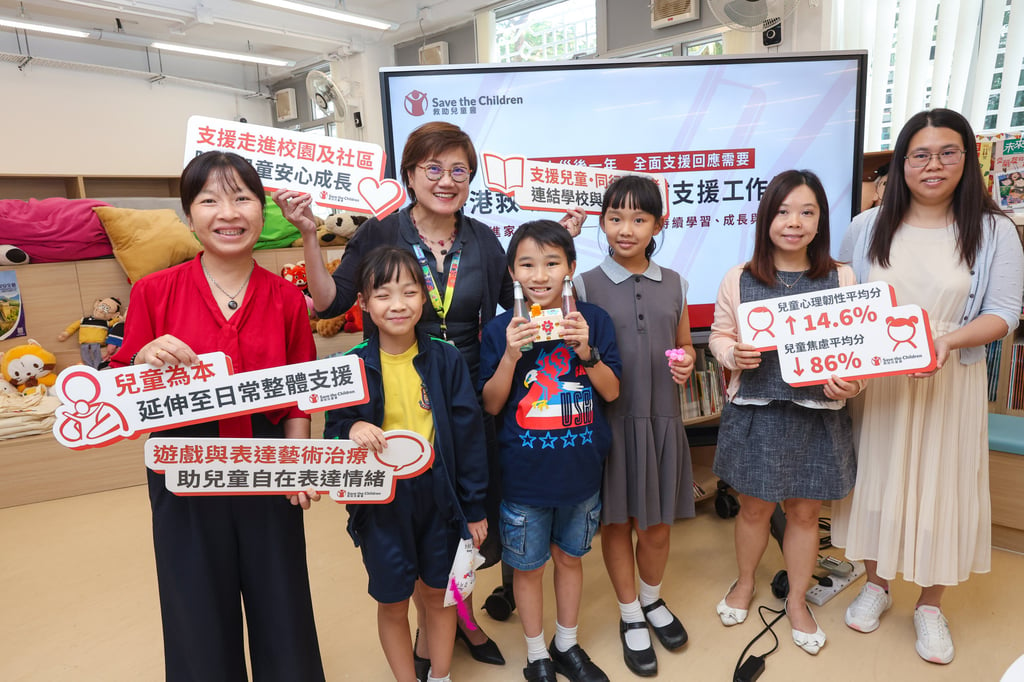
To extend support to affected children, the NGO said it would continue providing the therapies while making a series of policy recommendations.
These included incorporating children’s mental health recovery into the disaster response mechanism, and establishing preventive and early mental health intervention systems in schools.
It also urged the government to promote a family-centred mental health support policy, increasing interventions, enhancing parent training and emotional support, developing family mental health educational tools and incorporating parent support into regular funding scopes.
It further called for long-term community recovery support systems and diverse, child-friendly mental health intervention models.
“What we need is the support of society as a whole, so that children can keep moving forward,” Wong said.
KioskNews shows a cleaned-up reading view extracted from the publisher’s page — the original always lives on their site, not ours.