Japan plans new long-range anti-ship missile to bolster naval build-up
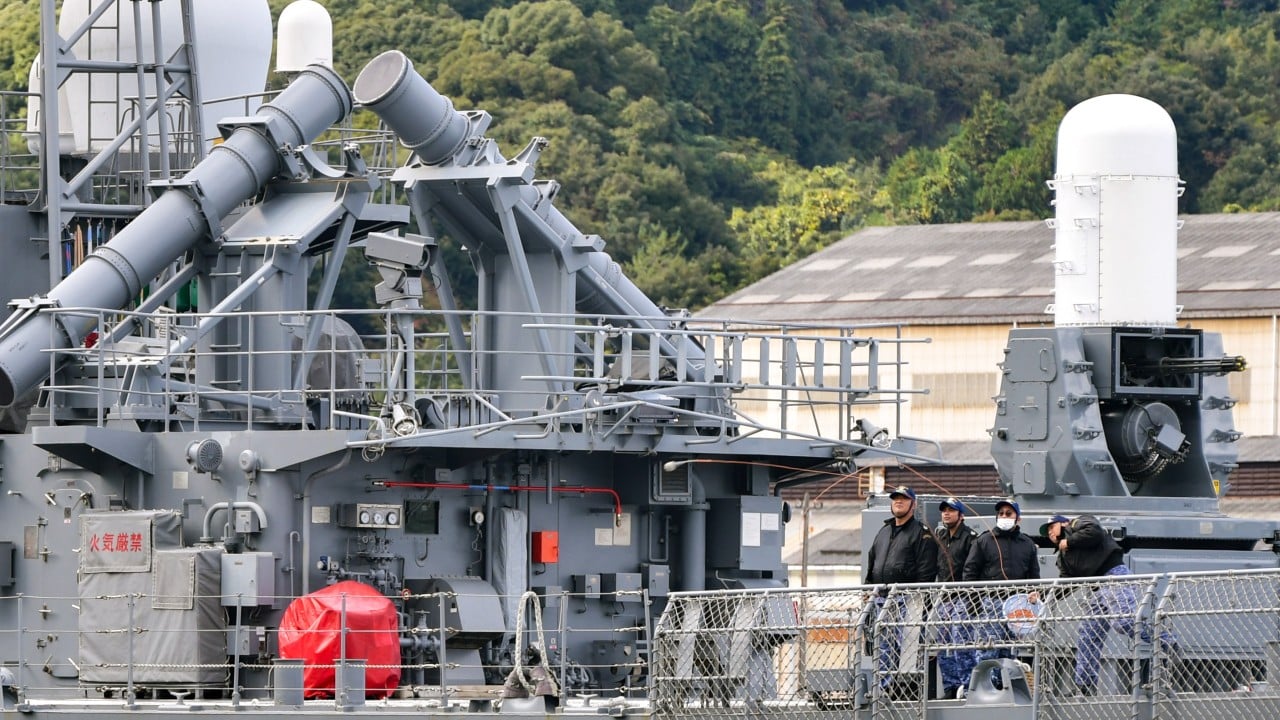
Tokyo is planning to introduce a new long-range anti-ship missile that could be launched from a broader range of vessels, according to Japanese media reports, potentially complicating Chinese military planning in a conflict.
The proposed capability could allow Japan to equip vessels that traditionally do not carry anti-ship missiles, according to defence experts.
The country is also looking to deploy a persistent surveillance system in medium Earth orbit to improve its ability to detect and track enemy warships, part of a broader effort to strengthen its counterstrike capabilities.
Both proposals were outlined in draft guidelines for Japan’s next five-year defence build-up programme, Kyodo News reported on Wednesday. The programme is one of three key national security documents the government plans to revise by the end of the year.
The Japanese government will reportedly examine whether the new missile could be operated from box-shaped launchers that resemble shipping containers and can be placed aboard various types of naval vessels.
02:21
Satellite images reveal massive Chinese warplane build-up across 11 western airbases
China has the world’s biggest navy by number of ships and continues to expand and modernise its fleet. Its shipyards accounted for more than 43 per cent of global naval production tonnage in 2024 and 2025, more than twice the US share, according to a recent survey.
Beijing has repeatedly criticised Tokyo’s planned security revisions, with both the foreign and defence ministries of China accusing Japan of accelerating its “remilitarisation” and challenging the post-war international order.
While the exact type of missile Tokyo envisages remains unclear, documents reviewed by the South China Morning Post show that Japan’s defence procurement agency had already begun exploring acquisition options over three months ago.
In a notice dated August 12, the agency invited Japanese companies with experience designing or manufacturing guided-missile systems to express interest in providing information and discussing technical options for a new naval anti-ship missile and containerised launcher.
Defence expert Yoshihiro Inaba, the Japan correspondent for the Naval News website, said the Japan Maritime Self-Defence Force (SDF) had long been interested in containerised missile launch systems, but the latest reports suggested the initiative was moving beyond the research stage.
“Based on the latest media reports, this research effort is now set to transition into the actual development phase of the weapon system,” Inaba said.
Among the vessels that could carry the new missile, Inaba said, were the Maritime SDF’s offshore patrol vessels, transport ships and replenishment ships.
01:51
North Korea’s Kim attends live-fire drone and rocket demonstration in Wonsan
“In the event of a potential conflict with China, the Chinese military would have to account for the possibility that virtually any Japan Maritime SDF vessel could be armed with long-range missiles,” Inaba said.
“The apparent intention is to complicate China’s operational planning and military calculations.”
Japan is already acquiring a ship-launched variant of its upgraded Type 12 anti-ship missile for use aboard destroyers, with the defence ministry allocating 35.7 billion yen (US$224 million) for its acquisition in the current financial year.
Inaba suggested that the proposed container-launched missile could draw on technology from an anti-ship missile for island defence that Kawasaki Heavy Industries has been researching since 2023.
Designed to strike enemy warships and landing forces, the Kawasaki missile prototype underwent its first launch test last year.
Beyond the missile proposal, the draft defence build-up guidelines call for a satellite surveillance system capable of continuously monitoring vast areas from medium Earth orbit, according to Kyodo.
The system could complement Japan’s planned low Earth orbit satellite constellation, as satellites in higher orbits are generally able to observe larger areas.
In its Space Domain Defence Guidelines, released in July last year, the Japanese defence ministry said it would consider developing observation satellites in higher orbits.
However, that document did not specifically identify medium Earth orbit as a potential zone for surveillance operations.
05:03
Which PLA generals are going to fill the theatre command posts left by China’s anti-corruption crackdown?
The draft guidelines also called for the acquisition of medium-sized uncrewed surface vessels for search-and-rescue missions and missile launches, as well as satellites to protect Japanese spacecraft against potential attacks by Chinese and Russian satellites, Kyodo reported.
The government is also seeking to promote domestic production of defence equipment across all sectors to enable rapid increases in manufacturing in the event of a conflict.
The guidelines also recommend reviewing the organisation and troop numbers of the Ground Self-Defence Force amid recruitment difficulties and a declining birth rate.
The measures are part of a broader overhaul of Japan’s three main strategic security documents, which also include the country’s National Security and National Defence strategies. The revised documents are expected to be released next month.
How much of the proposed military build-up will ultimately be implemented remains unclear. Fiscal pressures appear to be prompting Tokyo to consider a smaller defence budget than the 70 trillion to 80 trillion yen proposed by the defence ministry, but still well above the 43 trillion yen allocated under the current five-year programme.
KioskNews shows a cleaned-up reading view extracted from the publisher’s page — the original always lives on their site, not ours.