In world's second most populous country, empty schools are turned to nursing homes as birth rate hits lowest in decades
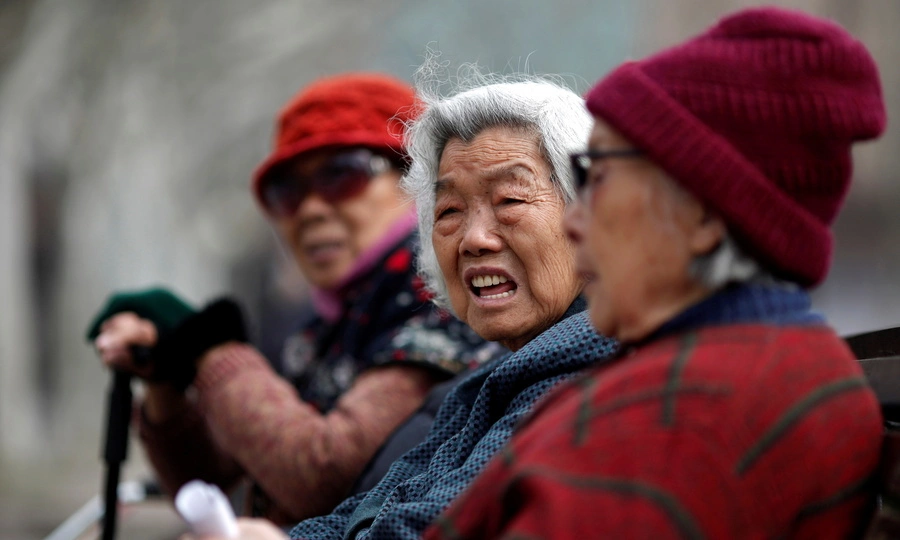
Primary schools and kindergartens across China are being turned into nursing homes and senior centers as a record-low birth rate empties classrooms and the number of elderly residents keeps climbing.
Primary school admissions fell 9.6% in 2025 to 14.62 million, while preschool enrollment dropped 10% to 32.26 million, according to the Ministry of Education's annual statistical bulletin released in July.
The total number of schools at all levels fell more than 6% to 440,700. Kindergartens dropped by 21,400 and primary schools by about 8,000, financial news outlet Yicai reported, citing the ministry's data.
China recorded 7.92 million births in 2025, down 17% from the previous year, as its population shrank for a fourth straight year to 1.405 billion, according to the National Bureau of Statistics. Deaths rose to 11.31 million, putting the death rate at 8.04 per 1,000 people, the highest since 1968.
China has been the world's second-most populous country since India overtook it in 2023, according to United Nations estimates. The UN Population Fund put India's population at about 1.46 billion in 2025.
The birth rate fell to 5.63 per 1,000, the lowest since records began in 1949, and has declined steadily over the past decade despite the end of the one-child policy, RTHK reported.
People aged 60 and above numbered 323.4 million at the end of 2025, or 23% of the population, according to official data.
Local governments across China are speeding up efforts to reuse idle campuses, and a large share of empty primary schools have become nursing homes, elderly care centers and senior canteens, China News Service reported in September.
In Shanyang county in Shaanxi province, a village primary school left idle for years has been converted into a nursing home.
Xiji county in the northwestern Ningxia Hui Autonomous Region plans to convert 65 idle school buildings into rural elderly care facilities within five years, the state-run People's Daily reported in August. The county has 191 idle school buildings across its 19 townships, with more expected as schools merge.
In January, the Ministry of Natural Resources, the Ministry of Civil Affairs and the National Health Commission jointly issued measures to lower land costs for elderly care facilities and put idle buildings back into use, Xinhua reported.
 |
|
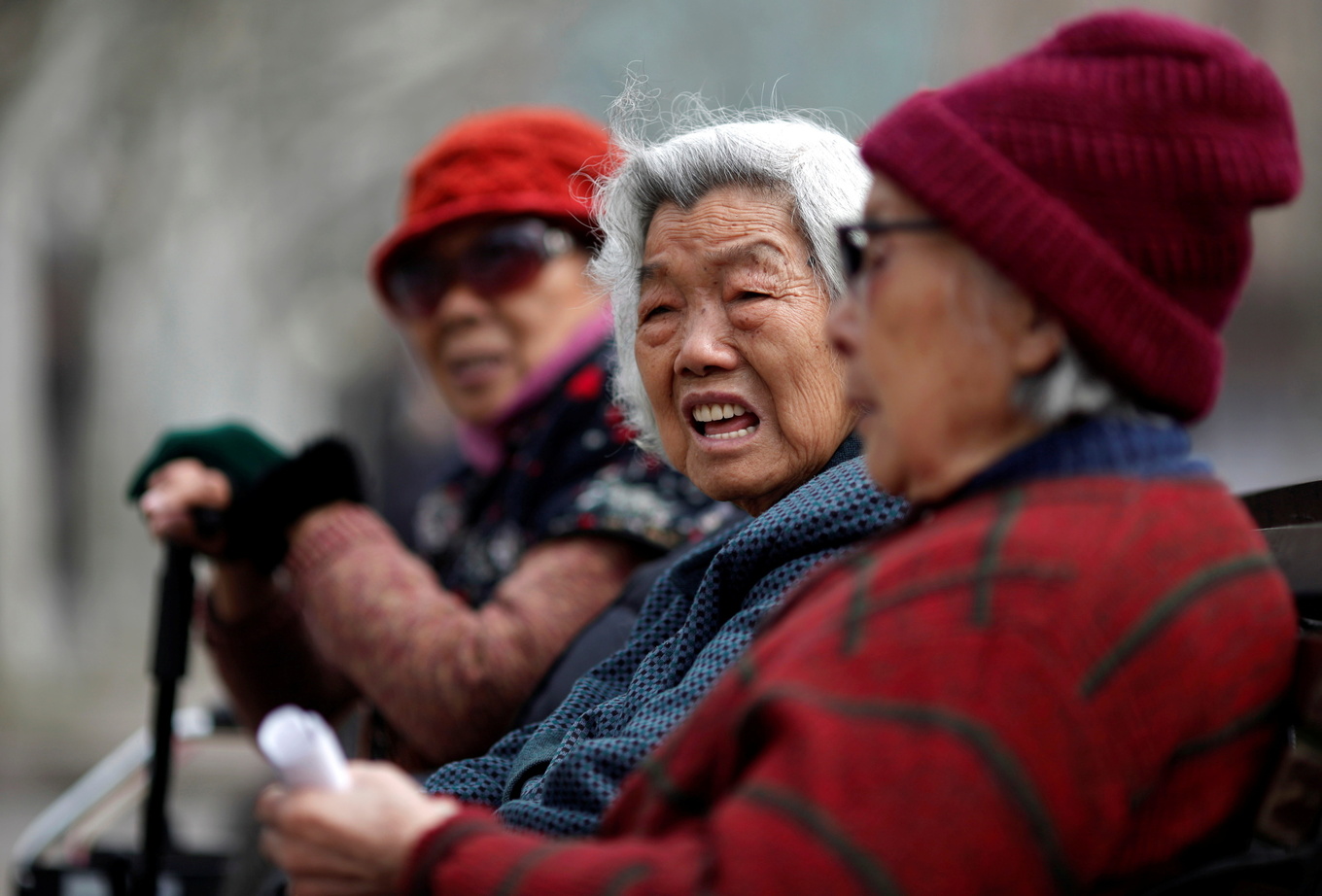
Elderly women sit at a park in downtown Shanghai, China. Photo by Reuters |
Hollowed-out villages
Stuart Gietel-Basten, a professor of social science and public policy at the Hong Kong University of Science and Technology, told the South China Morning Post the conversions are what one would expect as populations change. He predicted that secondary schools, and in some regions even universities, may also close and be repurposed as China ages.
China can adapt to a shifting age structure at the national level, but smaller and sparsely populated areas face a harder adjustment, Gietel-Basten said. The decline is sharpest in rural villages and rust-belt industrial towns that young workers have left for jobs elsewhere.
"These places have been hollowed out, not only because of demographic changes, but also because of the lack of economic opportunities," he said, warning that shrinking local tax revenue could make it harder to fund public services and create jobs, driving more people away in a "negative spiral."
In a video shared on Chinese social media, a former resident of a village in Jiangxi Province revisits his old primary school, now a senior activity center offering classes and subsidized meals. Just six babies were born in the village last year, he said, compared with roughly 80 children in his grade when he studied there.
Gietel-Basten noted that rural areas in other fast-aging societies, such as Japan and Italy, have tried to reinvent themselves through tourism and relocation incentives. Some Chinese communities are now turning abandoned schools into rural guesthouses to revive local economies.
In Sichuan Province's mountainous Pingwu County, a primary school that had stood empty since 2020 reopened as a boutique inn in late June. The renovation cost CNY10 million ($1.49 million), and the inn expects 10,000 guests a year, according to a local government notice cited by SCMP.
The inn is also expected to employ more than 10 villagers and buy about CNY500,000 ($74,500) of farm produce from local growers each year.
KioskNews shows a cleaned-up reading view extracted from the publisher’s page — the original always lives on their site, not ours.