How Malaysia offers Chinese investors Singapore’s comfort at prices lower than Thailand
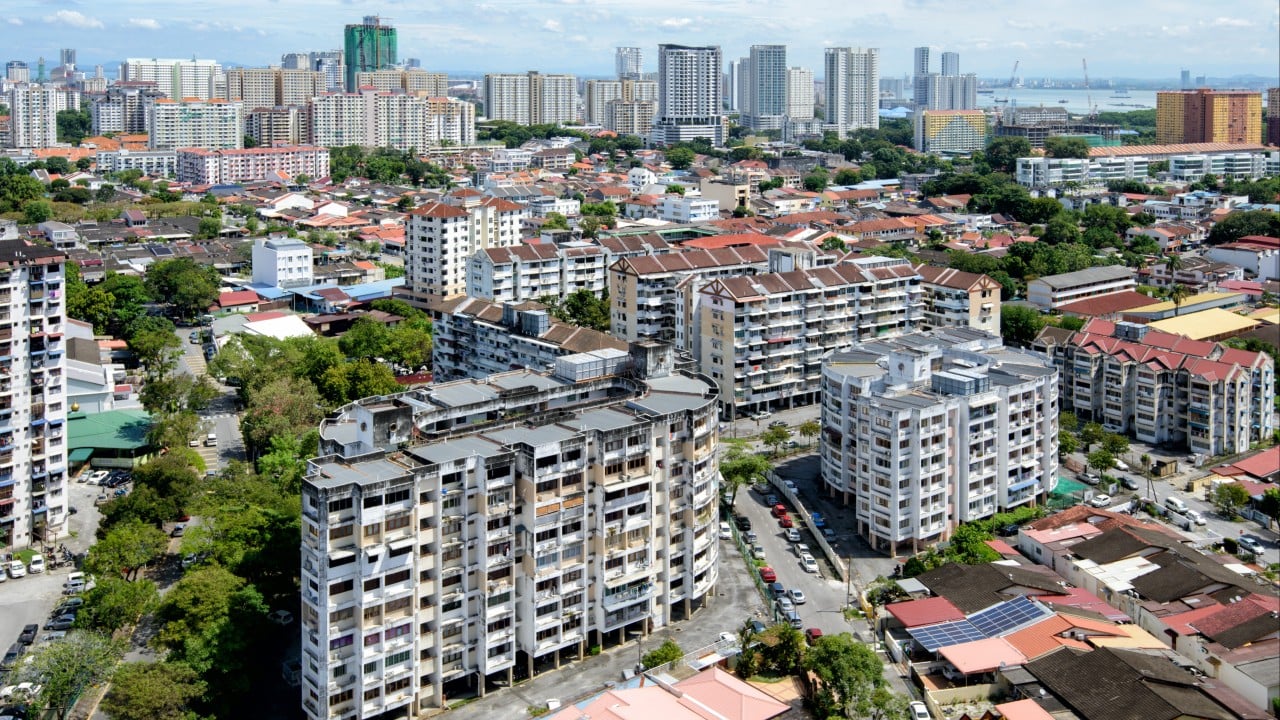
Malaysia is proving to be a middle ground for many Hong Kong and mainland Chinese investors looking to buy property in a country that provides the stability Singapore offers, but with competitive price points similar to those found in Thailand, according to analysts.
Data from Juwai IQI, a property portal with 7 million listings across 111 countries, showed that in the first half of 2026, Malaysia was the fourth-highest destination for inquiries received from Chinese buyers. That compared with its seventh-place ranking in 2024 and sixth spot in 2025.
“Malaysia is a very popular destination for Hong Kong and mainland Chinese buyers, especially as a lifestyle, education, retirement or residency-linked investment,” said Kashif Ansari, co-founder and group CEO at Juwai IQI.
This demand was underpinned by several factors, including lifestyle preferences as well as improvements in the Malaysian economy, said Kingston Lai, founder and CEO of Hong Kong-headquartered Asia Bankers Club, a direct investor sales company.
Malaysia also stood out for its high-growth market for data centres, a key infrastructure in the global artificial intelligence build-out. Johor Bahru, the Malaysian city closest to Singapore, has seen a 132 per cent increase in data centre capacity since 2024, according to property consultancy Savills.
“Year-on-year there’s an increase of about 50 per cent in data centre capacity in the special economic zone in Johor Bahru,” said Neil Brookes, head of Asia-Pacific capital markets at the property consultancy. “So there is huge demand from occupiers to go there, and a lot more development, so people will definitely buy there.”
While many people in the US object to living near data centres due to higher electricity bills, water consumption and noise and light pollution, occupiers are typically staff hired by data centres which spur economic activity in the district due to requiring massive construction work.
Interest rates were also “supportive” at 2.75 per cent and economic growth was “fairly good”, Brookes added. In the first half of the year, Malaysia’s economy expanded by 5.7 per cent.
It also helped that Chinese was spoken in Malaysia and English was also widely used, as well as the country being a common law jurisdiction, Asia Bankers’ Lai added.
Malaysia pushes to lure Chinese durian fans away from Thai fruit supply
“For Hong Kong and mainland families, the pitch is simple,” he said. “You get good-quality, freehold property in a Chinese-speaking, English-friendly, common-law country at a fraction of what you’d pay at home. Their kids can go to international schools that cost half of Hong Kong’s.”
The country is also seen as a safe investment destination.
“For a Hong Kong buyer, the legal and institutional set-up feels very familiar,” Lai said. “Stability has been one of the country’s quiet strengths. Governments have changed, and the rules for foreign buyers have stayed largely intact.”
Ansari of Juwai IQI noted that unlike Thailand, Malaysia could be considered “more welcoming” for foreign homebuyers as non-locals could purchase “freehold property, including some landed homes, which is prohibited in Thailand”.
Malaysia’s long-term residency programme – the Malaysia My Second Home (MM2H) – was also boosting the country’s residential property market, generating US$1 billion in foreign inflows in 2025, he added.
The programme approved 3,172 applications in 2025 and attracted 9,038 participants, including dependents, into the country, Ansari said. Among other considerations, applicants were required to meet specific property purchase conditions.
Investors from China were the top foreign property buyers in Malaysia, accounting for 329 deals worth 834.6 million ringgit (US$204.3 million) in the first half of 2025, according to the latest official data.
Buyers from Hong Kong recorded 15 transactions with a total value of 30.3 million ringgit in the same period, making them the fourth largest foreign property investors in Southeast Asia’s third-wealthiest country in terms of GDP per capita.
A good condominium in the Kuala Lumpur City Centre or Mont Kiara costs what you’d pay for a car park space in some parts of Hong Kong
Prices in Kuala Lumpur would be more comparable to those in Bangkok than in Singapore or Hong Kong.
For example, a 50 square metre (538 square feet) suburban flat in Hong Kong could cost five to seven times more than the average home in Malaysia, according to Ansari.
“A good condominium in the Kuala Lumpur City Centre or Mont Kiara costs what you’d pay for a car park space in some parts of Hong Kong,” Lai of Asia Bankers said.
He said that in prime Bangkok areas such as Sukhumvit, Silom, Lumpini and Sathorn, the per square metre price of flats was about 200,000 to 350,000 baht (US$5,970 to US$10,440)
In Kuala Lumpur’s premium areas such as the city centre and the downtown district, newer flats would be between 16,150 ringgit to 23,680 ringgit per square metre, making the Thai capital still pricier than its Malaysian peer.
However, Lai advised foreign property buyers in Malaysia to be selective in the location of their investment.
“Buy for use, or buy in a location with a genuine demand driver,” he said. “The mistakes in Malaysia have almost always come from buying oversupplied condos in the wrong locations because the showroom looked nice.”
Overall, Malaysia could provide an attractive investment option to foreign property buyers, Lai added.
“So I’d put it this way: Malaysia gives you Singapore-style comfort at close to Thai prices,” he said. “That combination is hard to find anywhere else in the region. The one thing buyers should accept is that it’s a steadier, slower-growth market, not a place to flip property.”
KioskNews shows a cleaned-up reading view extracted from the publisher’s page — the original always lives on their site, not ours.