Michael Giles, co-founder and drummer of King Crimson, dies aged 84
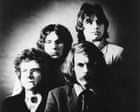
Michael Giles, the drummer who co-founded prog rockers King Crimson, has died aged 84.
The news was announced by King Crimson’s record label DGM, who said he died on Monday 23 November, but did not give a cause of death.
“Michael was instrumental in establishing King Crimson as one of the most innovative and influential bands in the history of progressive music,” the statement reads. “His extraordinary rhythmic imagination, musical sensitivity and highly inventive approach to drumming were fundamental to the band’s pioneering sound.”
That skill and dexterity made a huge impact on the prog artists who followed him, including Rush drummer Neil Peart, who called Giles “a very important influence on me”.
Born in Bournemouth in 1942, Giles and his brother Peter sowed the seeds for King Crimson by advertising in a local newspaper for a bandmate: guitarist Robert Fripp answered it, and the trio formed Giles, Giles & Fripp, who alighted on an eccentric, sprightly jangle-pop style. They released their debut album The Cheerful Insanity of Giles, Giles & Fripp in 1968, which sold poorly and their label Deram rejected their next set of songs.
Ian McDonald joined the group, along with Fairport Convention singer Judy Dyble, though the group only recorded a handful of home-recorded songs before Peter Giles left later in 1968. Michael Giles, Fripp and McDonald forged ahead, forming King Crimson with Greg Lake and Peter Sinfield, debuting live in April 1969 and supporting the Rolling Stones in Hyde Park that summer.
Their debut album In the Court of the Crimson King, released in October 1969, was a sensation: a vision of rock music as not only heavy but shapeshifting, symphonic and mystical, it was an instant critical and commercial success, reaching the UK Top 5 and US Top 30. Giles’s deft drumming was a key ingredient, from the heavy tumbling fills of 21st Century Schizoid Man to lighter jazz-adjacent playing and pattering ghost notes, all with a sure-footed rhythmic sense that guided songs through shifts in time signature. “I was always interested in space, restraint and atmosphere, in allowing music to breathe rather than constantly filling it,” Giles later said.
Giles (as well as McDonald) then walked away from King Crimson, later citing a desire to “explore and develop new ideas for a much more expansive approach to playing drums and percussion into being equal and integral to my own compositions,” though he played as a session musician on King Crimson’s second album In the Wake of Poseidon, which returned them to the UK Top 5.
Giles and McDonald formed a duo, releasing the album McDonald and Giles in 1970, but thereafter Giles worked chiefly as a session musician. He backed Leo Sayer on his 1975 album Another Year, including the UK No 2 hit single Moonlighting; recorded with other prog figures such as Soft Machine’s Kevin Ayers and former Genesis member Anthony Phillips; and in 1993, played with Bryan Ferry on his cover of soul classic Taxi, plus there were numerous stints with other musicians.
He also reconvened with another ex-King Crimson member, Greg Lake, for the latter’s 1981 self-titled solo debut album; with McDonald again for McDonald’s only solo album, 1999’s Drivers Eyes; and in 2002 formed a band with various King Crimson alumni, 21st Century Schizoid Band.
Giles also released two solo albums, 2001’s Progress and, earlier this year, Shadows/Solo, a compilation of material recorded over a number of years. “It probably does reveal a more private and continuous thread running through the different phases of my life as a musician,” he said of the latter album in an interview with It’s Psychedelic Baby magazine. “What has always been important to me is to remain honest and genuine in the creative process, to make music only when it feels natural and truthful to do so … I have always preferred to allow the music to pass through me like a conduit, in its own time.”
He is survived by his five children: Tina, Amanda, William, Rosie and Oliver.
Year-end fundraiser
$0 of $2,000,000 goal
A moment full of possibility – and risk
We hope you appreciated this article. Before you close this tab, can we ask you to support the Guardian at this crucial time for democracy in the US? With Black Friday approaching, our most impactful monthly support option is just $7.50 a month for six months.
In the last two years alone, Donald Trump has eroded many of the pillars of US democracy – slashing funds for universities, undermining science, shutting down arts institutions, and attacking the free press as an “enemy of the American people” and “a threat to our national security”. While he and his allies have enriched themselves and spread lies, federal forces have harassed and imprisoned innocent people and violated the constitutional rights of many Americans.
Now, in a sweeping change election, the American people have spoken: Donald Trump, Pete Hegseth, RFK Jr, Elon Musk and the tech oligarchs may finally be held to account. A majority of American voters have demanded an end to the costly and immoral wars, the flagrant profiteering, and the corrosive attacks on communities and democratic institutions.
It’s a moment full of possibility, with more stories than we can possibly cover. New leaders are emerging from Texas and Michigan to Iowa and South Carolina – and heading to Washington to fight for affordability, against wealth inequality, and for human survival in the face of AI and the climate crisis.
These new leaders will be facing a cornered Trump and his hardline chief of staff, Stephen Miller, who have nothing left to lose. The next few years are critical for the future of the country. Journalism that covers the epic clash between these forces has a vital role to play right now.
Investigative journalism provides a fact-based paper trail for an emboldened Congress to follow. Members of Congress – and the American public – often rely on our in-depth reporting to inform the tough questions, to connect the dots and to pursue accountability for wrongdoing.
At the Guardian, our newsroom is devoted to uncovering the truth and conveying it to as many people as possible. We’re not alone in this mission, but this kind of journalism faces unprecedented hurdles: big tech threatening our financial stability and stealing our work for AI, billionaire owners telling journalists what to publish, and a hostile executive branch intent on suppressing our reporting.
The Guardian is free to dig deep without fear because we’re funded by our readers. Our readers hold us to account, and we hold the powerful to account.
However, this only works when enough of our readers contribute. Against the advice of most industry analysts, we’ve refused to put up a paywall – we believe good journalism should be freely available to all people, regardless of ability to pay. If you’re counting on our reporting, and you can’t afford to pay, please stop reading this message and go back to our articles.
If you can afford to contribute, please know that your support is not only helping yourself – from voters in Kansas to immigrants in Minnesota and families in Gaza, your generosity is bringing factual news to people around the globe.
Today is among our most important fundraising days of the year. To sustain our unique financial model, our goal is to raise $2,000,000 before the new Congress is seated on 3 January. More than 19,000 people have contributed already. All gifts are gratefully received, but for the next several days only, our most impactful monthly support option is $7.50 a month for the first six months. If you can afford 37 seconds, please join our ranks – and show your support for the rekindling of democracy in the US and around the world.
KioskNews shows a cleaned-up reading view extracted from the publisher’s page — the original always lives on their site, not ours.