Trump declares robot imports a national security threat
Any tariffs or other fees would, of course, be paid by the US companies importing such foreign-made robots. That would likely increase the cost of US manufacturing operations at a time when the United States has become the second largest market in using industrial robots, with the International Federation of Robotics reporting nearly 38,500 new US installations of industrial robots in 2025.
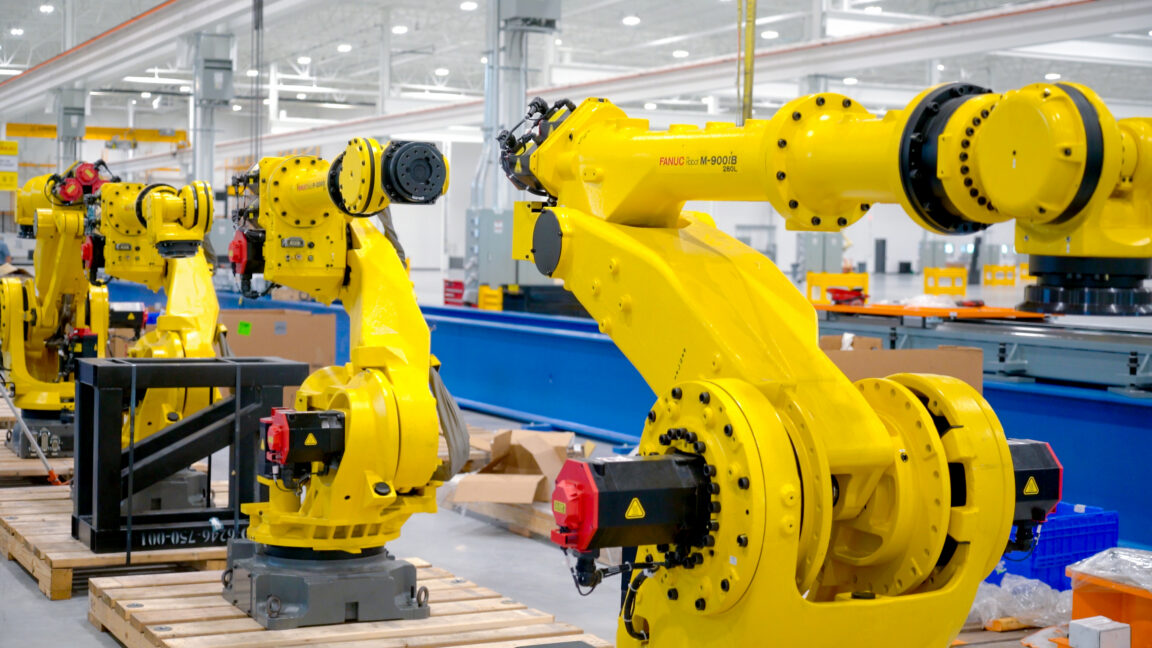
Major US automotive and aerospace companies often buy large robotic arms for factory floor work from the “big four” robotics makers—FANUC, ABB, Yaskawa, and KUKA—that are headquartered in Japan, Switzerland, and Germany. No US company currently offers comparable heavy-duty hardware for large industrial robotic arms, although the foreign robotics makers have been expanding their US engineering and assembly facilities.
Even Amazon, the company that has arguably deployed more robot workers than any other in the world, still uses some foreign-made robots, like Japan’s FANUC robotic arms, despite having significantly ramped up its own in-house robot production and developed certain specialized robotic arms.
Trump’s own proclamation acknowledges that US robotics companies do not produce enough industrial robots to “meet national security needs,” and that the United States “relies on foreign imports for most types of robotics and industrial machinery and for their components.”
If Trump eventually slaps tariffs on US imports of foreign-made industrial robots, that would at least fall short of restricting imports outright. Although as Intel recently showed, major US companies can still get waivers from the Trump administration to continue using foreign-made robots even when a nominal ban is in place.
KioskNews shows a cleaned-up reading view extracted from the publisher’s page — the original always lives on their site, not ours.