How a 17th-century rabbi’s poem sung by Ofra Haza made it onto the car radio in Grand Theft Auto

GTA VI launches on what would have been Ofra Haza’s 69th birthday. In 2005, players could already hear the Israeli singer’s “Im Nin’alu” as they drove through Liberty City.
Steal a car in Grand Theft Auto and you get to choose the music. In the 2005 video game Liberty City Stories, one turn of the radio dial could bring up a familiar voice for Israeli listeners: Ofra Haza singing “Im Nin’alu,” the words of a 17th-century rabbi from Yemen.
The Thursday launch of Grand Theft Auto VI, better known as GTA VI, falls on November 19, the day Haza would have turned 69. The crime-game series lets players roam fictional versions of American cities, taking on jobs for gangsters or simply driving around. The new game takes place in and around Vice City, modeled on Miami. Haza’s song played in Liberty City, the series’ version of New York.
The cars have their own radio stations, complete with DJs. Haza was on Radio Del Mundo, which played music from the Middle East and South Asia. In a recording of the original broadcast, her voice comes in at 4:13.
Haza had her parents in mind when she first recorded the song. Her mother had sung at weddings in Yemen, and the family often sang together after dinner at home in Tel Aviv’s Hatikva neighborhood. By 1984, Haza had represented Israel at Eurovision and could make a record of the music she had grown up with.
“In 1984 I wanted to do an album as a present to my parents to thank them for giving me my culture,” she told the American music magazine Cash Box in 1989.
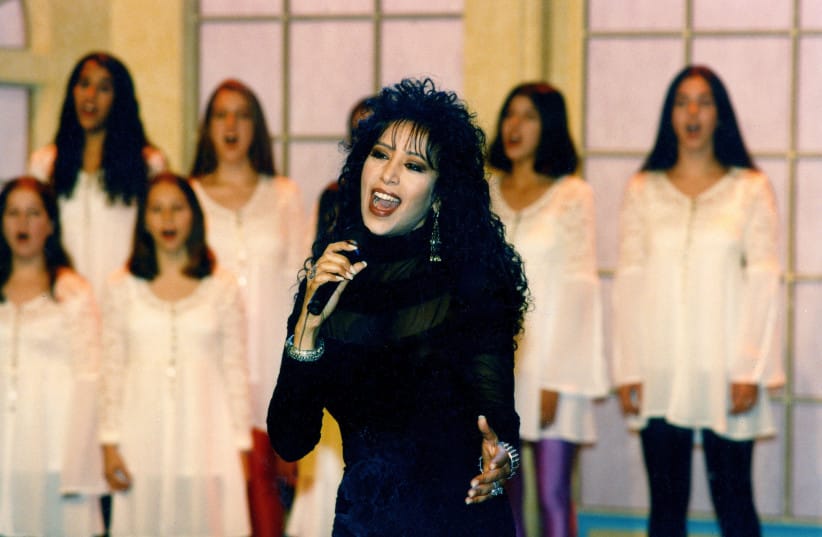
That album, Yemenite Songs, opens with Haza singing alone. The first lines of “Im Nin’alu” offer a word of comfort from Rabbi Shalom Shabazi: Even when people with the means to help you close their doors, the gates of heaven remain open. Among the instruments on the record was a pach, a hollow tin that percussionist Chaim Gispan played with his fingers.
Ofra Haza's song finds success abroad thanks to British DJs
The song owed some of its success abroad to a pair of British DJs. The duo Coldcut heard “Im Nin’alu” on John Peel’s radio show and sampled Haza’s voice for their remix of “Paid in Full” by American hip-hop duo Eric B. & Rakim. In 1988, Haza’s own dance version topped the singles chart in West Germany.
Haza died in 2000, five years before Liberty City Stories came out. Players who stayed on Radio Del Mundo after “Im Nin’alu” heard Farid al-Atrash sing “Hebeena Hebeena.” On the streets of Rockstar’s imaginary New York, the two shared a station.
KioskNews shows a cleaned-up reading view extracted from the publisher’s page — the original always lives on their site, not ours.