Will robots replace human workers? — Dilip S. Mutum and Ezlika M. Ghazali
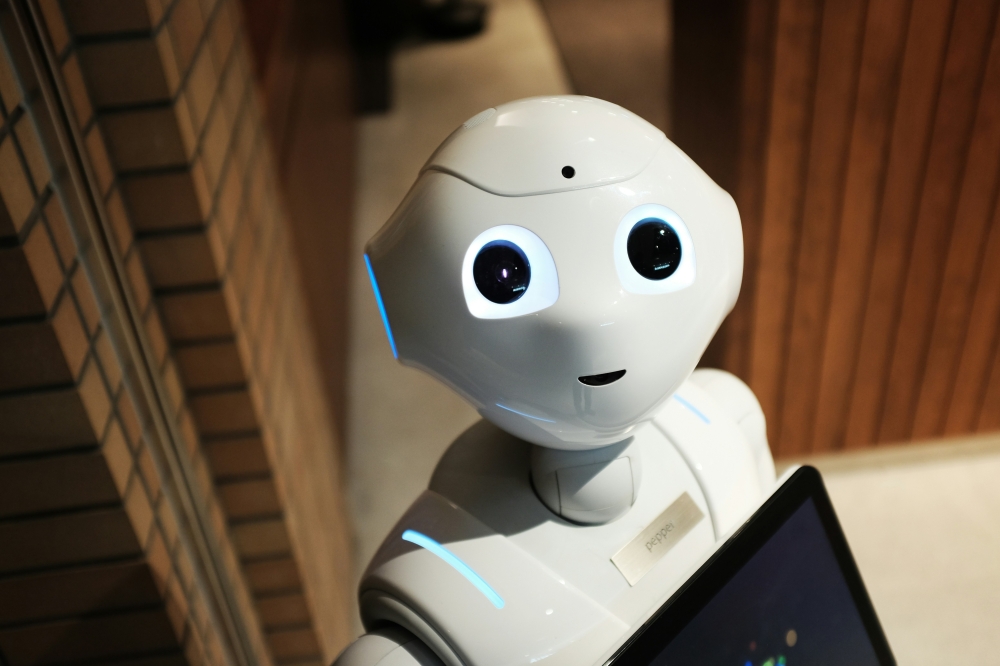
NOVEMBER 3 — Walk into many restaurants in Malaysia today and a robot may bring your food. Restaurants such as Q-Bistro, Johnny’s, Mamak Xpress and OldTown White Coffee have introduced robot waiters to cope with labour shortages, especially after the pandemic disrupted migrant labour flows and to keep costs down.
So, do these machines replace people or do they simply change the kind of work businesses need? Our short answer is that they change it.
For business leaders, the question is no longer whether robots will enter the workforce, but how, where and at what cost.
The trend is global. At the World Robot Conference in Beijing in August 2026, companies showed humanoid robots built for customer service, home help and even companionship, some with multilingual conversation and soft synthetic faces.
These machines raise a bigger question: how will people trust and react to robots that look and act more like us?
The rise of the robot workforce
Service robots now deliver food, guide customers and even sing birthday songs.
Rent-a-robot schemes have sped up the shift. In 2022, media reports put the cost of buying a single unit at around RM35,000 or more and renting one at roughly RM1,500 to RM2,000 a month.
Prices have likely shifted since, but renting still lets small businesses experiment without heavy upfront costs.
Yet robots are not autonomous replacements. Ivan Teo, chairman of the Malaysian Association of Hotels’ Johor chapter, has reportedly noted that robots in hotels and restaurants remain limited to specific tasks such as delivery.
Humans are still needed for personalised service, crisis handling and relationship-building.
What robots do well and where they fall short
Robots excel at consistency, hygiene and speed on simple tasks. They don’t take breaks, call in sick or make emotional judgments.
That is why busy restaurants, hotels and hospitals use them. Customers often report faster service and enjoy the novelty, which can bring in more traffic in the short term.
But novelty fades. Our study of 308 restaurant customers, published in Electronic Markets (Ghazali, Mutum & Cheah, 2025), found that novelty and enjoyment can raise satisfaction at first, but they do not guarantee repeat visits.
The excitement levels off over time, especially among customers who love new things, unless efficiency and trust support the experience.
Robots also lack the subtle cues that build loyalty. Tray bots and food runners can imitate friendliness with polite voice prompts or screen-based smiles. That is no substitute for the warmth and empathy of attentive staff.
Rapport matters too. We found that the bond between customer and robot changes how much a robot’s friendliness and trustworthiness count.
When rapport is high, friendly cues improve satisfaction. Paradoxically, our findings suggest that some customers may find an overly friendly robot off-putting. If it tries too hard to act human, it can come across as fake.
A robot can deliver your food efficiently, but it can’t ask whether your child liked the meal or whether you want more sambal. That kind of engagement builds loyalty and right now only humans can provide it.
Robots also have practical limits:
- Unexpected situations. A spilled drink, a complaint or a menu change still needs a human.
- Peak hours. Robots follow fixed paths and can block staff or customers in tight spaces.
- Cost. Upfront cost is still a worry for businesses that don’t want a long-term commitment.
- Connection. They can’t listen empathetically or respond to tone of voice.
Match the robot to the task
The challenge for managers is strategic fit. Where automation supports your value proposition of speed, standardisation or cost-efficiency, robots make sense. For example:
- Quick-service restaurants can use robot food runners to reduce staff fatigue.
- Hotels can use robots for luggage delivery or corridor sanitation.
- Hospitals can use them for medication delivery or patient guidance.
Tasks that need empathy, negotiation or discretion should stay with people. This is not about preference. It is about putting the right task with the right talent.
What this means for managers
- Treat robots as support staff, not replacements. Use them for repetitive, tiring or unappealing jobs. Let your people focus on work that needs personality, flexibility and emotional intelligence.
- Match robot features to your business. Fast-food outlets and busy casual restaurants may gain the most. Fine dining, boutique hotels and businesses built on deep customer relationships should be cautious.
- Don’t rely on the “wow factor”. Customers will be impressed the first time. Keep them coming back with consistently good service, whether it comes from humans or machines.
- Train staff to work alongside robots. Humans are still needed to handle surprises, talk to customers and keep the experience smooth. Staff roles may shift, but they won’t disappear.
- Track customer feedback. High-tech doesn’t always mean it works for your customers. Check whether satisfaction and return visits improve after robots arrive.
Rethinking roles
We should be honest: some repetitive tasks and some jobs built around them, will shrink. But many restaurants and hotels already struggle to hire enough staff and robots help fill gaps that are hard to fill with short-term labour.
That doesn’t mean businesses should let people go. Instead, staff can be trained for roles robots can’t do, such as handling customers, overseeing robot performance, troubleshooting and higher-value work.
Customers may accept being served by a robot, but they still expect great service overall. A good robot makes things efficient. A good human makes the experience memorable.
Concluding thoughts
Robots are here to stay, but they are not here to replace all human labour.
The task for managers is to design systems where technology adds to the human value chain instead of displacing it.
Get the balance right and robots will complement workers rather than threaten them.
* Professor Dr Dilip S. Mutum is a Professor of Marketing at the School of Business, Monash University Malaysia (email: [email protected]), and Associate Professor Dr Ezlika Mohd Ghazali is an Associate Professor of Marketing at the Faculty of Business and Economics, Universiti Malaya (email: [email protected]).
** This is the personal opinion of the writer or publication and does not necessarily represent the views of Malay Mail.
KioskNews shows a cleaned-up reading view extracted from the publisher’s page — the original always lives on their site, not ours.