Supreme Court panel: Phase out ‘unsustainable’ river sand mining in 3 years, desilt dams
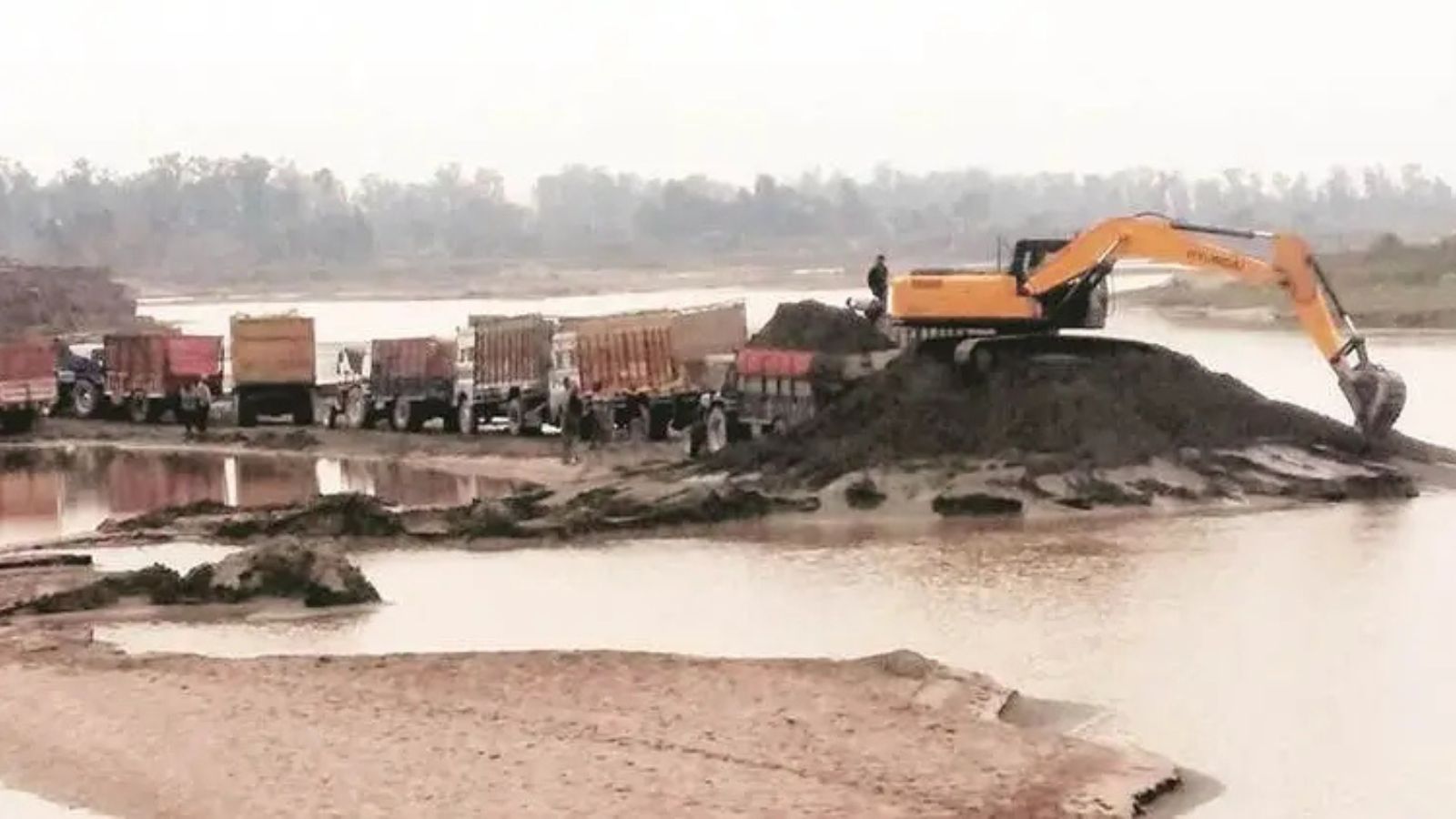
The SC-appointed Central Empowered Committee (CEC) has said that the country should phase out “unsustainable” sand extraction from rivers within three years, and instead desilt dams to meet the construction sector demand.
The recommendation is part of the CEC’s Report No. 36 of 2026, filed before the apex court on November 2, in the suo motu case on illegal sand mining in the National Chambal Sanctuary.
“A time-bound roadmap shall be prepared to progressively phase out unsustainable sand extraction from active river channels over the next three years, alongside development of adequate alternative sources, including reservoir sediment, M-sand and recycled C&D waste, while ensuring that legitimate construction requirements are met,” the report states.
M-sand, or manufactured sand, is produced by crushing and processing suitable rock and can substitute for natural river sand in concrete and other construction applications when it meets BIS specifications. The committee also recommended a set of measures on “digital monitoring and traceability of mineral movement”.
Key among these will be regulation through secure electronic transit permits, incorporating unique QR/barcodes or RFID-based identification.
Additionally, state mining departments shall establish a digital monitoring system on permissions, quantities permitted, actual extraction, transit permits and end-use.
Desilting plan
On dams, it recommended that “a time-bound desiltation programme be prepared, with contracts for eligible works awarded within the next three years, followed by a structured 10-year desiltation cycle for reservoirs identified as suitable”.
Story continues below this ad
The court had sought the report on October 6 when it widened the Chambal proceedings to cover river sand mining across the country. In earlier hearings, the court had warned that the activity has a “disastrous effect” on river ecosystems and cannot continue unchecked.
A two-judge bench headed by Justice Vikram Nath also appointed advocates Nikhil Goel and Rupali Samuel as amicus to assist the court.
The CEC recommended that the Ministry of Jal Shakti lead a comprehensive national framework specifying reservoir-wise sediment availability, recoverable quantities, processing requirements, timelines, financing arrangements and environmental safeguards in consultation with the CWC, National Dam Safety Authority, MoEFCC and State Governments. Sand, a minor mineral, and water are state subjects.
The CEC cited data from the Ministry of Jal Shakti, placed before Parliament in December 2025, that of the 439 reservoirs in the country assessed, gross storage lost to sedimentation averaged 19.24 %. It states that 23 reservoirs had lost more than half their capacity and Gobind Sagar, behind the Bhakra dam, has shrunk from 9,868 million cubic metres (MCM) to about 7,300 MCM (-26%).
Story continues below this ad
Desilting, the report argues, would serve the “dual purpose of restoring reservoir storage capacity and meeting part of the growing demand for construction materials”.
According to the Jal Shakti reply cited by the report, the 2025 national register lists 6,628 specified dams.
The panel recommended that all storage dams over 15 years old that have not been systematically desilted be assessed, and about one-tenth of reservoirs found suitable would be desilted each year.
The recovered sand, the CEC recommended, would be sold through transparent mechanisms. The panel adds that the cycle “should not be construed as a mandate for desiltation of every dam”.
Story continues below this ad
However, the CEC acknowledged that it does not know how much usable sand the dams hold since the potential of reservoir sediment as a source of construction sand “has not been adequately assessed at the national level”.
It said “the total volume of accumulated sediment cannot be equated with the quantity that is technically recoverable, environmentally permissible or commercially usable”.
On illegal mining, it said: “There is no consolidated, reliable national database that quantifies the volume or value of illegally extracted river sand.” The available material, it said, “does not support a scientifically defensible national estimate of its total volume or value”.
The CEC’s recommendation for a national desilting plan is a deviation from earlier efforts to regulate illegal sand mining by banning it in specified areas. A 2020 CEC report on Rajasthan found that legal sand collection fell from about 57 million tonnes a year to 5 million after the SC restrained mining. It identified that gap as the main driver of illegal mining. The new report stated only that alternatives must be developed “while ensuring that legitimate construction requirements met”.
Story continues below this ad
The report also cited the desilting project by Bhakra Beas Management Board, as a model, which plans to excavate deposits up to two metres deep in the Bhakra reservoir.
KioskNews shows a cleaned-up reading view extracted from the publisher’s page — the original always lives on their site, not ours.