6 Movie Trilogies Where Every Film Is a Perfect Banger

William likes watching movies and writing about those movies. Anything else is minutae.
Sign in to your Collider account
It's hard to make a good movie, even harder to make a good sequel, and it's almost impossible to make a good trilogy. And yet, it's been done before, several times—not just good, either, but three perfect bangers. One, two, three. Trilogies that kill it, beginning, middle, and end. No slow starts or soft landings. These are three movies that start off high and maintain that altitude all the way to the end.
Now what constitutes a trilogy should be established. No grouping of any three movies will do. No thematic trilogies, spiritual sequels, or three movies that are all their own contained stories (all due respect to The Dollars Trilogy and The Cornetto Trilogy), but this list is reserved for three films that tell a complete story together. The one caveat is that perfect trilogies that have been "ruined" by years-later addenda will still be allowed. These are six trilogies where every film is a perfect banger.
6 The Apu Trilogy (1955-1959)
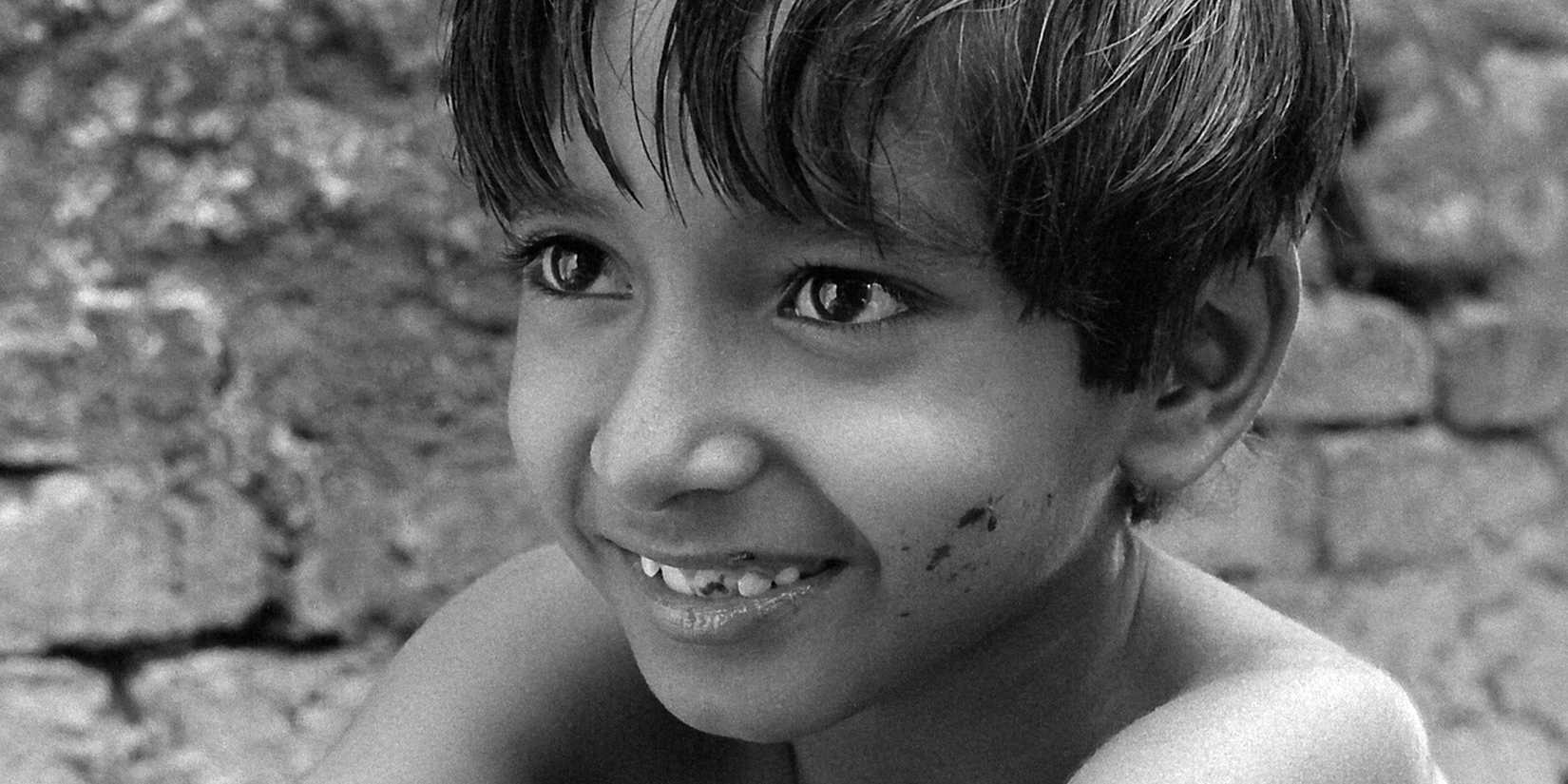
Satyajit Ray's Apu Trilogy is one of the most seminal cinematic works ever made. Instead of telling a complete story in simple plot terms, it tells the complete story of a character. Through the three films, we see Apu grow up from a little boy to a man and a father in the early 20th century in India. It's a coming-of-age narrative told in three parts, based on novels by Bibhutibhushan Bandyopadhyay, and taken all together, it's a moving portrait of maturity and self-discovery.
Pather Panchali introduces Apu (Subir Banerjee) as a boy who lives in a small rural village with the rest of his family and, by the end, sees them headed for the city. Aparajito shows Apu (Smaran Ghosal) earning an education while simultaneously growing more distant from the only surviving family he has. Apur Sansar is the final chapter where Apu (Soumitra Chatterjee), as a young man, finds romance followed quickly by tragedy as he unexpectedly becomes a single father. The Apu Trilogy is a totemic piece of filmmaking and of Indian cinema, offering an honest and perfect cinematic depiction of childhood, adolescence, and adulthood.
5 'The Human Condition' Trilogy (1959-1961)

A three-part, nine-and-a-half-hour war epic, The Human Condition trilogy is the towering achievement of director Masaki Kobayashi, also known for his samurai masterpiece Harakiri and the visually stunning horror anthology Kwaidan. Based on the six-part novel by Junpei Gomikawa, the trilogy follows one Japanese man during WWII and the laboring of his soul under a corrupt and cruel system of government. It's a punishing trilogy that doesn't so much reward patience as it punishes for it. The Human Condition is unrelenting, but also undeniable.
Kaji (Tatsuya Nakadai) begins his story in No Greater Love as a married man and pacifist looking to avoid military service by becoming a supervisor at a Chinese labor camp, where he witnesses horrific brutality. In Road to Eternity, he is conscripted into the army, where he suffers unrelenting punishment. In A Soldier's Prayer, he is captured and becomes a prisoner of war, where he endures his greatest trials. The Human Condition is a bleak but uncompromising trilogy that offers perfection in resilience.
4 'The Evil Dead' Trilogy (1981-1992)

From two staggering works of humanistic cinema to one gonzo splatstick trilogy composed of blood, guts and chainsaws. The Evil Dead trilogy started about as humble as any horror franchise, with a bunch of friends making a movie in the woods of Tennessee. From there, it took some increasingly wild turns with increased budgets to end up with a fantasy-adventure finale. The trilogy and the enduring success of the franchise are a testament to the wild ambitions of producer Rob Tapert, director Sam Raimi, and star Bruce Campbell.
The Evil Dead begins with Ash (Campbell) and his friends visiting a cabin in the woods, where they unwittingly unleash an ancient evil. Evil Dead II partially remakes the first movie and then goes spinning off in a wild new direction where horror and comedy collide with regularity, and Ash gets a chainsaw for a hand. Army of Darkness sends Ash hurtling through time, ending up in the Middle Ages where he re-enacts A Connecticut Yankee in King Arthur's Court with an army of Ray Harryhausen skeletons. Evil Dead has evolved beyond its original trilogy, but those three films are perfect popcorn horror.
Collider Exclusive · Horror Survival Quiz Which Horror Villain Do You Have the Best Chance of Surviving? Jason Voorhees · Michael Myers · Freddy Krueger · Pennywise · Chucky
Five killers. Five completely different ways to die — if you're not smart enough, fast enough, or self-aware enough to avoid it. Only one of them is the villain your particular set of instincts gives you a fighting chance against. Eight questions will figure out which one.
🏕️Jason
🔪Michael
💤Freddy
🎈Pennywise
🪆Chucky
01
Something feels wrong. You can't explain it — you just know. What do you do? First instincts are the difference between the survivor and the first act casualty.
02
Where are you most likely to find yourself when things go wrong? Setting is everything in horror. Where you are determines which rules apply.
03
What is your most reliable survival asset? Every survivor has a quality the villain didn't account for. What's yours?
04
What kind of fear is hardest for you to fight through? Knowing your weakness is the first step to not dying because of it.
05
You're with a group when things start going wrong. What's your role? Horror movies are brutally clear about who survives group situations and who doesn't.
06
What's the horror movie mistake you're most likely to make? Honest self-assessment is a survival skill. Denial is not.
07
What's your best weapon against something that can't be stopped by conventional means? Every horror villain has a weakness. The survivors are always the ones who find it.
08
It's the final scene. You're the last one standing. How did you make it? The final survivor always has a reason. What's yours?
Your Survival Odds Have Been Calculated Your Best Chance Is Against…
Your instincts, your strengths, and your particular way of thinking under pressure point to one villain you actually have a fighting chance against. Everyone else — good luck.
Jason Voorhees
Jason is relentless, but he is also predictable — and that is the gap you would exploit.
- He moves in straight lines toward his target. He doesn't strategise, doesn't adapt, doesn't outsmart. He simply pursues.
- Your ability to keep moving, use the environment, and resist the panic that freezes most victims gives you a genuine edge.
- The Crystal Lake survivors were always the ones who stopped running in circles and started thinking about terrain, water, and distance.
- You think like that. Which means Jason, for all his indestructibility, would face someone who simply refused to be where he expected.
Michael Myers
Michael watches before he moves. He is patient, methodical, and almost impossible to detect — until it's too late for anyone who isn't paying close enough attention.
- But you are paying attention. You notice the shape in the window, the car parked slightly wrong, the silence where there should be sound.
- Michael's power lies in the invisibility of ordinary suburbia — the fact that nothing ever looks wrong until it already is.
- Your spatial awareness and instinct to map every room, every exit, and every shadow before you need them is precisely the quality Laurie Strode had.
- You are not a victim waiting to happen. You are someone who already suspects something is wrong — and acts on it.
Freddy Krueger
Freddy wins by getting inside your head — using your own fears, your own memories, your own subconscious as weapons against you. That strategy requires a target who can be destabilised.
- You are harder to destabilise than most. You've faced uncomfortable truths about yourself and you haven't looked away.
- The survivors on Elm Street were always the ones who understood what was happening and chose to face it rather than flee from it.
- Freddy's greatest weakness is that his power evaporates in the presence of someone who refuses to give him the fear he feeds on.
- Your psychological resilience — the ability to stay grounded when reality itself becomes unreliable — is exactly the quality that keeps you alive here.
Pennywise
Pennywise is ancient, shapeshifting, and feeds on terror — but it has one critical vulnerability: it cannot function against someone who genuinely stops being afraid of it.
- The Losers Club didn't survive because they were braver than everyone else. They survived because they faced their fears together, and faced them honestly.
- You ask the questions others avoid. You look directly at what frightens you rather than turning away.
- That directness — the refusal to let fear fester in the dark — is Pennywise's worst nightmare.
- It chose the wrong target when it chose you. You are exactly the kind of person whose fear tastes like nothing at all.
Chucky
Chucky's greatest advantage is that nobody takes him seriously until it's already too late. He exploits the gap between how something looks and what it actually is.
- You don't have that gap. You take threats seriously regardless of how they present — and you never make the mistake of underestimating something because of its size or appearance.
- Chucky relies on surprise, on the delay between recognition and response. You close that delay faster than almost anyone.
- Your instinct to treat every unfamiliar thing with appropriate scepticism — rather than dismissing it because it seems absurd — is the exact quality that keeps you breathing.
- Against Chucky, not laughing is already winning. You are very good at not laughing.
3 The 'Back to the Future' Trilogy (1985-1990)

A time travel trilogy is rife with possibilities, and Robert Zemeckis and Bob Gale explored all of them in their blockbuster Back to the Future. It's a story that starts at the beginning, then goes into the future, then goes back to the beginning, and then goes back one hundred years before the beginning. All three films are perfectly cast, sharply written sci-fi comedies that remain perfectly frozen in time, since both Gale and Zemeckis have vowed that there will never be any further installments as long as they live.
Marty McFly (Michael J. Fox) first goes back to 1955 in a time machine built by Doc Brown (Christopher Lloyd), where he meets his parents and has to find a way to get them together or be erased from history. After getting back to the future, he goes even further into the future in Part II, where he accidentally changes the timeline of the past and must travel back to 1955 to fix it. Marty takes a backseat in Part III, where Doc Brown falls in love in the Old West while they both try to figure out a way to get back home. Endlessly creative, the Back to the Future trilogy is perfect entertainment.
2 The Before Trilogy (1995-2013)

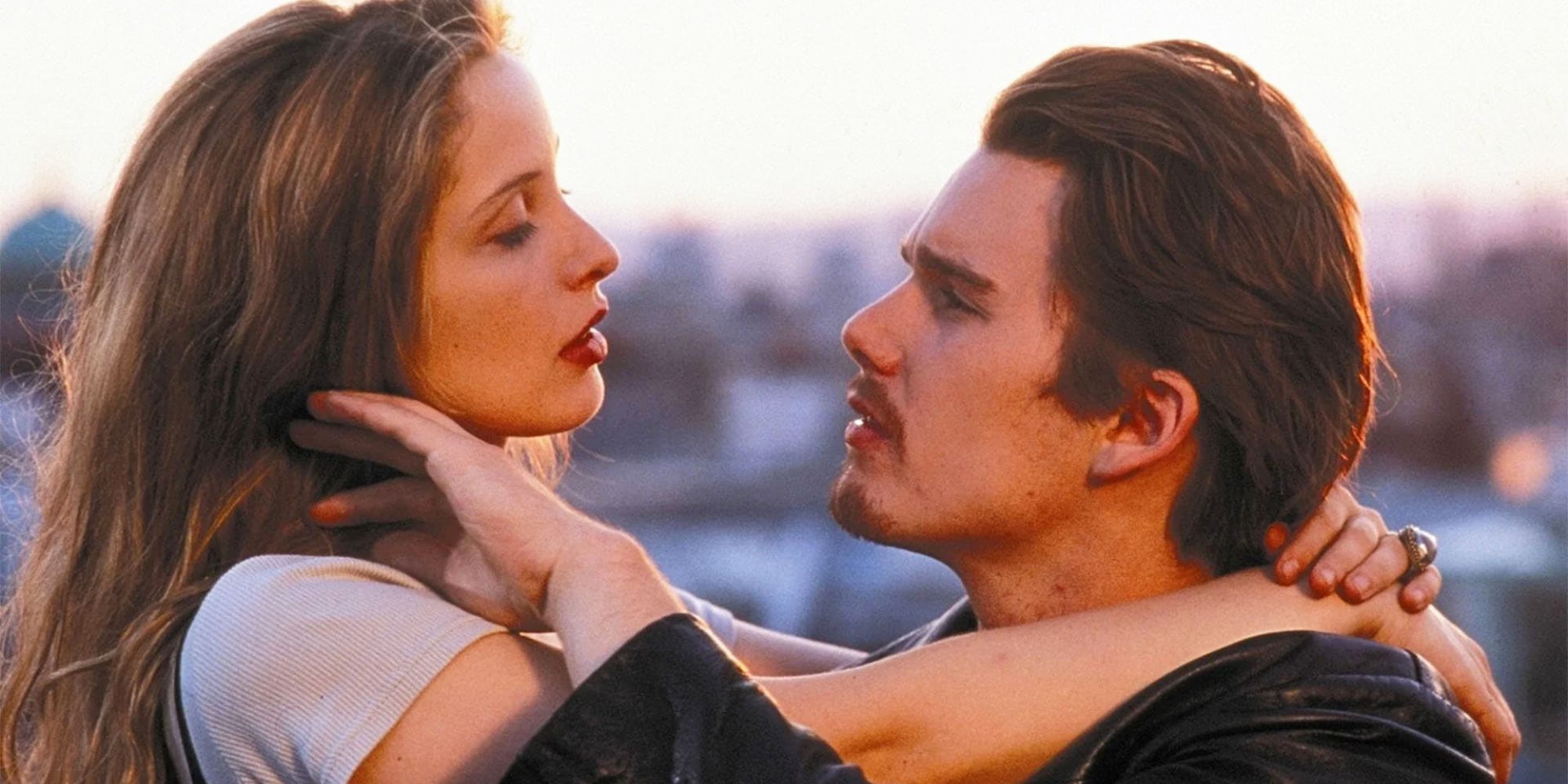
Where the previous trilogies on this list followed a childhood, one man's experience in wartime, another's to hell and back, and a teen's travels through time, Richard Linklater's Before trilogy is the story of a relationship. It's told over three days across eighteen years, from the first moments of romantic connection to years later of marriage woes. Made in close collaboration with its two stars, Ethan Hawke and Julie Delpy, the trilogy finds beauty not in grand romantic gestures but in the smaller, casual ones.
Jesse (Hawke) and Céline (Delpy) meet on a train to Vienna, where they spend the night together and part in Before Sunrise. They reconnect nine years later in Paris, where they spend a day together with plans to part again in Before Sunset, but they stay together instead. Another nine years later, Jesse and Céline are married and on vacation as a family in Greece, where they must solve their marital issues in Before Midnight. This trilogy is the perfect portrait of an imperfect relationship.
1 The Bourne Trilogy (2002-2007)

Based on the trilogy of novels by Robert Ludlum, the Bourne movies starring Matt Damon are not perfect adaptations. They take only the basic premise of the source material, that of an amnesiac spy, and rework it into a modern thriller that evolved considerably in the wake of 9/11. From director Doug Liman to Paul Greengrass, the original three films form a perfect trilogy of identity and morality punctuated by dizzying action scenes.
The Bourne Identity begins with Jason Bourne (Damon) awakening in the Mediterranean Sea. After he pieces together parts of his past as a CIA asset, he goes on the run and disappears. After his cover is blown and his wife is killed, he goes on the warpath in The Bourne Supremacy, where he rips the CIA apart and discovers even darker chapters of his past. Things come to a head in The Bourne Ultimatum as he brings the fight home and finally uncovers the deepest buried secrets of his past. After that, the studio tried to carry on the legacy in a spin-off with Jeremy Renner that was dead on arrival, and then they brought back the original Jason Bourne. Those two unnecessary films are futile filler, while the original trilogy is lethally efficient perfection.

The Bourne Identity
- Release Date
- June 14, 2002
- Runtime
- 119 minutes
- Director
- Doug Liman
- Writers
- Tony Gilroy, William Blake Herron, Robert Ludlum
KioskNews shows a cleaned-up reading view extracted from the publisher’s page — the original always lives on their site, not ours.