'Where To?' Israeli director explores bond between Palestinian driver, Jewish passenger in Berlin
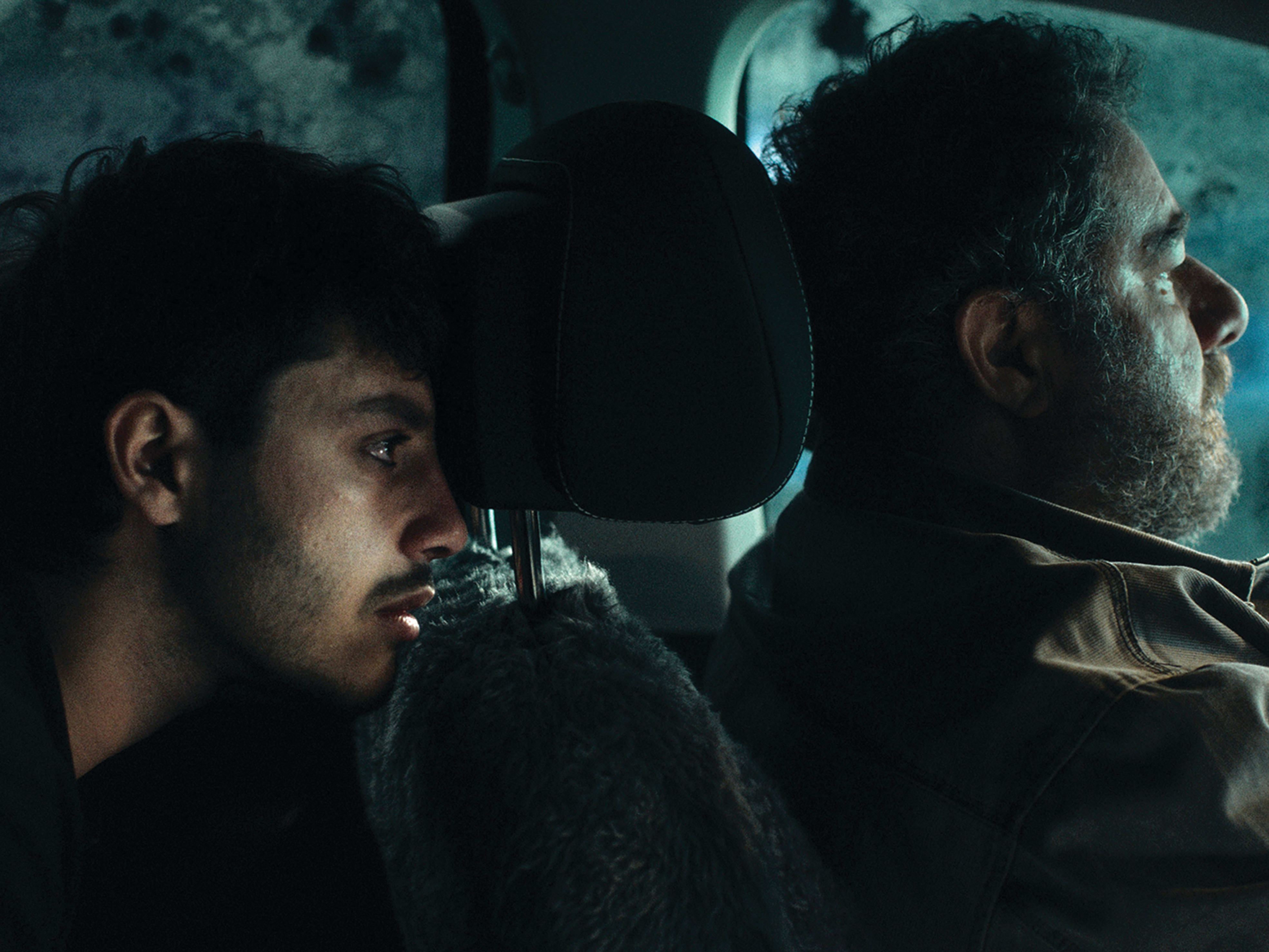
Assaf Machnes, the director of the movie Where To?, which opens in theaters throughout Israel on Thursday, said that a simple cab ride sparked the idea for this film, which tells the story of an unlikely bond that develops between a Palestinian Uber driver and a young Israeli passenger in Berlin.
“Like most of my previous films, it all starts with an experience that I got to go through, and then I end up asking myself, ‘What if?’
“In this case, it was winter in Berlin, and I was developing this series for ARTE, but I was also there for a love story that went in all the wrong directions. I was quite miserable and disconnected.
“Toward the end of the visit, I found myself in the taxi of a Palestinian Uber driver, and I felt that we understood each other without saying much,” said Machnes, who is based both in Tel Aviv and Berlin.
“There’s something very special, very intimate about a taxi ride, especially one-on-one… It’s an opportunity to connect because it doesn’t have this sense of commitment. It’s two people who will probably never see each other again.
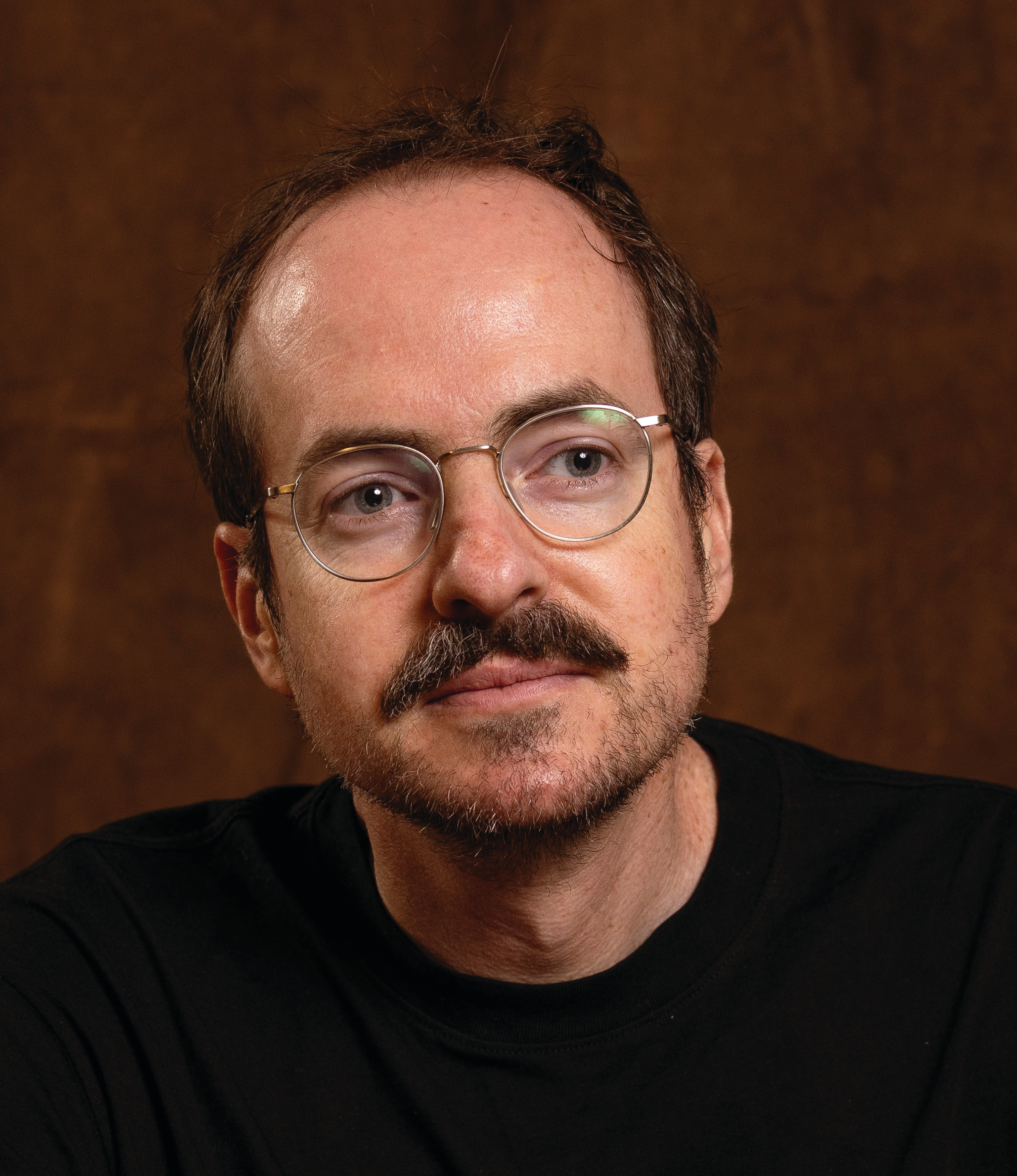
“I felt like we understood each other based on exile. I don’t know why. We didn’t talk much, but it felt like there was this quiet connection that intrigued me. I started wondering, ‘What if I ended up living in Berlin and I kept on meeting this driver?’”
His attempt to answer this question led him to create the film, which won rave reviews after its world premiere earlier this year at the Berlinale, the Berlin International Film Festival.
'Where To?' lead actors both win Ophir Awards
In September, its two lead actors, Ehab Salami, who plays the driver, Hassan, and Ido Tako, who plays the passenger, Amir, won Ophir Awards for their performances in a highly competitive year.
This success wasn’t surprising for anyone who had seen Where To? because it is an intense, moving film that is first and foremost a touching human drama about lonely, isolated people far from home, but it also deals with barriers between Jews and Arabs.
Each character has a complex backstory, a trauma that they are trying to forget. Hassan is struggling with a disappointment from years ago that still shadows his life, and with the fact that his daughter, who is fully integrated into German society, has a serious German boyfriend.
Hassan buries himself in work, while Amir is trying to cope with a family tragedy and tries to numb himself with drugs and clubbing.
“I started to figure out what kind of dynamic it could be. What kind of connection could it be without making fake promises, without falling into clichés? … Through the development process, I realized that I wanted my protagonist to be the Uber driver, the 55-year-old man.”
Much of the movie is set in the cab, an environment that begins to seem claustrophobic, since it reflects Hassan’s dark state of mind. Berlin is a dynamic, exciting city, but he doesn’t seem to notice anything except for the traffic.
Amir might at first seem to fit the stereotype of the Israeli after the army who is partying, but he is often anxious and depressed. The tourist Berlin has faded far into the background for both of them.
As he wrote Hassan’s story, he found himself inspired by different people. “Hassan is based on two main characters. One is a guy called Tarek from Ramallah, whom I met in Berlin, who was doing COVID tests.
I started writing the movie at the very peak of the first winter of COVID. He has a pretty similar story to Hassan’s… It’s also based on, or inspired by, on some level, my father, who died at Hassan’s age and was a man full of regret and full of ‘what ifs’ in his mind.”
He also worked with a Palestinian screenwriter to fine-tune the character and translate some dialogue into Arabic.
Like Amir, Machnes said he had often felt he was able to get to know Palestinians better when he met them in Berlin than he did in Israel.
“We rarely get to talk to the people who live among us, around us, next to us, and it’s crazy how few channels there are… It’s interesting that you have to go away to get into the real stories.
“It’s something I always like to explore: the ideas we bring with us, but then how the actual moments and intimate relationships overcome those ideas.”
'For me, absurdity and humor are a must.'
In one part of the movie, Hassan and a relative of his have a little fun at the expense of a tourist couple, which is incredibly funny.
“For me, absurdity and humor are a must. I do stand-up comedy sometimes in Berlin. All my films have a certain amount of absurd humor, this kind of humor that doesn’t really tell you where to laugh… It was really important for me to have that scene inside. It’s almost like oxygen for me to know that I also have that scene.”
He is pleased that audiences around the world laugh at this scene. “It’s not related to nationality. They laugh everywhere. The best thing is that both Israelis and Palestinians laugh at this scene.”
At the heart of the film, though, is the connection that forms between the main characters. “It was clear to me from the first drafts that I wanted to explore, to some extent, this unstated father-son bond. That’s where I find the magic between Hassan and Amir.”
To bring this complex aspect of the film to life, Machnes had to find the right actors. “My favorite part of the entire process, from the moment you start writing a script until you lock the picture, is working with the actors.
“It gives me the biggest amount of satisfaction and pleasure when something super authentic comes across on camera, despite all the technicalities of the film set. I personally think maybe 70% of good acting is good casting. For me, they fit the roles a lot.”
Salami, a theater director, previously won an Ophir Award for Best Supporting Actor for his performance in Eran Kolirin’s Let It Be Morning. Machnes said he acts only occasionally, when he finds the right role.
“Ehab had all the qualities of an actor, because he knows how to read texts; he’s familiar with the set and everything. But he also has all the qualities of a non-actor, and that’s very rare.
“There were other actors who did great auditions, but I chose him because I felt I could watch six hours of him just driving and looking at people through the rearview mirror. He says so much without saying anything. It brought me back to that first ride that initiated the movie.”
When he met with Tako, one of Israel’s most in-demand young actors who is currently starring in the television series The Escape, he felt he had found the right performer to portray Amir.
“We had two weeks of rehearsals in Berlin. All the rehearsals were inside a car. I never did rehearsals in a room, because I feel it’s a very specific type of communication where people actually don’t see each other most of the time.
“It’s almost like a church booth, where it’s like, ‘Forgive me, Father...’ Most of the time, there is no eye contact. The eye contact is very interesting because it’s through the mirror.”
Israeli films face difficulties being screened worldwide
Machnes is pleased with the film’s success so far, but acknowledged it was not easy being an Israeli director hoping to get a movie shown worldwide these days.
“We were lucky to sell this movie to 12 territories for cinema distribution. Let’s see how many of them will actually release it.”
He said the movie had been accepted into and then rejected from several film festivals.
“What people don’t understand is that by boycotting or silencing Israeli culture, they’re not contributing to the solution, obviously… I can only hope it will change.”
Ultimately, he said, the movie has helped him process difficult emotions, and he hopes it will have a similar effect on audiences.
“It shows my struggle in life: When do you go toward the emotions? When do you go toward the pain, and when do you just keep driving?” he said.
“That’s why I dedicated it to all those men who simply kept driving. So often we don’t process what we’re going through, and we just press the gas.”
KioskNews shows a cleaned-up reading view extracted from the publisher’s page — the original always lives on their site, not ours.