Space rocks reveal how early solar system separated rock from ice-rich dust
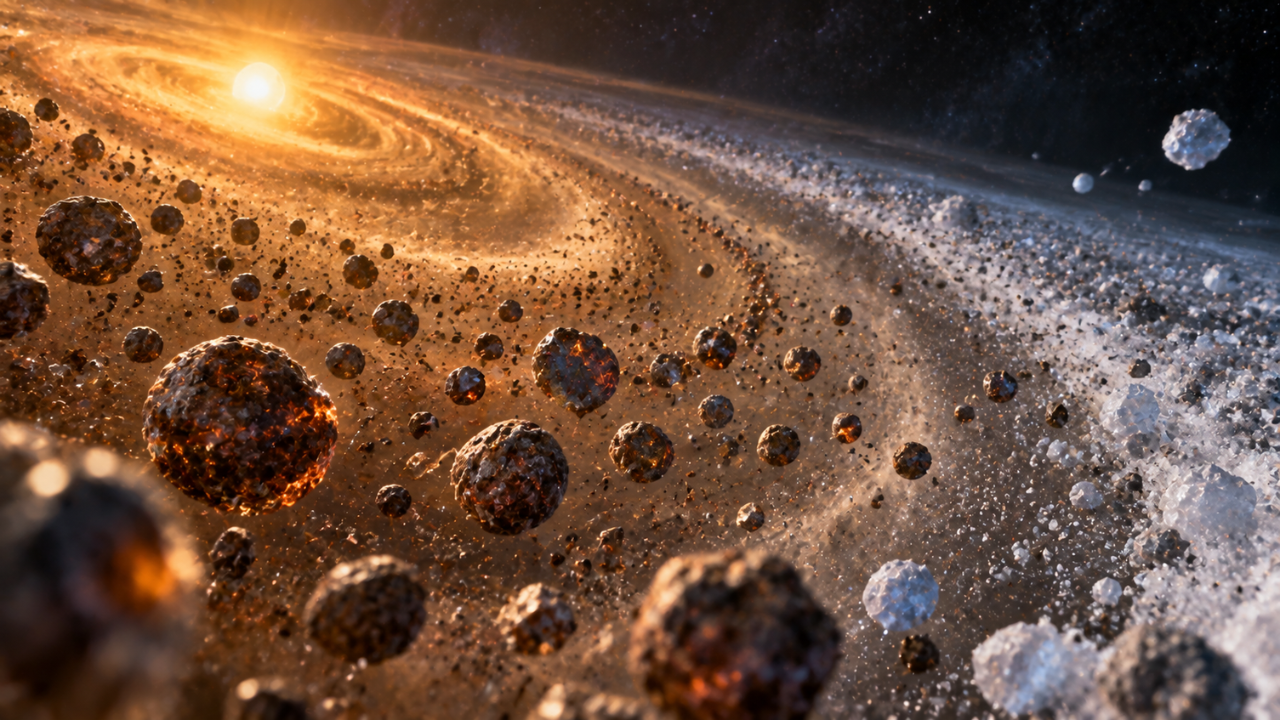
Image AI generated
During the Solar System’s first million years, its earliest outer worlds appear to have formed from a carefully filtered mix of material, with heat-forged chondrules making up between 83% and 92% of their composition.
In the young disc, aerodynamic sorting separated these rocky grains from fine matrix containing water ice and organic molecules, leaving the first planetesimals unusually poor in volatile-rich dust. According to the new study published in Nature Astronomy, titled ‘Planetesimal compositions governed by aerodynamic sorting from the onset of Solar System formation’, because many of these ancient bodies later melted, researchers turned to iron meteorites for chemical clues. Sulfur and iron oxidation measurements independently indicated matrix levels of just 8% to 17%, supporting evidence that this sorting began almost immediately.
Aerodynamic sorting separated rocky chondrules from ice-rich dust
The young Solar System was surrounded by a disc of gas and solid particles, and the different particles did not necessarily move through that environment in the same way. The study's findings indicate that aerodynamic effects preferentially sorted the larger, heat-processed chondrules from the fine-grained matrix. The result was that some of the earliest planetesimals incorporated far less of the volatile-rich, ice-bearing material than later bodies did.
This distinction matters because the matrix was not simply ordinary dust. According to Yale University, it was fine-grained and loaded with water ice and organic molecules, while chondrules were heat-forged rocky particles. The Nature Astronomy paper likewise describes carbonaceous chondrites as mixtures of volatile-rich matrix and thermally sintered, volatile-poor chondrules. Together, these findings show that the earliest planetesimals were assembled from a strongly filtered mixture of material rather than from an undifferentiated reservoir of dust.
Iron meteorites reveal early space rocks
Studying these earliest planetesimals is difficult because the original bodies did not survive intact. According to Yale, some of their parent bodies accumulated enough radioactive aluminium-26 to melt completely. That melting destroyed the physical evidence of their original chondrule-to-matrix proportions, leaving researchers unable to examine the material directly.Researchers instead turned to iron meteorites from the outer Solar System and searched for chemical traces that could reveal what their parent bodies had originally contained.
Two independent indicators were particularly important: sulfur, which is concentrated in matrix material, and the oxidation state of iron, which provides information about the amount of water ice and oxidised dust incorporated into the original body.
Both indicators produced matrix estimates of only 8% to 17%.
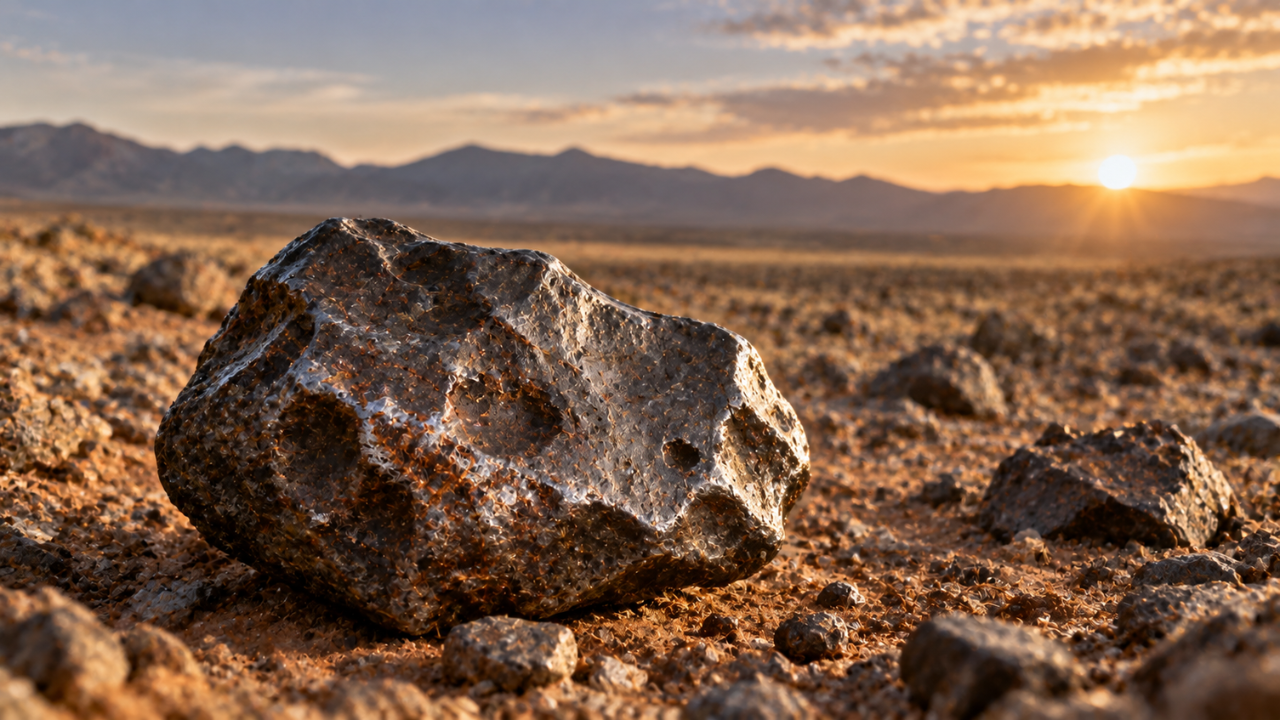
Image AI generated
Why ancient chondrules are rare in meteorites
The agreement between the two chemical indicators strengthened the researchers' findings. Damanveer Grewal, the study's first author, said, “Both tracers independently tell the same story: these early planetesimals were remarkably matrix-poor.” The Nature Astronomy study concludes that aerodynamic sorting was already influencing planetesimal composition during the Solar System's earliest epoch. The findings also help explain why ancient chondrules are scarce in the meteorite record.
Many were incorporated into bodies that later melted, erasing their original physical evidence.
KioskNews shows a cleaned-up reading view extracted from the publisher’s page — the original always lives on their site, not ours.