10 Classic Thriller Books Worth Reading Again and Again

Jeremy has more than 2900 published articles on Collider to his name, and has been writing for the site since February 2022. He's an omnivore when it comes to his movie-watching diet, so will gladly watch and write about almost anything, from old Godzilla films to gangster flicks to samurai movies to classic musicals to the French New Wave to the MCU... well, maybe not the Disney+ shows.
His favorite directors include Martin Scorsese, Sergio Leone, Akira Kurosawa, Quentin Tarantino, Werner Herzog, John Woo, Bob Fosse, Fritz Lang, Guillermo del Toro, and Yoji Yamada. He's also very proud of the fact that he's seen every single Nicolas Cage movie released before 2022, even though doing so often felt like a tremendous waste of time. He's plagued by the question of whether or not The Room is genuinely terrible or some kind of accidental masterpiece, and has been for more than 12 years (and a similar number of viewings).
When he's not writing lists - and the occasional feature article - for Collider, he also likes to upload film reviews to his Letterboxd profile (username: Jeremy Urquhart) and Instagram account.
He has achieved his 2025 goal of reading all 13,467 novels written by Stephen King, and plans to spend the next year or two getting through the author's 82,756 short stories and 105,433 novellas.
Sign in to your Collider account
If you read books once, even great ones, that’s good. That’s better than not reading anything at all. It’s hard to find the time sometimes to read things fully, but it is rewarding once you get into the habit, because even if books get adaptations into other mediums, those adaptations aren’t always ideal (and often, even when they are done well, there’s still a lot you can only get from the source material).
So, if you’ve got even more time on your hands, or otherwise feel capable of re-reading a few books, these ones are probably worth tackling. Or, well, re-tackling. Reading again? Whatever sounds better. These are great thriller books that are rewarding to read again and again, often because they're overwhelming and heavy on details and/or they have some pretty great plot twists that might be even easier to admire once you’ve read the book one time and the shock of those revelations has worn off.
10 'The Hunt for Red October' (1984)

The Hunt for Red October came out when the Cold War was still ongoing, and so while it might not be as timely now, it’s an interesting snapshot of the times. But more importantly, it holds up as a thriller regardless of the broader conflict it’s set against, being the first of the Jack Ryan books, and one with a great premise, too: there’s a Soviet submarine captain who goes rogue while being equipped with some immense weaponry, and chaos ensues.
Well, people work to stop things from getting too chaotic, but The Hunt for Red October is certainly tense, and it’s written in a way where you can believe something bad will happen at any point (even if you know, reading post-1984, that Jack Ryan has a fair few more books/events to get wrapped up in). It’s a strong thriller/war novel, and a good starting point for Tom Clancy, since it was his first published novel and all.
9 'Jurassic Park' (1990)
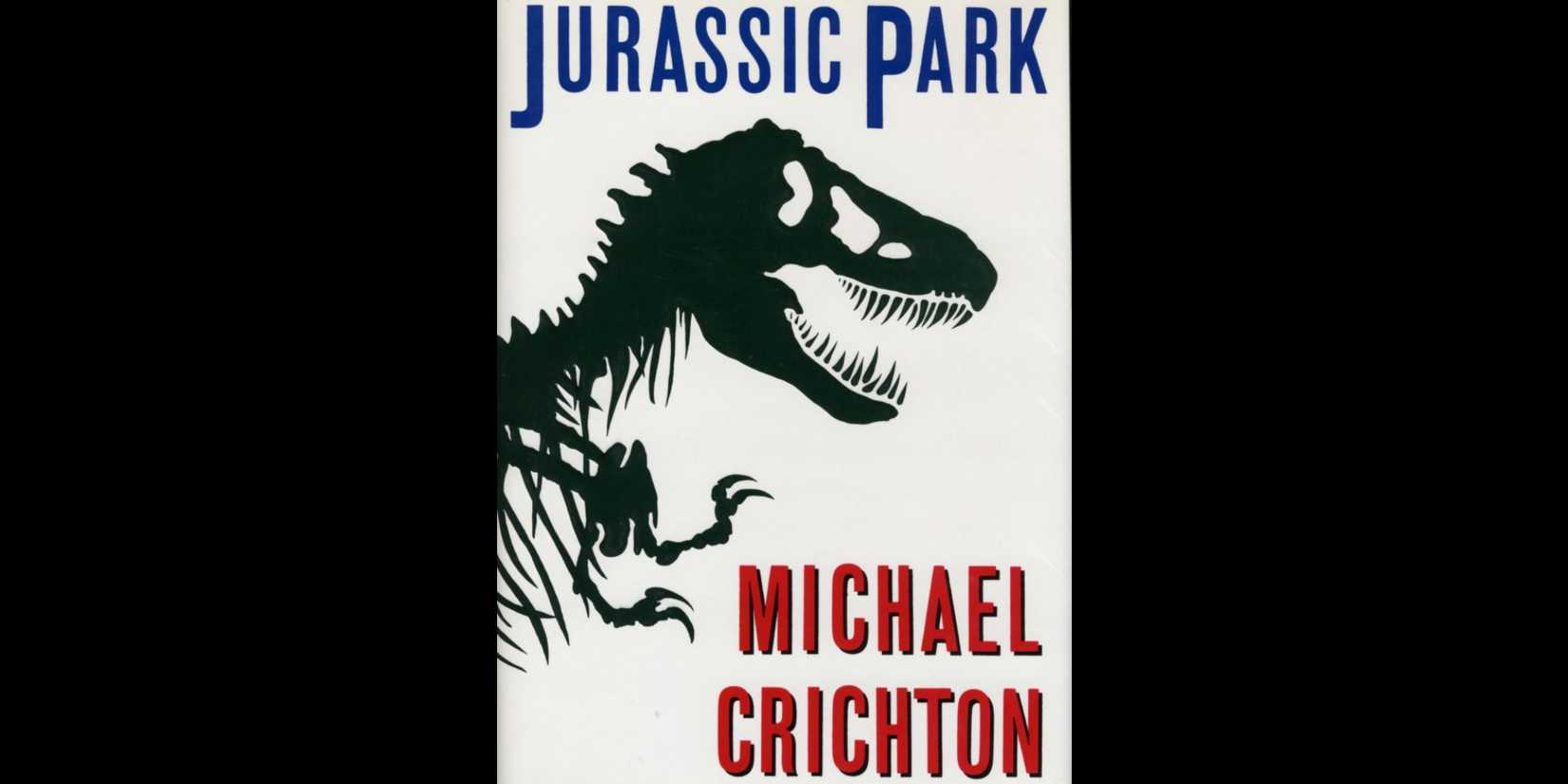
If you like science fiction, you can’t go wrong with the better-known Michael Crichton novels, since he did very much like writing within this genre, and Jurassic Park is no exception… though this one might be a bit more thrilling than some of his earlier hard sci-fi books. Make no mistake: there’s still a lot of science in this science fiction, but the whole bringing dinosaurs back to life thing does ultimately give Jurassic Park a bit more in the excitement department.
As long as you're not expecting something as thrilling or broadly enjoyable as the film adaptation (which is tense for sure, but gentler overall), then the original Jurassic Park is well worth diving into. There’s a lot here, and so as with the case with all books overflowing with ideas, going back to them and reading it again is always helpful.
8 'Rebecca' (1938)
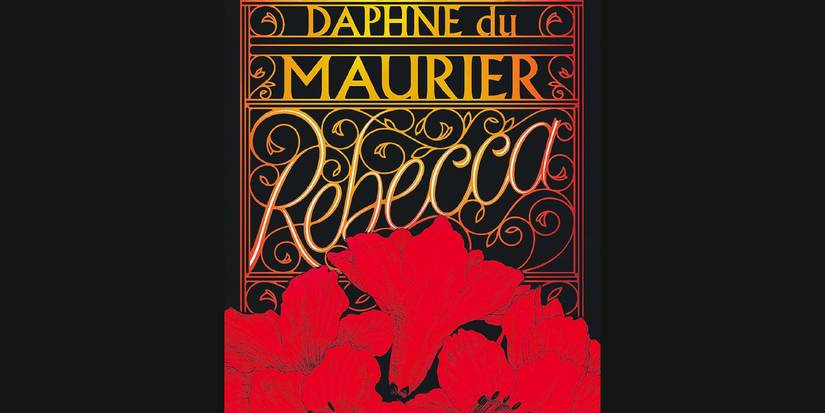
There was a famed movie adaptation of Rebecca just a couple of years after the book came out, and it’s notable for being the only Alfred Hitchcock-directed film to win Best Picture. On its own, though, and just looking at the book, it’s a classic with or without that noteworthy movie, since it’s one of the best gothic novels of all time, and one with a good deal of mystery, crime, and romance elements, alongside some other things.
You can call it a thriller, but perhaps more of a slow-burn one that rewards patience, and then it has enough by way of reveals that re-reading Rebecca will also prove rewarding. It’s about a young woman whose first name is never learned, and she becomes the second wife of a mysterious man who shows increasingly troubling signs that he’s haunted by the death of his first wife. Some patience is needed to go with it while it’s all unfolding, but it’s more than worth it and everything.
7 'The Running Man' (1982)

Living up to its title, The Running Man keeps things going at a very fast pace, and that’s extra appropriate when you learn that Stephen King (under his Richard Bachman pseudonym) wrote this in a shorter period of time than it might take you to read some of the author’s longest books. The similarly titled The Long Walk might be more horrifying, and ultimately more psychologically devastating (as well as better overall), but The Running Man has more thrills.
Stephen King (under his Richard Bachman pseudonym) wrote this in a shorter period of time than it might take you to read some of the author’s longest books.
It is unapologetically a thriller alongside being a work of dystopian science fiction, with the premise here involving one man’s struggles to survive a deadly competition that’s like extreme reality TV, and involves people trying to kill you the whole time. It’s a high-risk/high-reward show (well, on paper, there are rewards), and it’s ultimately such a wonderfully quick read, being the sort of thing that’s hard to put down once you start. So, the idea of returning to it doesn’t feel like too much of a leap, nor an especially big time commitment.
6 'The Black Dahlia' (1987)

The Black Dahlia is the first book in the L.A. Quartet series, though the books generally have different characters at their centers, with references and thematic similarities, sure, but not much by way of continuity between books until you get to some shared narrative elements between books #3 and #4 (L.A. Confidential and White Jazz). All four books get progressively more complicated, too, meaning The Black Dahlia feels refreshingly straightforward in comparison, even if it’s quite dense and harrowing by most other standards.
It’s the most focused on a real-life crime out of any book in the quartet, with the titular case being infamously grisly and unsolved: that of the murder of Elizabeth Short, who became known as the Black Dahlia. There are fictional characters who get wrapped up in this real-life murder case, and it all makes for a great psychological thriller book dealing with obsession, and comparable to Rebecca in the sense that it feels like it’s a book about being haunted, too (though here, not in a horror/supernatural sense).
5 'House of Leaves' (2000)

If you judge it as a postmodern book, House of Leaves is not one of the hardest to follow, so long as you get used to some of the strange stylistic and formatting decisions. By most other metrics, though, it’s pretty full-on and confounding, since it’s about a guy researching another guy who was researching a documentary film about a strange sort of haunted house.
But then different discoveries are made at different levels, and lots of things cross over and/or appear uncertain. The book itself does strange things that make you feel like you're going a bit mad as well, like all the characters, and so calling House of Leaves exceptionally immersive would be quite an understatement. Still, it’s also extremely entertaining and ambitious with all the genres and emotional beats it goes for, so diving into it all again at some point feels pretty much essential and undoubtedly rewarding.
4 'The Silence of the Lambs' (1988)

The most legendary of the Hannibal Lecter books would have to be The Silence of the Lambs, and sure, that’s also something you can say about all the movies featuring the character. The Silence of the Lambs just has the most by way of stuff going on, with Lecter himself being imprisoned and used by an FBI trainee who is after another serial killer actually at large… or is she being used by him?
Or both? You know the drill. You’ve either read the book or seen the movie, or perhaps you’ve done both, because that’s always very much worth doing. There’s a great dynamic here between Lecter and Clarice Starling, as the two main characters of the book, and then the more outward/traditional villain, Buffalo Bill, is no slouch in the “gets-your-heart-racing-and-your-stomach-feeling-queasy” department. Sure, that department does need a catchier name, but you get the sentiment, right?
3 'The Talented Mr. Ripley' (1955)
The Talented Mr. Ripley centers on a man named Tom Ripley, and he is talented in the sense that he definitely knows how to be a con artist, and he continues his conning ways in a whole series of books. But The Talented Mr. Ripley is the first, and probably the best, being about what happens when Tom becomes infatuated with another man named Dickie Greenleaf, aspiring to have just about everything that Dickie has.
If you're worried about spoilers for a 70-year-old book… uh, well, there’s something dramatic that happens, maybe more dramatic than in most books, and then there’s a whole series of consequences that follow that event. It’s textbook stuff maybe, but also executed so well, with Patricia Highsmith being one of the all-time greats when it came to crafting this kind of psychological thriller/crime story.
2 'Misery' (1987)
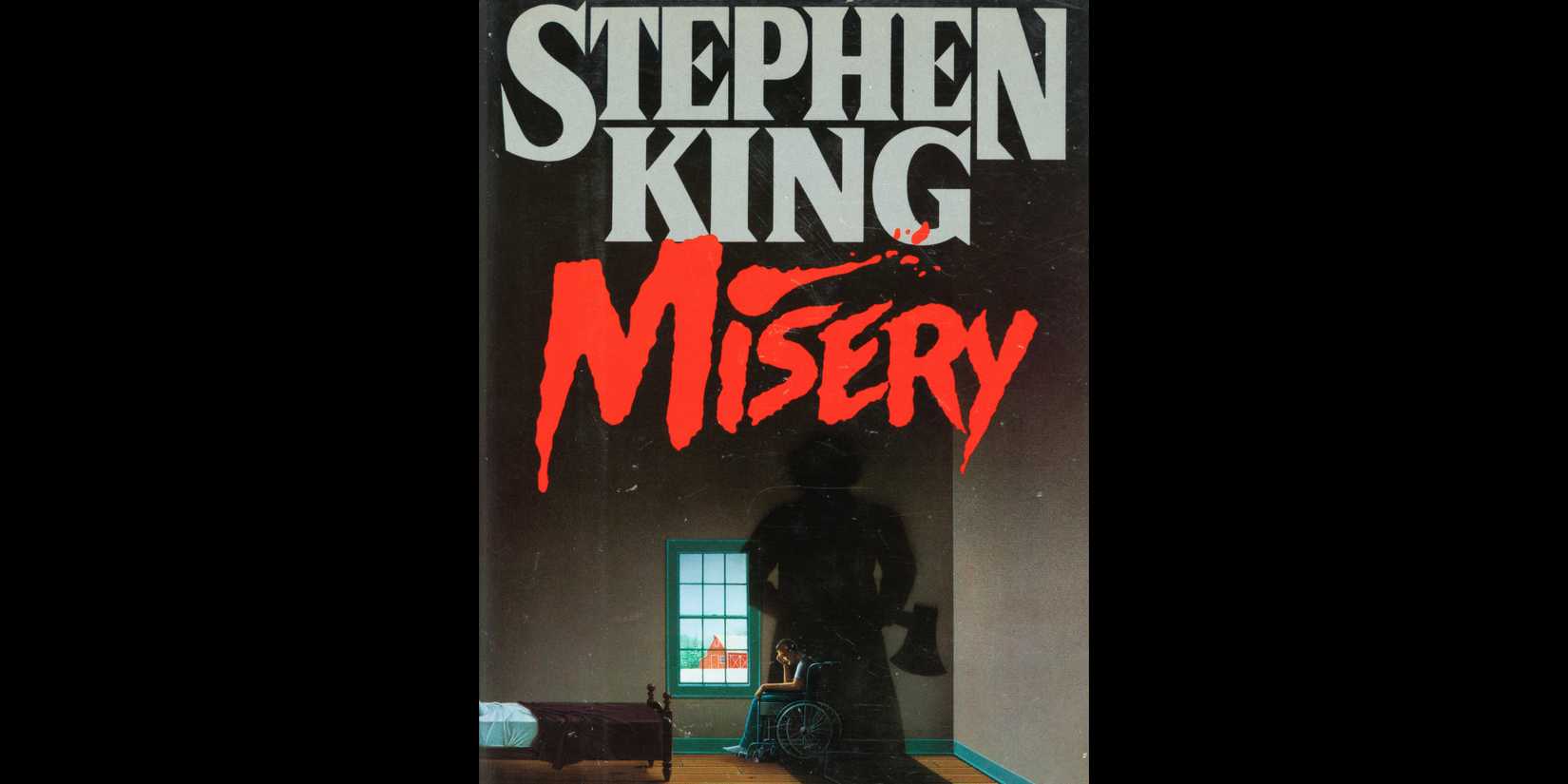
Stephen King knows his way around the horror genre, without a doubt, and Misery does see him tackling horror while also doing what’s probably his strongest effort as far as ventures into psychological thriller territory go. Here, things also feel pretty grounded, since Misery has a villain who’s famously terrifying without having any fantastical or otherworldly powers, and the protagonist is memorably at odds with her the whole time, since he’s an author she’s a fan of, and she’s kidnapped him.
From there, things get more intense and gruesome, and protagonist Paul Sheldon is indeed one of the Stephen King characters who’s gone through the most misery (ha), and that’s saying something. Overall, Misery is one of the very best Stephen King books, and so long as you’ve got the stomach for some of the grislier scenes, it’s probably one worth returning to sooner rather than later.
1 'And Then There Were None' (1939)

Agatha Christie is the quintessential murder-mystery writer, and so her books are very thrilling, and sure, some – like And Then There Were None – cross over a little genre-wise (there are some borderline-horror elements here, honestly). In any event, that level of praise is not really something that can be said casually, but she earns it, and this novel is perhaps her best. It’s got the greatest premise imaginable for such a book, since it’s about a bunch of people on an island getting murdered one by one.
The slowest it gets is right at the start, because you do need to have some introductions for the characters (or murder victims), and you care just enough before the murdering and dying starts happening. And Then There Were None is truly relentless once it gets going, and the re-readability of it all is obvious: like, it’s fun to be surprised the first time around, but then the second time, it’s neat to appreciate all the foreshadowing and better understand how Christie toys with you the first time around.

And Then There Were None
- Release Date
- October 30, 1945
- Runtime
- 97 Minutes
- Director
- René Clair
KioskNews shows a cleaned-up reading view extracted from the publisher’s page — the original always lives on their site, not ours.