Exile has not broken young Rohingya people. But survival cost us more than our homes | Ajas Khan

Nine years ago, I was forced to flee my home in Maungdaw township, Rakhine state, Myanmar. I was 13 years old. I remember how quickly an average day turned into a day when life felt extinguished, leaving behind the place where I grew up with my family.
Even now, when I go to sleep, what comes into my mind is the memory of that journey, the fear of not knowing what awaited me. It took three days to reach refuge.
With so many others, my family and I crossed the Naf River into Bangladesh. But survival came at a high price: the price of my home, my liberty, my life.
I am Ajas Khan, a climate activist, youth leader and Rohingya genocide survivor.
Nine years is a long time for a child to grow up, to feel at home, or not to feel at home if the place you are staying in is not your country.
It is a long time for the whole family to wait, in exile, seeing another generation grow up in the camps. The people of Bangladesh have given us a safe place to stay, which we are incredibly grateful for and can never forget. Humanitarian organisations have saved many lives. However, a plastic shelter is not a permanent solution. It can provide a place to sleep, but little else in the way of home, citizenship, freedom or dignity.
But the exile has not broken us. Young Rohingya people are studying, caring for each other, and survivors are telling their stories. We are not just victims; we have a history, a culture, a home and dreams for the future.
When we speak of justice, we do not seek revenge. Survivors want the truth to come out about those who have committed genocide against the Rohingya people, and for the international community to continue to provide all possible support. Those responsible for these crimes must be brought to justice, which will allow us a future away from the brutality of the past.
It makes no difference if the perpetrators are soldiers or politicians, state actors or non-state actors. If they destroy homes, expel people, take away their lives and nothing happens to them, they will do the same again.
Nine years is more than enough. Time must never become an excuse for impunity.
I’ve never for one second let go of the hope of returning to my home. Going home doesn’t mean just crossing back over the Naf River. It means going home with full human rights in our motherland, without fear, with our citizenship, security, equality, land and livelihood restored. Our healthcare and education.
There is no choice between being rendered stateless and living in the camps, or repatriation without rights. Return without citizenship is no solution at all.
On this ninth anniversary, I would like to raise the point that decisions over the fate of the Rohingya people must no longer be made by any entity other than the Rohingya themselves.
The government of Bangladesh and NGOs have made immense sacrifices to care for Rohingya refugees, navigating the immense humanitarian and economic implications of hosting more than a million Rohingya in Bangladesh. It is understandable that the government of Bangladesh might want to make concessions in its negotiations to ensure solutions can be brokered, and to engage with anyone claiming authority in Myanmar who could contribute to this goal. But such concessions should not come at our expense.
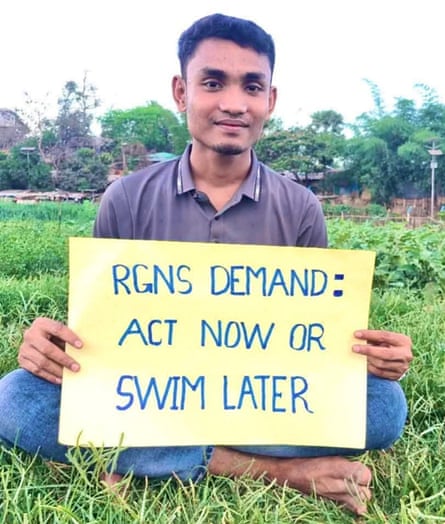
The Rohingya are not a footnote; we are a people with a history, and our future can no longer be dictated either by governments or armed groups. Should the governments of Bangladesh or Myanmar, or the Arakan Army in Rakhine, or any other interlocutor, make decisions, then Rohingya representatives must be at the table.
We give our breath to our future. And through all these years of fighting, our identity is still there and our dreams have not gone away, despite the pain.
I remember all the people who were lost during the 2017 massacres, and those who survived but are still being chased and hated. I think about the people whose families are broken, who have injuries, and those whose childhood was taken away.
Rohingya children should grow up with different stories – not of loss, but tales of returning home. We need justice; we need to be recognised as humans; we need our citizenship; we need accountability. And we need to go home.
I want our next generation to hold their lives in their own hands and not in those of strangers. I want them to see our land, not just hear stories.
For me, I have spent nine years in a foreign refugee camp without a future, in an open jail, and I’m still waiting for hope to return.
KioskNews shows a cleaned-up reading view extracted from the publisher’s page — the original always lives on their site, not ours.