Pageantry matters for US-China summits, even with modest results
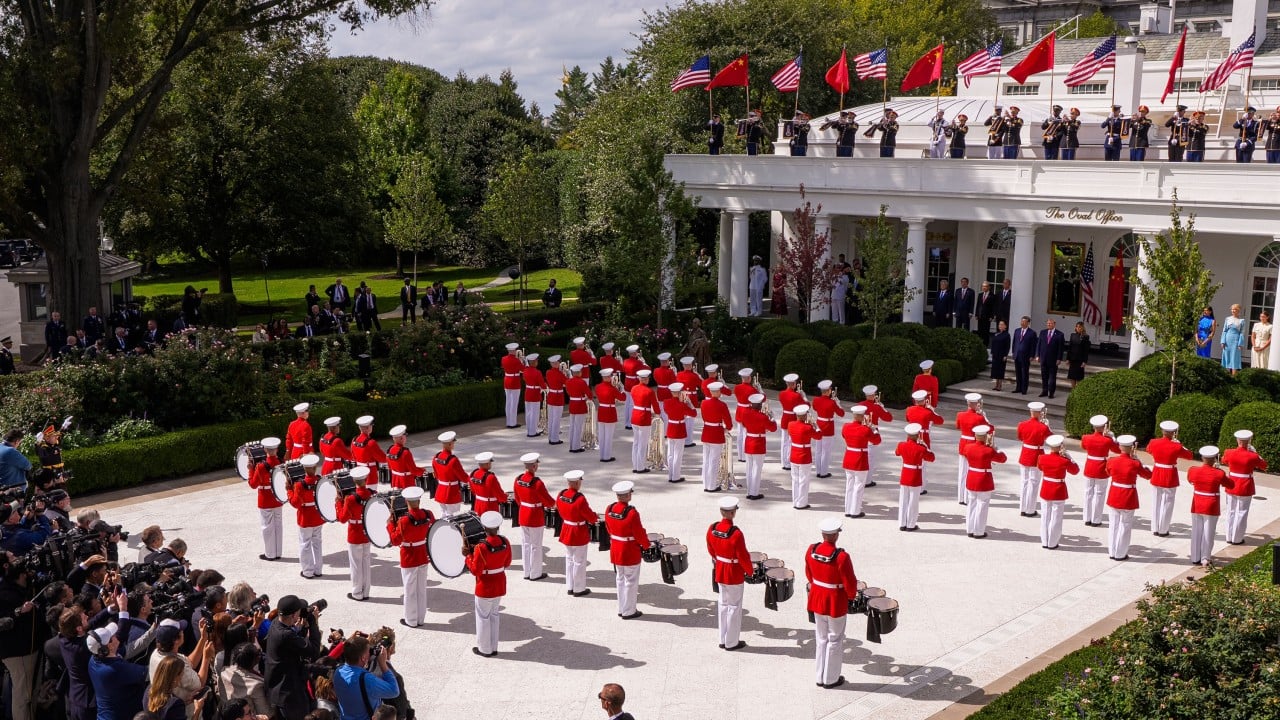
The most consequential outcome of President Xi Jinping’s Washington visit might be his US counterpart Donald Trump’s unusually lavish welcome. It told Beijing, US allies and global markets that, however fierce the strategic rivalry, China’s importance makes sustained diplomatic engagement essential.
The airport greeting, lavish banquet at the White House and flyover by military aircraft restored the appearance of a workable relationship between two powers. Even so, Beijing has learned not to mistake presidential warmth for policy assurance.
Trump visited Beijing only four months earlier. That May meeting produced plans for new trade and investment boards alongside Chinese commitments on aircraft and agricultural purchases. Yet in July, Trump’s administration imposed new tariffs on goods from 60 trading partners, including China, alleging they had failed to curb imports made with forced labour.
That history gives the gentler symbols of the Washington visit their proper scale. The arrival of two giant pandas, Ping Ping and Fu Shuang, at Atlanta’s zoo was the visit’s softer punctuation mark and an enduring diplomatic symbol of friendship in a relationship that remains challenging.
For Xi, the choreography mattered. A Chinese leader received with military honours and a White House banquet is plainly not being treated as the representative of a lesser power. The message to a domestic audience was that China must be dealt with on equal terms, even by a US administration that has made economic pressure and national advantage central to its foreign policy.
The welcome also served a political purpose for Trump. He has a habit of treating personal diplomacy as proof of presidential authority. The hospitality also carried a political message: courtesy could be presented not as weakness but as confidence. The image was of a president confident enough to extend courtesy while claiming to have extracted trade concessions in return.
WATCH: China-US presidential summit welcome ceremony
Trump’s pat on Xi’s shoulder drew attention but should not be excessively analysed. More significant was his decision to avoid publicly provoking or embarrassing Xi. That restraint was diplomacy in itself.
However, Beijing has reason to be cautious. During Trump’s first term, Xi welcomed Trump and his wife Melania to Beijing in November 2017 with similarly warm hospitality and carefully managed optics. The goodwill was short-lived as Trump’s administration began imposing tariffs and announcing further levies on Chinese imports in early 2018, setting off the US-China trade war.
This time, the two sides’ trade truce lasts only until January 10. The harder questions have simply been deferred.
The notable feature of the Washington visit was therefore its division between symbolism and substance. The symbolism was rich: pandas, gifts, ceremonial welcomes, cultural diplomacy and the presence of Xi’s wife Peng Liyuan alongside the president. For all the ceremony, the results were modest: the truce was extended to January, and both sides recommended US$30 billion of non-sensitive goods in each direction for more favourable tariff treatment. These are useful steps, but they do not amount to a wider settlement.
That distinction matters particularly for Hong Kong. The city has every reason to welcome a less volatile US-China relationship. It benefits when commercial and financial decisions are not distorted by the prospect of sudden tariff shocks, restrictions or geopolitical tensions.
00:51
Giant pandas Ping Ping and Fu Shuang settle into new home in Atlanta zoo
A steadier atmosphere can support investor confidence, fundraising and cross-border trade. Hong Kong’s relationship with the United States is not the same as China’s, though. Improved US-China sentiment does not necessarily translate into a change in US policy towards Hong Kong.
SCMP Plus is a new premium news platform that gives you an
all-inclusive edge to stay ahead on China news.
To access our exclusive content you’ll need to subscribe.
Already a subscriber?
LOG IN
That is why this month’s Asia-Pacific Economic Cooperation forum finance ministers’ meeting matters. Hong Kong is hosting the gathering for the first time, bringing senior economic officials together at a difficult point in US-China relations. Such work can help companies, investors and households, but it does not alter the distinct US policy framework governing its relationship with Hong Kong.
Executive Order 13936, signed in 2020, ended much of Hong Kong’s separate treatment under US law. Once the order expired in July, the Trump administration revised rather than dismantled parts of its sanctions regime. Chief Executive John Lee Ka-chiu and other Hong Kong officials remain sanctioned, while property blocked before July 14 remains blocked.
This produces an interesting contrast. At the highest level, the US and China can manage ceremony, conversation and limited compromise. Hong Kong, ranked third globally and first in Asia-Pacific in the latest Global Financial Centres Index, is largely absent from public accounts of those discussions.
The pandas’ arrival in Atlanta is a small but welcome sign that the two sides still see value in maintaining contact. It settles nothing, but its significance shouldn’t be dismissed. For Hong Kong, a calmer relationship between Washington and Beijing is in the city’s best interests.
KioskNews shows a cleaned-up reading view extracted from the publisher’s page — the original always lives on their site, not ours.