Despite pre-Oct. 7 warning, PM reportedly opposed strikes in Gaza for fear they’d undermine Saudi peace talks
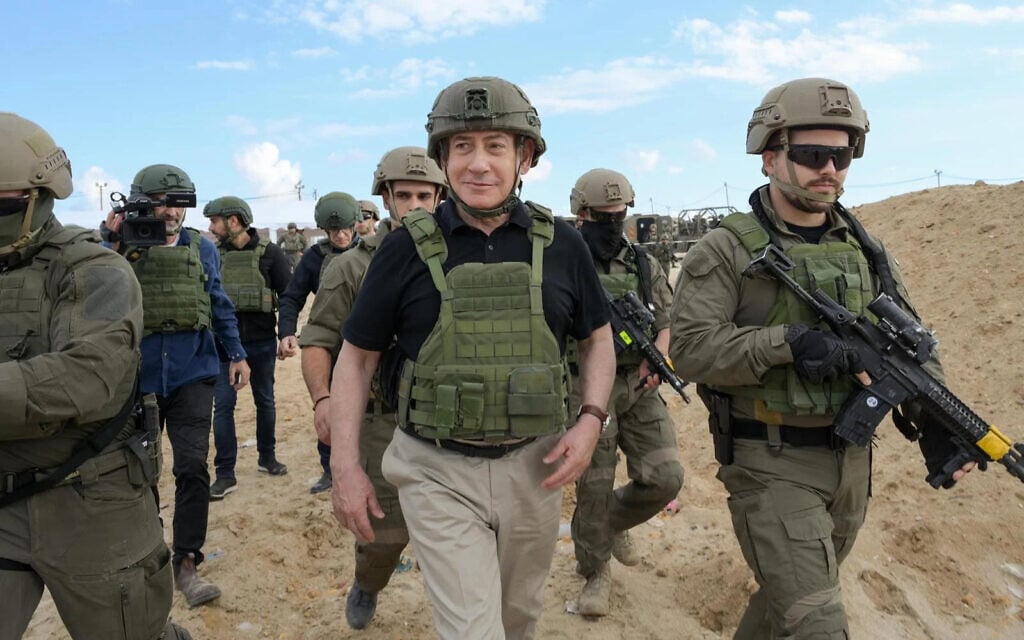
After receiving a personal warning from the United Arab Emirates about a potential major offensive being planned by Hamas in the days leading up to the terror group’s October 7 onslaught, Prime Minister Benjamin Netanyahu reportedly told his security chiefs that he didn’t want to authorize strikes in Gaza because they could have risked harming an ongoing effort for Saudi Arabia to normalize relations with Israel.
The revelation was made in a Friday New York Times report that built on earlier reporting from Haaretz about a call Netanyahu received from UAE President Mohammed bin Zayed days before the Hamas invasion and massacre. Netanyahu has denied that such a call took place, but multiple outlets, including The Times of Israel, have confirmed that it did.
Netanyahu subsequently held a meeting with his security chiefs about the situation in Gaza on October 1, 2023, but did not inform them of bin Zayed’s message that Hamas was considering a major attack against Israel, NYT said.
0:00 / 0:00
Promoted: Nefesh B'Nefesh - Aliyah is Now

Instead, the premier stressed that Israel’s goal should be to maintain calm in Gaza, and even pushed back when some security officials proposed carrying out military strikes on Hamas leaders in the Strip who were overseeing attacks against Israelis in the West Bank, minutes from the meeting obtained by The Times showed.
Netanyahu expressed concern that military action in Gaza might harm ongoing negotiations on a normalization agreement between Israel and Saudi Arabia.
Get The Times of Israel's Daily Edition by email and never miss our top stories
By signing up, you agree to the terms
Such an agreement would have required Israel to make significant concessions toward Palestinian statehood, which Netanyahu and his hard-right government oppose. Saudi Crown Prince Mohammed bin Salman said the sides were moving closer, less than a month before the Hamas attack.
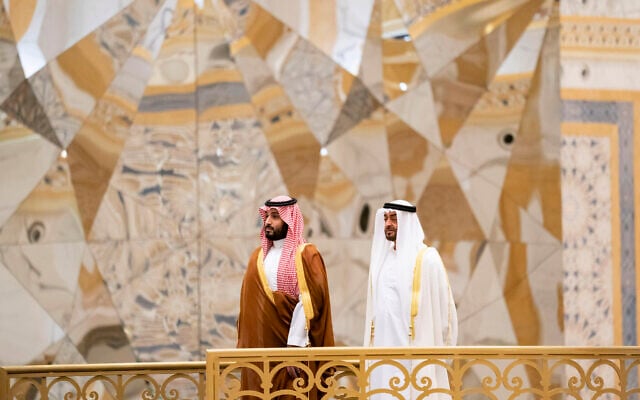
Internal Hamas documents obtained by Israel during the Gaza war showed that the terror group’s attack was partially motivated by a desire to thwart Riyadh’s rapprochement with the Jewish state.
Two sources familiar with the call between Netanyahu and bin Zayed have told The Times of Israel that the Emirati leader wanted to confirm that the prime minister had received the intelligence that one of the UAE president’s aides had passed along about an imminent Hamas attack being potentially planned against Israel. Netanyahu said he had received the message and assured bin Zayed that he was dealing with it.
The sources clarified that the intelligence did not include concrete information on a Hamas attack, just that something significant was being planned.
The intelligence that led bin Zayed to personally raise the issue with Netanyahu came from former Palestinian Authority minister Sufian Abu Zaida, who served as an intermediary between Israel and Hamas in failed talks during the months leading up to the October 7 attack about an extended truce.
Abu Zaida told the Egypt-based pan-Arab Alghad TV network earlier this month that he had received a warning from then-Hamas chief Yahya Sinwar that an “earthquake” was coming after the talks with Israel stalled.
The former PA minister then passed the message along to ex-PA Gaza security chief Mohammed Dahlan, who serves as a close adviser to bin Zayed. Abu Zaida is part of a breakaway Fatah faction headed by Dahlan.
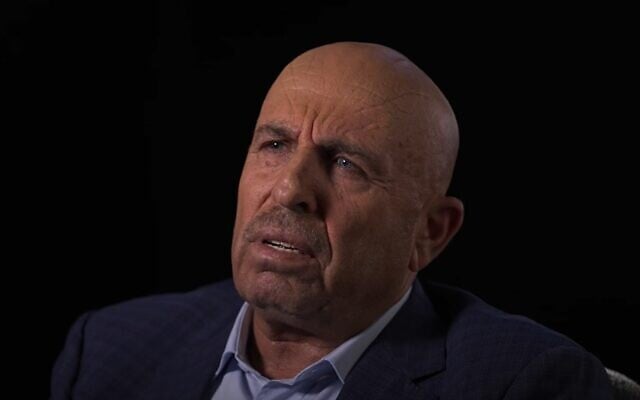
After receiving the warning from Abu Zaida, Dahlan asked the mediator to meet again with Sinwar to verify the seriousness of the latter’s threat.
Such a sit-down was held in mid-September 2023, with Sinwar repeating the threat and asking Abu Zaida to pass it along word for word.
Dahlan then informed bin Zayed of the warning, and on September 15, 2023, Abu Zaida also told a Shin Bet contact of Sinwar’s message, Haaretz reported.
Then-Shin Bet chief Ronen Bar requested an immediate phone call with Netanyahu and told him about the “earthquake” threat from Sinwar. The prime minister agreed to hold a consultation with the heads of the relevant Israeli security agencies.
The briefing was held two days later, but no concrete steps were approved. Shortly thereafter, bin Zayed called Netanyahu himself to confirm he had received the warning.
Jacob Magid contributed to this report.
Help us report truthfully on social media

As a multimedia journalist, my job is to take the quality, fact-based journalism produced by The Times of Israel newsroom and make it accessible across every platform — from Instagram posts to podcasts to short-form videos.
This is how many, especially young people, consume news these days. But misinformation is rampant on social media. Our team at ToI produces accurate, responsible short-form reporting on Israel and the Jewish world.
If you believe in the importance of factual social media journalism, please consider joining our reader support group, The Times of Israel Community. Your financial support is essential to sustain responsible multimedia reporting.
— Gabriella Jacobs, multimedia journalist
Support our work Support our work Already a member? Sign in to stop seeing this
KioskNews shows a cleaned-up reading view extracted from the publisher’s page — the original always lives on their site, not ours.