More than 16,000 seniors to benefit from new active ageing framework
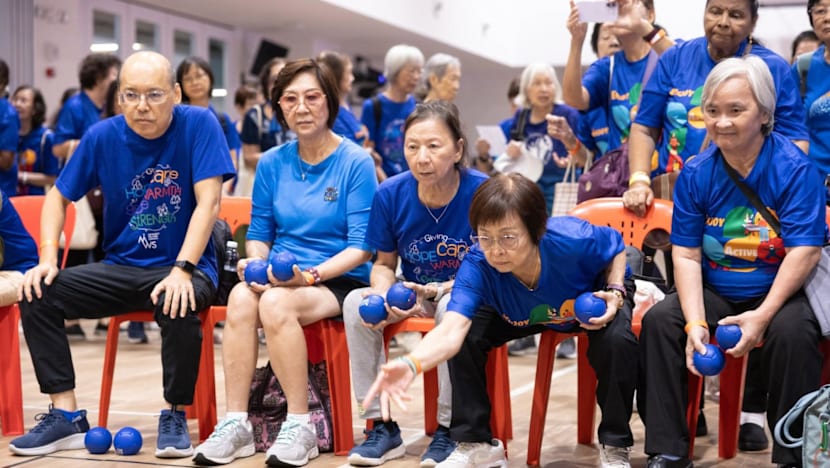
The initiative will guide programmes across Methodist Welfare Services’ seven Active Ageing Centres, with a focus on keeping seniors socially connected.
New: You can now listen to articles.

This audio is generated by an AI tool.

02 Oct 2026 05:35PM
SINGAPORE: More than 16,000 seniors will be able to take part in activities ranging from adaptive sports to drone flying and digital skills under a new active ageing framework by Methodist Welfare Services (MWS).
Called Harmony, the initiative will guide programmes across the charity’s seven Active Ageing Centres in Singapore. It will focus on areas such as social connectedness, physical activity, cognition and senior empowerment.
Dr Raymond Leong, MWS’ group director of healthcare services, said the framework was designed to provide a consistent approach that could be scaled across its centres, while allowing seniors to decide what they want to do there.
It was co-developed with seniors and staff and includes three signature programmes: sports adapted for different abilities, monthly social gatherings, and activities aimed at engaging older men who may be more socially isolated.
ENCOURAGING SENIORS TO STEP OUT OF HOME
At MWS’ Sims Place centre, the Men-Only Happy Hour has been running since 2023.
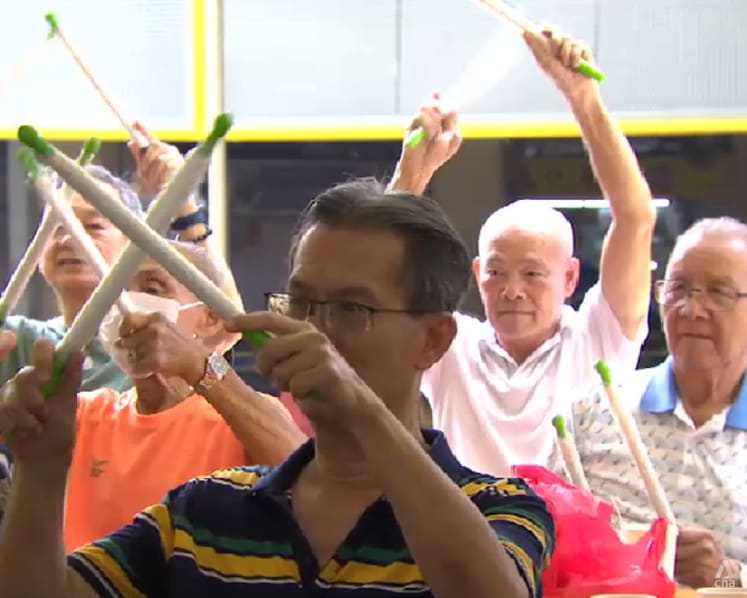
Held in a void deck setting, the weekly gathering gives male seniors a space to chat over coffee and snacks, play games and exercise.
Among the participants is retiree Thomas Choong, 70, who first joined after coming across a banner advertising the gathering.
“After retirement, we are (in) social isolation at home. Nothing much we do. We don't get to meet friends so often. So I used to come here to gather around, and then there's other men who are here,” he said.
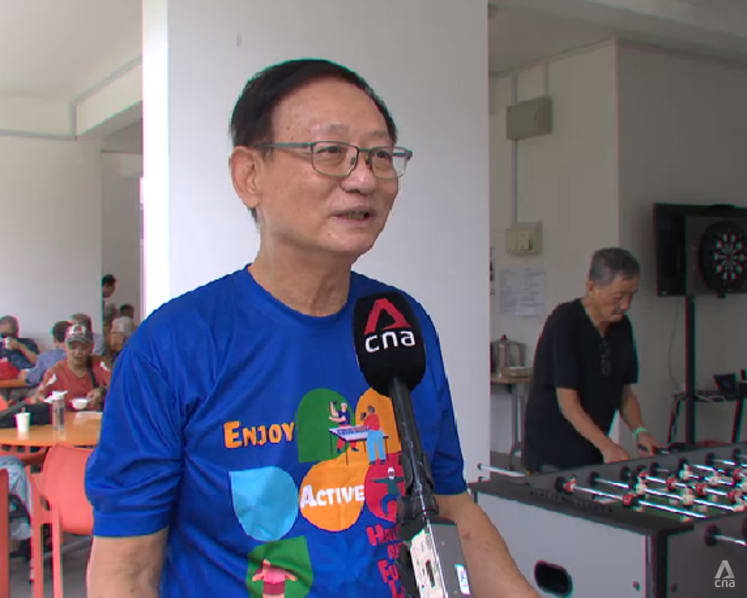
Mr Choong has since become a volunteer, helping centre staff to introduce short exercise sessions during the weekly gatherings, including simple drum-beating to music to get participants moving.
He also approaches seniors he meets around the neighbourhood, telling them about the centre and encouraging them to join its activities.
Those who tend to stay at home can be harder to reach, he said, adding that more effort was needed to encourage them to step out.
ACTIVITIES FOR DIFFERENT ABILITIES
Another part of the framework is an adaptive sports programme, which modifies activities so that seniors with different physical abilities can take part.
“(It) really focuses on the physical domain of seniors to have physical enablement, and so that they can actually have that foundational pillar to be able to engage in other activities,” said MWS' Dr Leong.
About 280 participants took part in MWS’ inaugural Senior Olympics Day at Fernvale Community Club on Thursday (Oct 1), where they tried some of these activities.
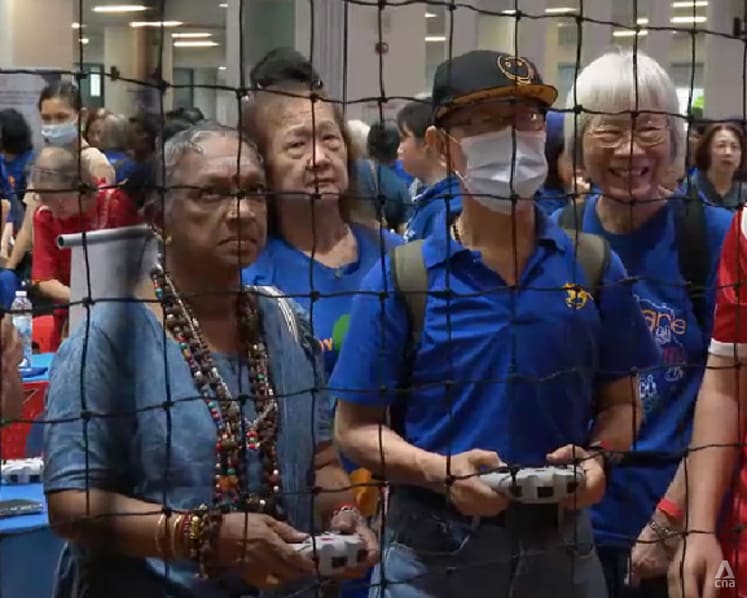
These included bocce bowls, seated volleyball, bean bag toss and drone soccer, while participants also learnt about artificial intelligence.
Other adaptive sports offered by MWS include boccia, badminton and basketball.
The third programme, Ling Ling Time, was rolled out at MWS’ Sims Place and Kebun Baru centres in 2024.
Senior volunteers help plan and run its monthly activities, which include exercise, cognitive games and communal meals.
SOCIAL CONNECTIONS A PRIORITY
One in four Singapore citizens is projected to be aged 65 and above by 2030.
Minister in the Prime Minister’s Office Ng Chee Meng said supporting the country’s ageing population went beyond healthcare.
Speaking at the Senior Olympics event, Mr Ng, who is also Adviser to Jalan Kayu Grassroots Organisations, said such activities not only encouraged seniors to stay active but also helped them form friendships with people from different parts of Singapore.
He added that the government would continue efforts to provide more active ageing centres and programmes for seniors.
“As our population gets older, it is not only in healthcare that we take care of you, but also in our social connections and activities. This is a definite priority,” he said.
For Mr Choong, getting seniors involved has also changed how some neighbours relate to one another.
“They start talking instead of (being) strangers walking on the roadside,” he said. “So with this, at least they meet each other.”
KioskNews shows a cleaned-up reading view extracted from the publisher’s page — the original always lives on their site, not ours.