Netflix’s R-Rated Sci-Fi Masterpiece Delivers A Masterclass In Dialogue-Free Storytelling


Dhruv is a Lead Writer in Screen Rant's New TV division. He has been consistently contributing to the website for over two years and has written thousands of articles covering streaming trends, movie/TV analysis, and pop culture breakdowns.
Before Screen Rant, he was a Senior Writer for The Cinemaholic, covering everything from anime to television, from reality TV to movies.
After high school, he was on his way to become a Civil Engineer. However, he soon realized that writing was his true calling. As a result, he took a leap and never looked back.
Sign in to your ScreenRant account
Netflix's sci-fi catalog includes quite a few ambitious sci-fi shows. However, when it comes to being bold and wildly experimental, only a few seem to fit the bill. Some of the more mainstream offerings on the streaming service remain relatively straightforward and conventional. One sci-fi masterpiece, though, defies many storytelling rules and even refuses to have dialogue as a narrative device.
The Netflix sci-fi show in question is Love, Death and Robots. Considering how the series is an anthology that refuses to confine itself to one genre or visual identity, Love, Death and Robots's episodes experience many radical shifts in quality. Some of its episodes refuse to leave you long after the credits start rolling, while others are quite forgettable.
Yet, Love, Death and Robots deserves to be touted as a masterpiece because of its willingness to broaden the scope of sci-fi storytelling. It achieves this by tapping into everything from cosmic horror to dystopian fiction, cyberpunk, and speculative philosophy. In one of its best episodes, the Netflix sci-fi show even delivers 17 minutes of storytelling mastery with no dialogue.
In Just 17 Minutes, Love, Death & Robots’ “Jibaro” Tells A Gripping Story With No Dialogue

Alberto Mielgo's "Jibaro" is the ninth episode in Love, Death and Robots' season 3. In its opening moments itself, "Jibaro" wastes no time and instills feelings of discomfort in viewers with its eerie animation style. Sitting between hyperrealism and painterly expressionism, it almost comes off as a weird live-action footage.
This is when it introduces its central and mythical Siren. As her lore suggests, she uses her voice to lure men towards her and drown in the lake she homes. The myth, however, is carefully dismantled though the introduction of a deaf knight who is immune to her acoustic weapon. What begins as a simple tale about lust gradually turns into a depiction of a toxic relationship.
More themes of codependency, greed, and mutual ruin emerge as the episode walks through the stages of the Knight and the Siren's relationship. In just 17 minutes, the episode shows how a simple attraction immediately devolves into plunder through violent transactions between the two. The characters say nothing, but their actions speak volumes.
The only semblance of dialogue seen in the episode lies in the Siren's deafening yet seductive shriek. This is contrasted by the Knight's inability to hear anything. To capture this, the episode shows subjective shifts in POV that show what the other knights hear compared to the central one.
Even the Siren's dance is so detailed and sharp in the episode that one can see everything from her predatory curiosity to her seductive desperation without her having to say anything. The need for any spoken word completely disappears as Love, Death and Robots "Jibaro" uses pure visceral imagery to tell its story.
Love, Death & Robots Is A Reminder Of What Sci-Fi Needs More Of

Considering how vast the sci-fi genre is, there is always room for stories that seem derivative and execute familiar ideas. However, the genre only grows when conventions are challenged and well-established rules and storytelling tropes are shattered. Many episodes in Love, Death and Robots struggle to leave their mark despite being unconventional and genre-bending.
Yet, it is hard not to see how they help sci-fi evolve. They pave the way for episodes like "Jibaro" to thrive, which, in turn, sets a high bar for more bold and experimental stories in sci-fi.
Love, Death and Robots was also partly inspired by the Heavy Metal magazine and its R-rated and no-holds-barred approach towards sci-fi storytelling. If it wasn't for the magazines, Love, Death and Robots probably would not have happened. Hell, even Neuromancer and Blade Runner would not have seen the light of day since they, too, were inspired by the same magazine.
Just as the Heavy Metal magazine pushed the boundaries of sci-fi to set the stage for shows like Love, Death, and Robots, the Netflix sci-fi masterpiece leaves the same influence on the genre that allows other movies and shows to redefine storytelling limits.
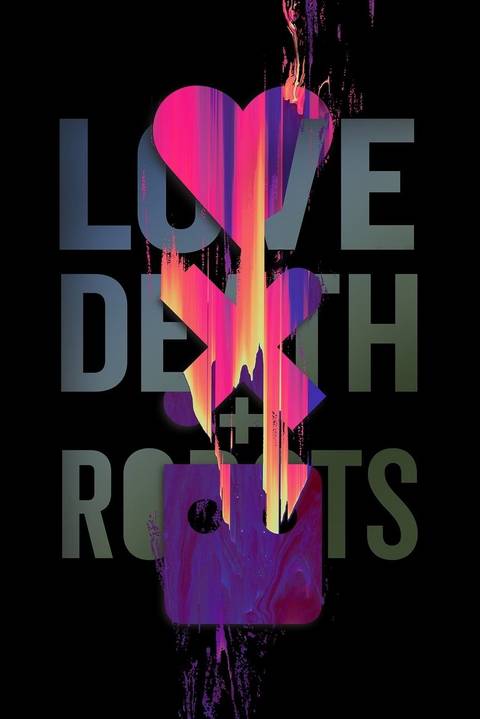
Love, Death & Robots
- Release Date
- 2019 - 2025-00-00
Love, Death & Robots is an anthology series released in 2019, presenting a collection of animated stories curated by Tim Miller and David Fincher. Each episode explores diverse genres, featuring terrifying creatures, unexpected twists, and elements of dark comedy.
- Network
- Netflix
- Cast
- Bruce Thomas, Jane Leeves, John Oliver, Nika Futterman, Rhys Darby, Scott Whyte, Sumalee Montano, Feodor Chin, Rahul Kohli, Ronny Chieng, Josh Brener, Mary Elizabeth Winstead, Topher Grace, Helen Sadler, Hayley McLaughlin, Omid Abtahi, Christine Adams, Hakeem Kae-Kazim, Anastasia Foster, Neil Kaplan, G.K. Bowes, Courtenay Taylor, Tudi Roche, Michael Benyaer, Matthew Yang King
- Directors
- Víctor Maldonado, Patrick Osborne, Robert Valley, Alfredo Torres Martínez, Jerome Chen, Emily Dean, Rémi Kozyra, Léon Bérelle, Dominique Boidin, Alberto Mielgo, Maxime Luère, Andy Lyon, Robert Bisi, Dave Wilson, David Nicolas, Simon Otto, Damian Nenow, Laurent Nicolas, Kevin Van Der Meiren, Vitaliy Shushko, Owen Sullivan, István Zorkóczy, Javier Recio Gracia, Oliver Thomas
- Writers
- Tim Miller, Philip Gelatt
- Main Genre
- Animation
- Creator(s)
- Tim Miller
- Executive Producer(s)
- Aaron Sims, Al Shier, Andy Williams, Antonio Canobbio, Ben Kalina, Caleb Bouchard, Chris Prynoski, David Fincher, Jack Liang, Jason Taylor, Jake Aust, Jennifer Miller, Joshua Donen, Lauren Siller, Luisa Murray, Nathalie Bergeron, Shannon Prynoski, Shuzo John Shiota, Tim Miller
- Producers
- Elena Volk, Jessica Ambrose, Alex Dos Santos, Andrew Chan Gladstone, Artur Zicz, Bill E. Miller, David Guti Rosado, Dennis Beier, Ellen Collins, Jialiang Pan, Jordan Harkins, Meg Darcy
- Seasons
- 4
- Where To Watch
- Netflix
KioskNews shows a cleaned-up reading view extracted from the publisher’s page — the original always lives on their site, not ours.