Brics leaders vow crackdown on ‘scam compounds’, push for coordinated global rules on AI
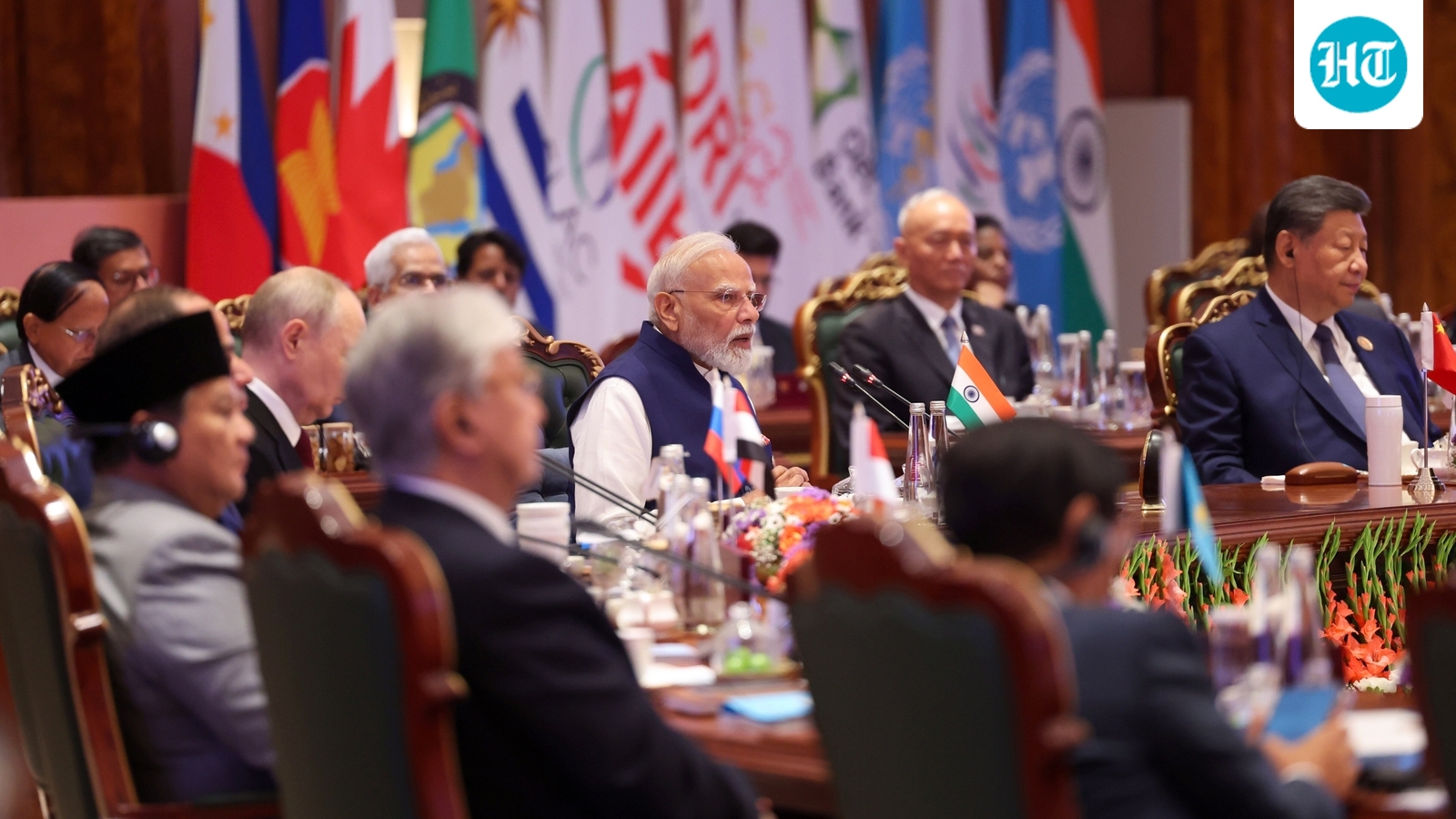
Between the usual mix of trade talk and climate pledges, the New Delhi Declaration issued by Brics leaders also addressed two increasingly urgent issues for the member states— the rise of organised digital fraud operations and the need for coordinated rules around AI.
The declaration, unanimously adopted by the 11 member countries of the bloc on Saturday, expressed serious concern over the proliferation of organised scam networks, specifically citing cross-border operations and alleged “scam compounds” that exploit digital technologies, payment systems, and vulnerable individuals. These operations often use fake investment platforms, romance scams, and fraudulent job offers to defraud victims before laundering proceeds through digital payment channels.
To counter this, the declaration calls for stronger cooperation between customs authorities, financial intelligence units, law enforcement agencies, tax authorities, and supervisory bodies. Telecommunications providers and technology platforms are also being asked to improve information-sharing and adopt data analytics to help detect and disrupt money laundering schemes earlier.
Also Read: Leaders back new ‘BRICS CONNECT’ platform to map skills, prepare future-ready workforce
On payments infrastructure, leaders reiterated that there is “no one-size-fits-all approach” to settling trade in local currencies, signalling that broader efforts to reduce reliance on the US dollar remain at an early, exploratory stage.
Sandeep K Shukla, cybersecurity expert and director at IIIT Hyderabad, said that while the declaration flagged cyber fraud, scam compounds in Southeast Asia, cross-border cybercrime, and called for cooperation between Brics countries through CERTs, financial intelligence units and law enforcement agencies, the cooperation on these matters is not binding and rather a show of requirements to solve transnational crimes.
He added. “It [declaration] also encouraged countries to sign the UN treaty on cybercrime but interestingly India is yet to sign the treaty whereas 70+ countries have signed. Privacy related laws is an issue that is flagged as a hindrance to full fledged cooperation especially sharing of PII information. In any case, from what I read, the declaration seems to acknowledge that cyber crime across various borders are problematic and hard to investigate without cooperation but does not go far enough to chart any roadmap on how to overcome such hindrances.”
The declaration also welcomed the establishment of a Brics Central Bank Hub for capacity building and endorsed conducting cyber security exercises on an annual basis to strengthen resilience in the financial sector, alongside efforts to prevent fraud in cross-border payment systems specifically.
Artificial intelligence featured prominently across the declaration, with applications referenced in sectors ranging from energy grids to tourism. The central commitment, however, was to implement the Brics Leaders’ Statement on the Global Governance of Artificial Intelligence, building on discussions at India’s AI Impact Summit and the World AI Conference held in Shanghai earlier this year.
The declaration frames AI as a significant opportunity for economic growth, particularly for developing economies, while emphasizing the need for safety, reliability, and energy efficiency in AI systems. Leaders underscored that international cooperation on AI should support a “just, fair, equitable and prosperous future,” with particular attention to ensuring Global South countries are not left behind in AI development.
The financial sector was flagged as an area requiring close monitoring, with leaders calling for an approach centred on the needs of emerging and developing economies when assessing the risks and opportunities posed by AI and quantum computing.
The declaration also raised concerns about intellectual property, noting that AI training data and models risk misappropriating or misrepresenting cultural knowledge and heritage from communities that are inadequately represented in existing datasets.
KioskNews shows a cleaned-up reading view extracted from the publisher’s page — the original always lives on their site, not ours.