Sharad Pawar Shows He Can Still Perform A Somersault At 85

"There are no permanent enemies and no permanent friends in politics, only permanent interests," goes the famous saying.
Sharad Pawar lives by it.
From being at the centre of the Congress-led INDIA bloc to now virtually knocking on the doors of the BJP-led NDA, Pawar's political journey has been a masterclass in political manoeuvring, strategic ambiguity and keeping all options open.
In a 2009 interview with NDTV, late veteran Congressman Pranab Mukherjee described it as Pawar's "mixed signals" game.
"He [Pawar] always gives mixed signals. Although it may not be desirable, it is inevitable... I have seen him doing it several times," Mukherjee had said.
His latest flip on delimitation is yet another reminder that, in Pawar's political playbook, alliances are tactical and loyalties negotiable.
At 85, the veteran leader has perfected a political style in which he rarely shuts doors, seldom burns bridges and almost always manages to remain in the reckoning, irrespective of which side of the political divide he occupies.
Advertisement - Scroll to continue
His latest position on delimitation, which has put him at odds with the Congress and the INDIA bloc, is another illustration of the Pawar playbook.
For the INDIA bloc, it is a reminder of an uncomfortable reality: Sharad Pawar may be a valuable ally, but he has rarely been an entirely predictable one.
Advertisement - Scroll to continue
The Politics Of Keeping Everyone Guessing
Pawar's political history offers enough examples to suggest that his delimitation somersault is hardly an isolated departure. His career has been dotted with dramatic realignments, tactical retreats and unexpected partnerships. He has often found himself on the side of those he was opposing just months earlier.
His first major act of political rebellion came in 1978, when he walked out of the Congress and joined hands with the Janata Party and Congress (U) to form a government in Maharashtra. At 38, Pawar became the state's youngest Chief Minister.
When Indira Gandhi returned to power in 1980, his government was dismissed. Six years later, Pawar returned to the Congress fold under Rajiv Gandhi.
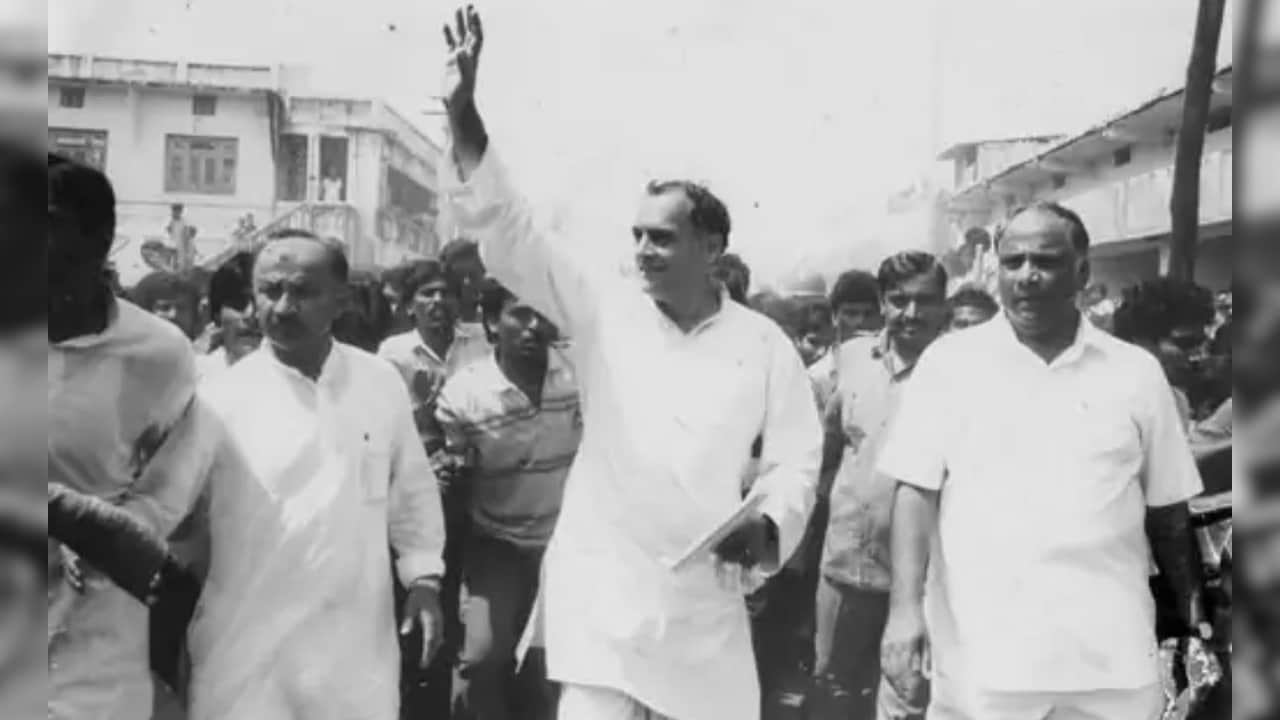
Sharad Pawar with Rajiv Gandhi
In 1999, he broke away from the Congress once again, questioning Sonia Gandhi's foreign origin, and founded the Nationalist Congress Party (NCP) along with PA Sangma and Tariq Anwar. Yet, the separation did not last long. Within months of its formation, the NCP joined hands with the very Congress it had broken away from to form a government in Maharashtra.
In 2004, Pawar became part of the Congress-led UPA government at the Centre and served as minister for a decade under Manmohan Singh.
The BJP, too, has been both a beneficiary and a target of Pawar's political calculations.
In 2014, after the BJP emerged as the single largest party in Maharashtra but fell short of a majority, the NCP offered it outside support. This was despite the two parties having contested the Assembly election against each other.
Pawar's explanation was that he wanted to ensure political stability and prevent a split in the NCP. The move also put pressure on the Shiv Sena, which was then negotiating with the BJP over government formation.
Then came November 2019.
After the BJP and Shiv Sena fell out over the chief minister's post, Pawar pulled off a remarkable political experiment by bringing together the Congress, Shiv Sena and NCP to form the Maha Vikas Aghadi (MVA) government under Uddhav Thackeray.
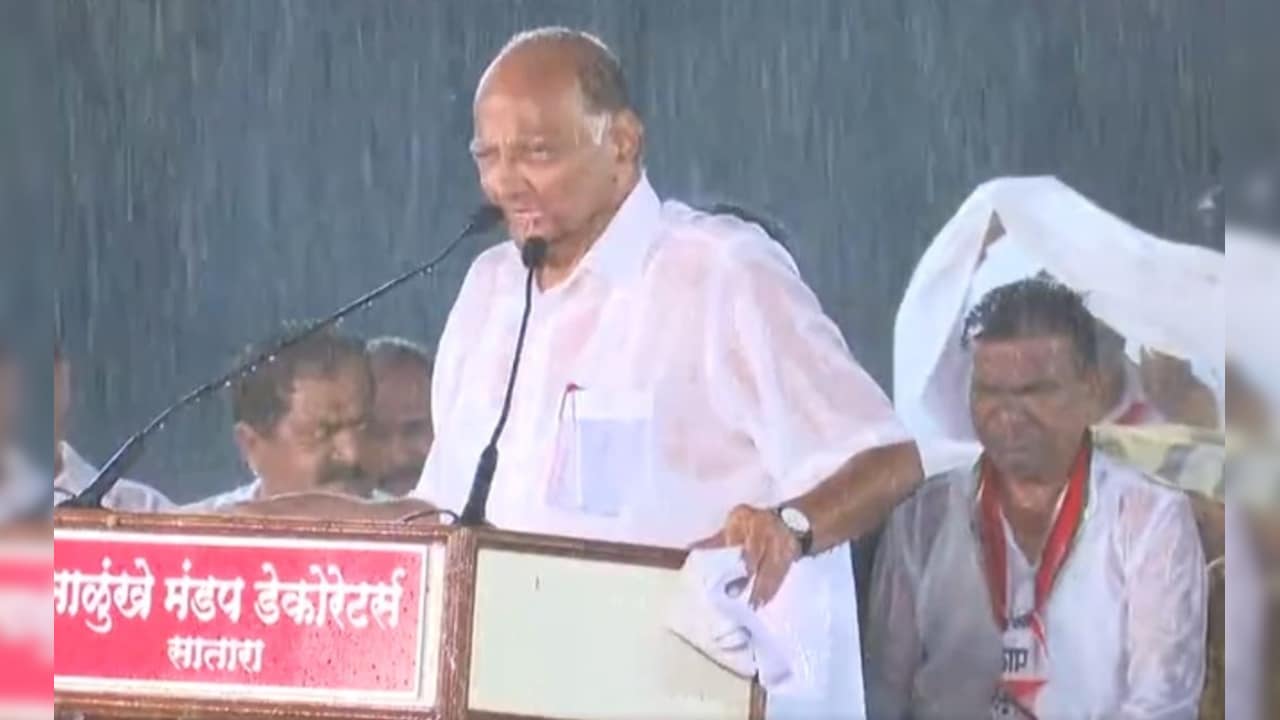
Sharad Pawar addressing an NCP rally in rain in 2019
An Ally Who Is Never Entirely Predictable
Even within the Opposition, Pawar has frequently demonstrated that he is not necessarily bound by the collective political position.
He has publicly differed with Rahul Gandhi over his attacks on businessmen and with ally Shiv Sena (UBT) over the Dharavi redevelopment project.
His latest stand on delimitation, therefore, fits into a larger pattern of political independence that often leaves his allies guessing.
The BJP Courtship Was Hiding In Plain Sight
Perhaps the most interesting aspect of the latest development is that the signs of Pawar's party moving closer to the BJP had been visible for months.
In July 2026, reports emerged of parallel conversations within the NCP (SP) about two possible political futures: a merger with the Congress or an arrangement with the BJP-led NDA. There were also reports of differences within the faction, with some leaders favouring a return to the ruling establishment.
Speculation also intensified over a possible reunion of the two NCP factions. The BJP, according to reports, was interested in a reunited NCP joining the NDA rather than accommodating the Sharad Pawar faction separately.
The delimitation issue became an early indicator of this changing political atmosphere.
In July, Supriya Sule had initially dismissed reports of a decision to support the legislation as speculative. By August, the party was publicly insisting that it remained firmly with the INDIA bloc, while maintaining that its position would depend on the final Bill.
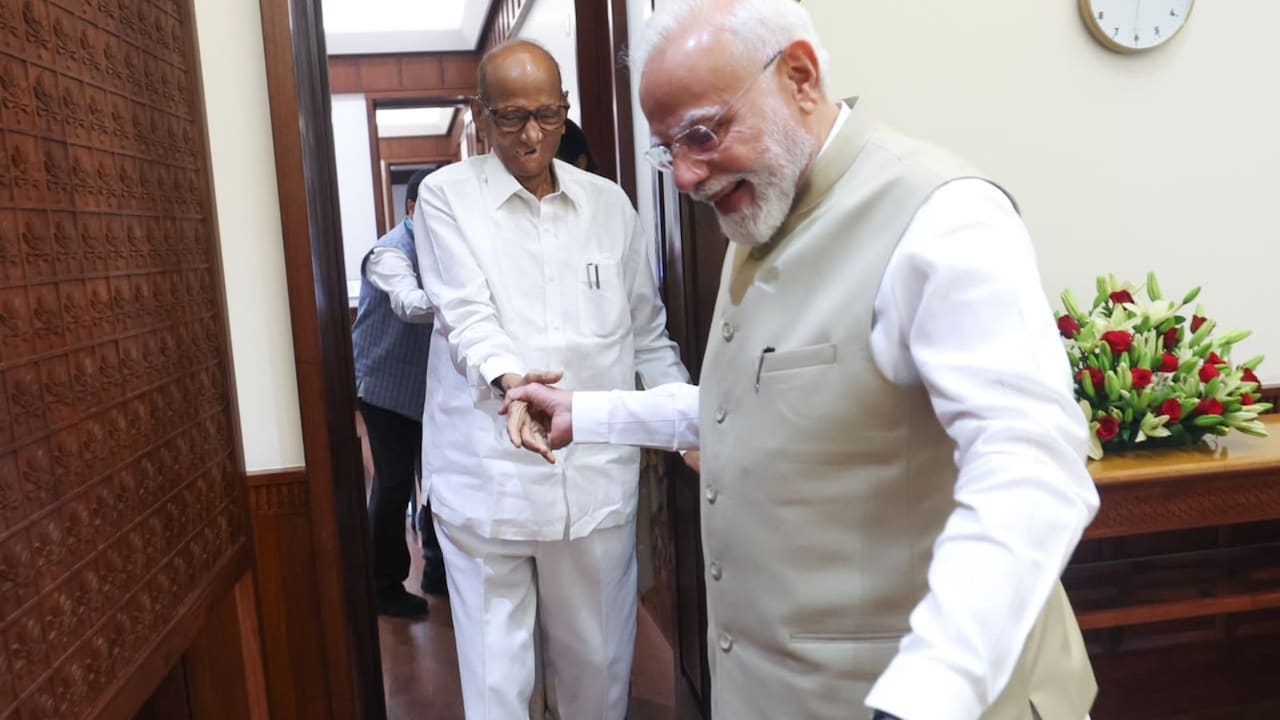
Sharad Pawar with PM Modi
The symbolism of a recent meeting between the Maratha strongman and the Prime Minister was also difficult to dismiss as routine. The Prime Minister walked up to the door of his office to greet Pawar, and the photograph was shared for all to see.
By November, the party shifted its position in favour of the Bill.
It would be premature to conclude that Pawar has decided to join the NDA. But it would be equally difficult to dismiss the accumulating signals as mere coincidence.
There is also a larger political calculation at work. The NCP (SP) has been weakened by the 2023 split, and its electoral fortunes have come under pressure. The Ajit Pawar faction has the advantage of the recognised party name and symbol. In such circumstances, access to power, political protection and the party's future become important considerations.
For a leader who has spent decades negotiating from a position of strength, the prospect of becoming politically marginal is perhaps the one outcome he would most want to avoid.
According to sources, Pawar has offered the Congress a "party survival" explanation for his latest political manoeuvre, arguing that the move was necessary to keep his party united.
The Paradox Of Sharad Pawar's Politics
Every major political formation wants Pawar in its corner.
The Congress values his experience, his understanding of Maharashtra's political and cooperative networks, and his ability to bring disparate groups together. The regional Opposition sees him as a seasoned negotiator capable of bridging ideological differences. Even the BJP has repeatedly maintained channels of communication with him, recognising his influence and political reach.
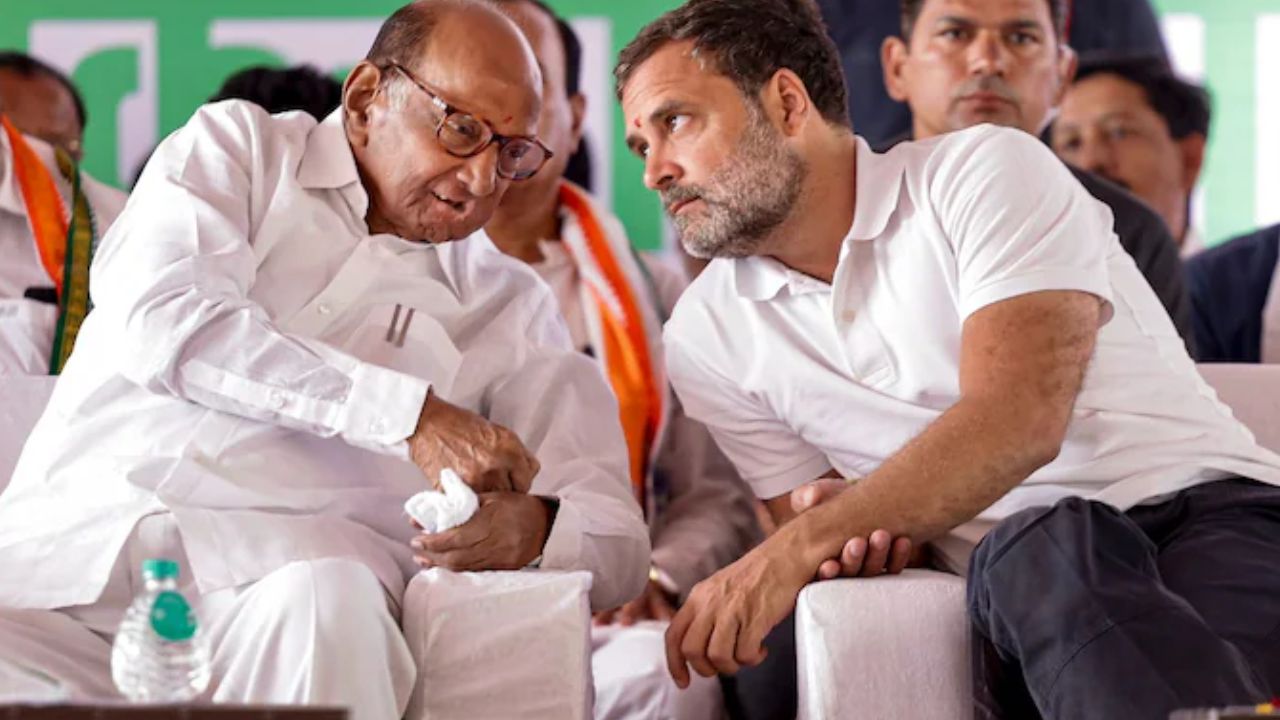
Sharad Pawar with Rahul Gandhi
But there is a difference between wanting Pawar as an ally and being able to count on him as one.
For the Congress, the latest episode is particularly awkward. Pawar was among the senior leaders who helped bring the INDIA bloc together and was seen as one of the few Opposition figures capable of maintaining communication across party lines. Yet, when a critical political test arrived, his party chose to chart its own course.
The BJP, meanwhile, has every reason to welcome the development. It weakens the Opposition's ability to present a united front and creates the possibility of further political realignments in Maharashtra. Even without a formal alliance, Pawar's willingness to differ with the INDIA bloc gives the ruling establishment a political advantage.
At 85, Pawar remains a formidable political operator. But his latest move on delimitation has revived an old question about his politics: Is he the Opposition's most experienced troubleshooter or its most unpredictable ally?
Perhaps, in Pawar's political universe, there has never been a contradiction between the two.
KioskNews shows a cleaned-up reading view extracted from the publisher’s page — the original always lives on their site, not ours.