Exclusive | Marcel Schmelzer On What India Must Do After 'Surprise-Filled' Grassroots Clinic In Kochi
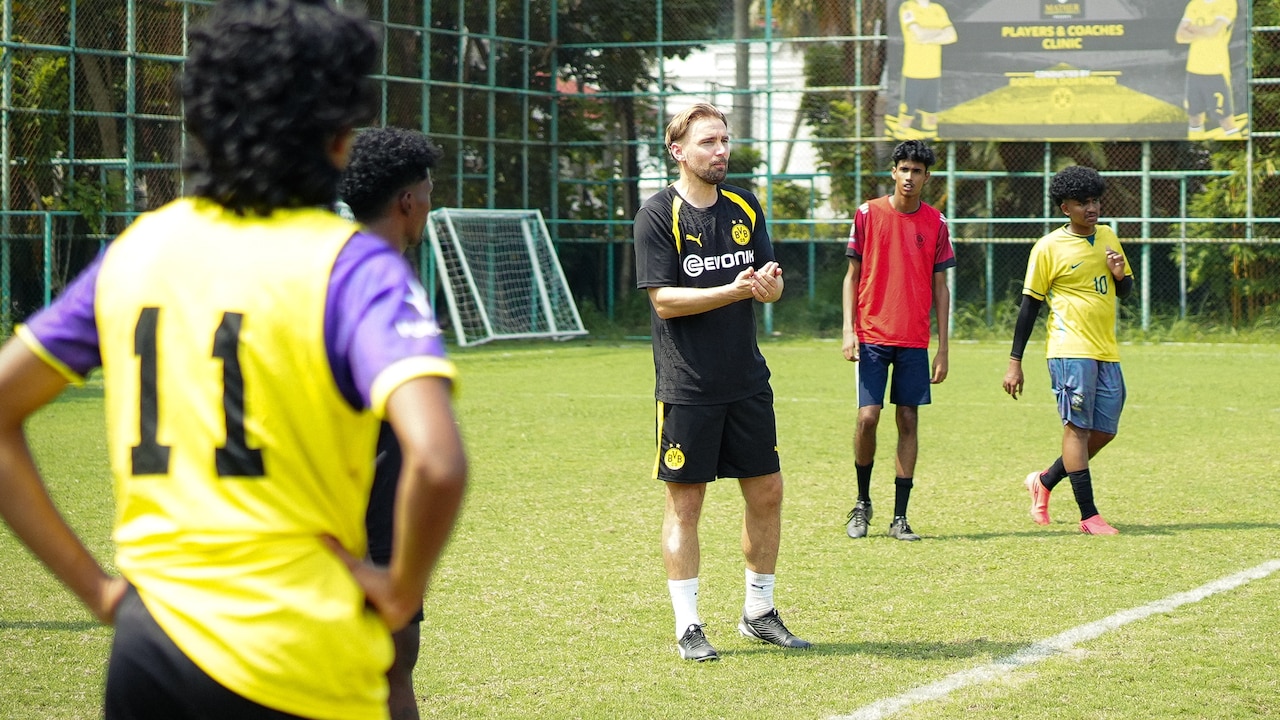
Marcel Schemlzer in Kochi for a football clinic© Framefit by Glade
Borussia Dortmund legend Marcel Schmelzer had plenty to share from an experience-filled first-ever visit to India as he conducted a football clinic in Kochi (Kerala). Schmelzer, who joined Borussia Dortmund as a youth academy player before becoming a mainstay in the club's starting XI for over a decade, knows what kind of environment an aspiring footballer needs to flourish and make it big. In an exclusive chat with NDTV, Schmelzer offered a candid assessment of Indian football's grassroots landscape.
Contrasting the raw enthusiasm he witnessed in Kerala with the structured rigour of German academies, the former Germany international emphasised that India's path to the global stage, including long-term ambitions for the 2031 Under-17 World Cup, hinges on abandoning premature professional-style drills in favour of small-sided games and fundamental ball mastery. In this exclusive conversation, Schmelzer opened up about his experiences in Dortmund, the way forward for Indian football, and a lot more...
Excerpts from the interview:
Question: Kerala has a deeply passionate, historical football culture. During your time observing or interacting with the football clinic in Kochi, what stood out the most for you? Was it the raw talent, the energy, or the playing style of Indian players compared to the youth academies that you have witnessed in Germany?
Marcel Schmelzer:First of all, it was my first time in India, and I really enjoyed it. The people were very friendly, and we had great training sessions with the kids and the coaches. Everyone was excited and willing to give their best. But, to be honest, it is completely different compared to the youth academies in Germany. Especially since we had a mix of kids from ages 13 or 14 up to 23. Sometimes it was hard to see whether a player was still a developing talent or already a grown player. We asked the players for their ages and were occasionally surprised, both positively and otherwise, because one player we asked was already 23 and playing for the first team. The talent, the training, and all the circumstances were different, but it was a very nice experience.
Question: What is the single most important tactical or physical habit you believe young Indian players need to develop early on to successfully transition from youth systems to playing at a higher level?
Marcel Schmelzer:To be honest, it is not rocket science; it is just the basics. Start with the basics: passing, dribbling, juggling, and maybe shooting, though shooting is not as important early on. It is about the first touch, second touch, using both feet, and controlling the ball with the chest or the thigh.
In the younger age groups, this is the most important thing, along with letting them play. Let them experience every situation hundreds of thousands of times. But let them play in small-sided games, 3v3, 4v4, or a maximum of 5v5, rather than 11v11 or 9v9. In larger games, players can hide. Give them the ball, let them play, and teach them the basics at a young age
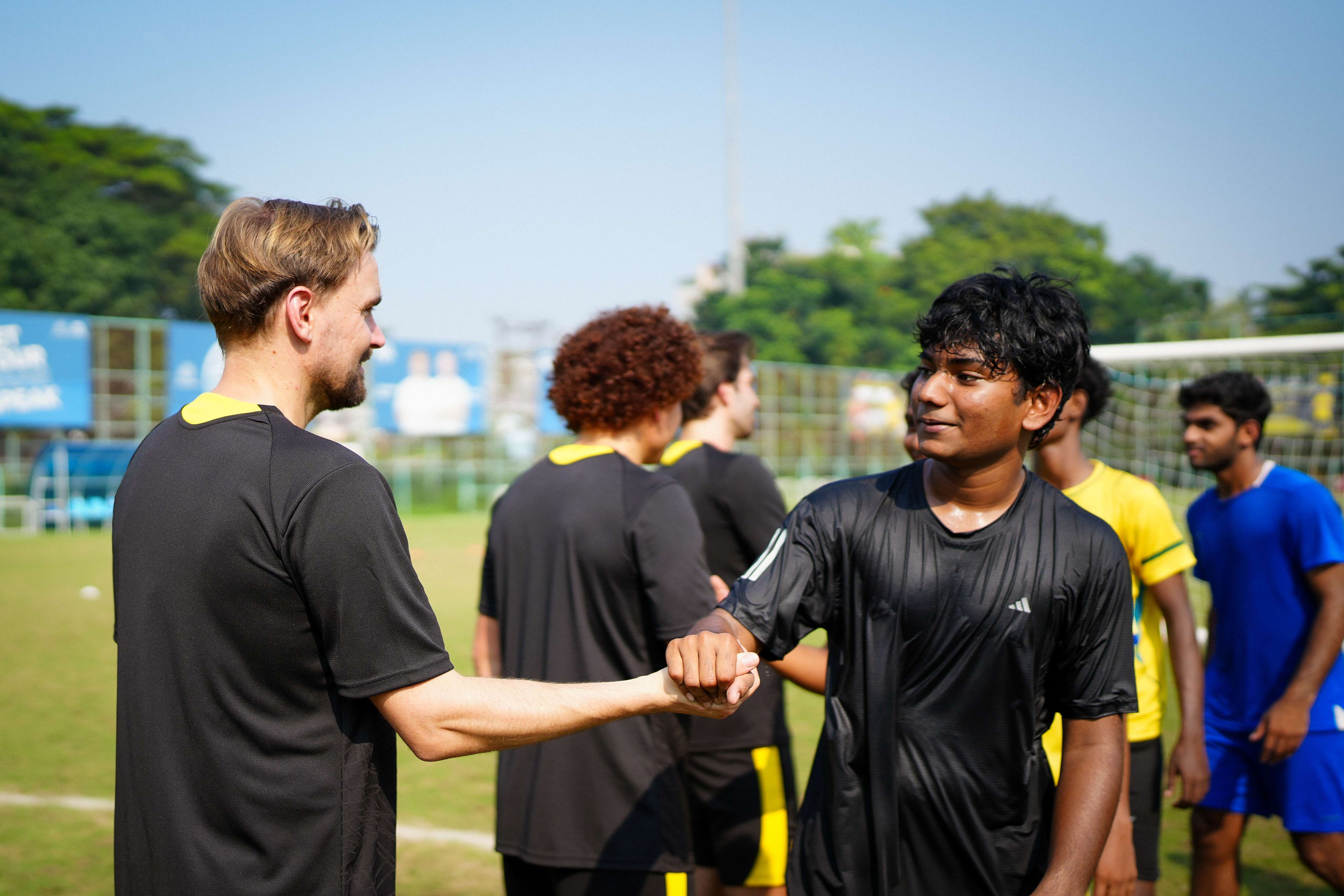
Image Courtesy: Framefit by Glade
Question:When it comes to football atmosphere, nothing beats Borussia Dortmund's Yellow Wall at the Westfalenstadion. But Kerala is also famous for its football culture. When you went to the watch party in Kochi, what was the atmosphere like with both Dortmund and Bayern fans coming together to watch Der Klassiker?
Marcel Schmelzer: It was incredibly loud. Both sets of supporters were very vocal before the game and during the match, especially when their respective teams scored. The watch party was really fun because we had both sets of supporters in one room with no issues, just everyone enjoying football and cheering for their club. It was a great experience.
Question:You have played in many Der Klassikers yourself. What was it like to witness this specific match from the perspective of a global audience and an Indian fanbase?
Marcel Schmelzer: Much like my trip to India, it was my first time experiencing this kind of atmosphere. I was actually a bit nervous sitting on the couch with a drink. As a former player, you know the pressure of those situations, especially playing away in Munich. It was fun, but I was definitely more nervous during the dangerous situations. Luckily, we managed to get a point from Munich.
Question: As a club legend and ambassador for Borussia Dortmund, how important is your role in bridging the gap between the club in Germany and its international fanbases? How do watch parties and clinics like the one in Kochi help bridge that gap?
Marcel Schmelzer: The people in India have to tell me if it is worth it. I hope it helps motivate the young players and shows them that a big club like BVB wants to help, teach, train, and improve them. Ultimately, the fans and the players on the other side have to show us if what we are doing and planning is valuable to them.
Question: How do you see the relationship between German football and India evolving over the next few years? Have you been briefed on any upcoming plans? Zee has signed a five-year deal with the Bundesliga and helped organise these clinics, so are there more initiatives in the works?
Marcel Schmelzer: Yes, we have had many talks about the five-year plan leading up to the Under-17 World Cup. I think it is a great start because players who will be ready for the U-17 tournament are currently 11 or 12 years old. You can start working with them now to reach that goal by 2031. However, you need to train them the right way. It does not make sense to train 12- or 13-year-old kids like a professional first team. You must start with the basics and progress step-by-step.
Question:Football is easily the second most-followed sport in India, with the Premier League holding a massive share of the audience. What would you tell a young Indian fan to convince them that Borussia Dortmund is the club they should follow?
Marcel Schmelzer: First of all, we have a massive stadium that is completely full for every single game, regardless of the opponent, the competition, or whether we are playing in the league or the cup. The people are incredibly passionate in a positive way. Even if we lose, as long as they feel the team gave 100%, they will stand behind you, stick together, and push you forward. That is highly unusual in world football; not every club has supporters like that.
They truly act as the 12th man, especially during Champions League nights under the floodlights when the team needs an extra push. From my own experience, their support can give you a second wind in the 75th or 80th minute when you are exhausted. Plus, our iconic yellow shirts make our community very special and easy to recognise.
Question:What do you think is the reason the Bundesliga does not have as large a following in India compared to the Premier League or La Liga, even though clubs like Dortmund and Bayern consistently reach the final stages of the Champions League?
Marcel Schmelzer:I think two factors are decisive. First, Premier League clubs started visiting Asian countries long before German clubs did. They established their presence many years ahead of us, which is why people are more familiar with them. Second, the Premier League has historically had much wider television broadcast coverage in these countries compared to the Bundesliga. It is a visibility issue.
Featured Video Of The Day
Spain Vs Argentina | Dani Olmo On WC Triumph: 'Wanted To Set An Example For The Next Generation'
KioskNews shows a cleaned-up reading view extracted from the publisher’s page — the original always lives on their site, not ours.