Mumbai’s first bridge to Navi Mumbai is rusting, and nobody wants to own it
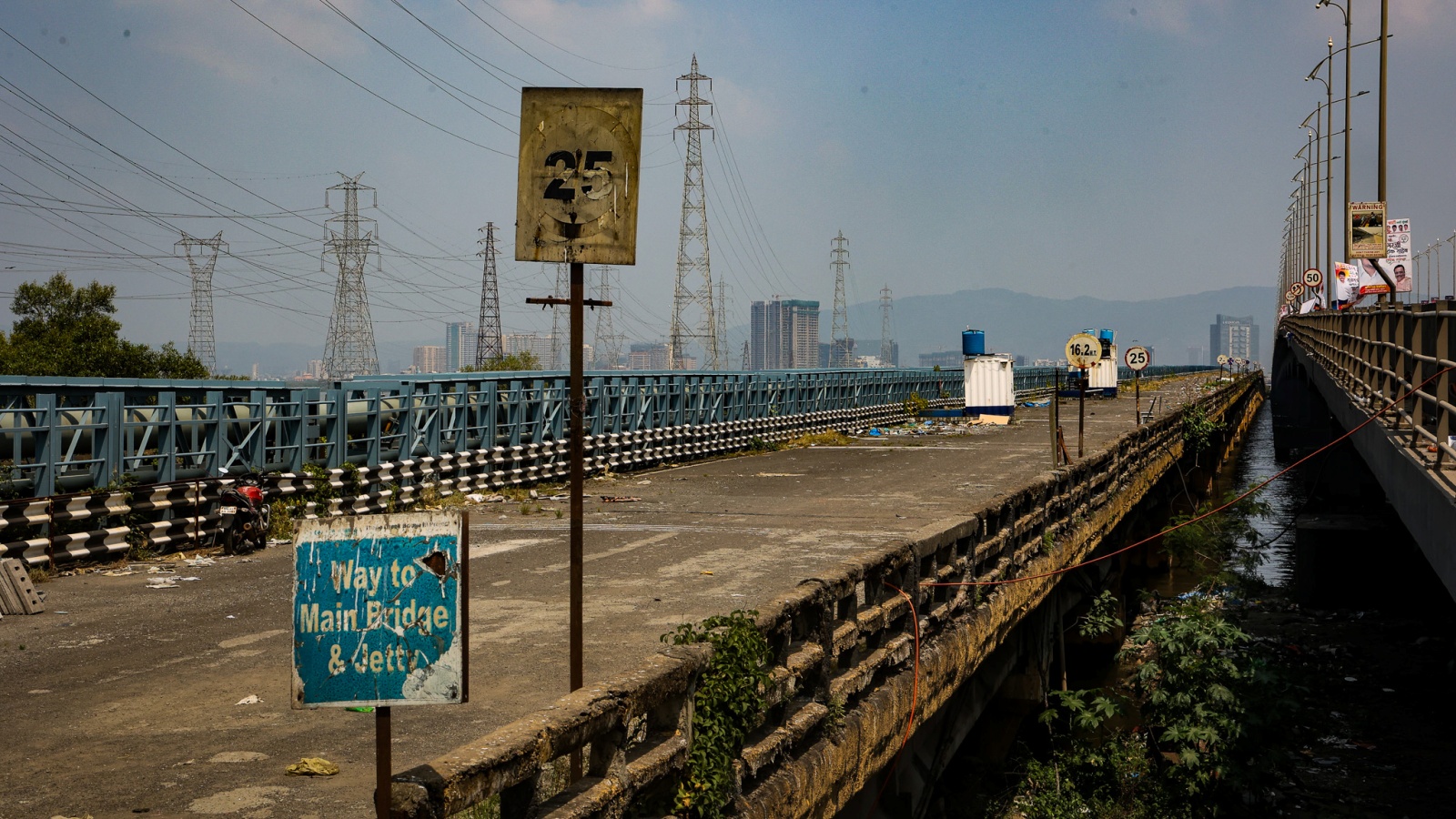
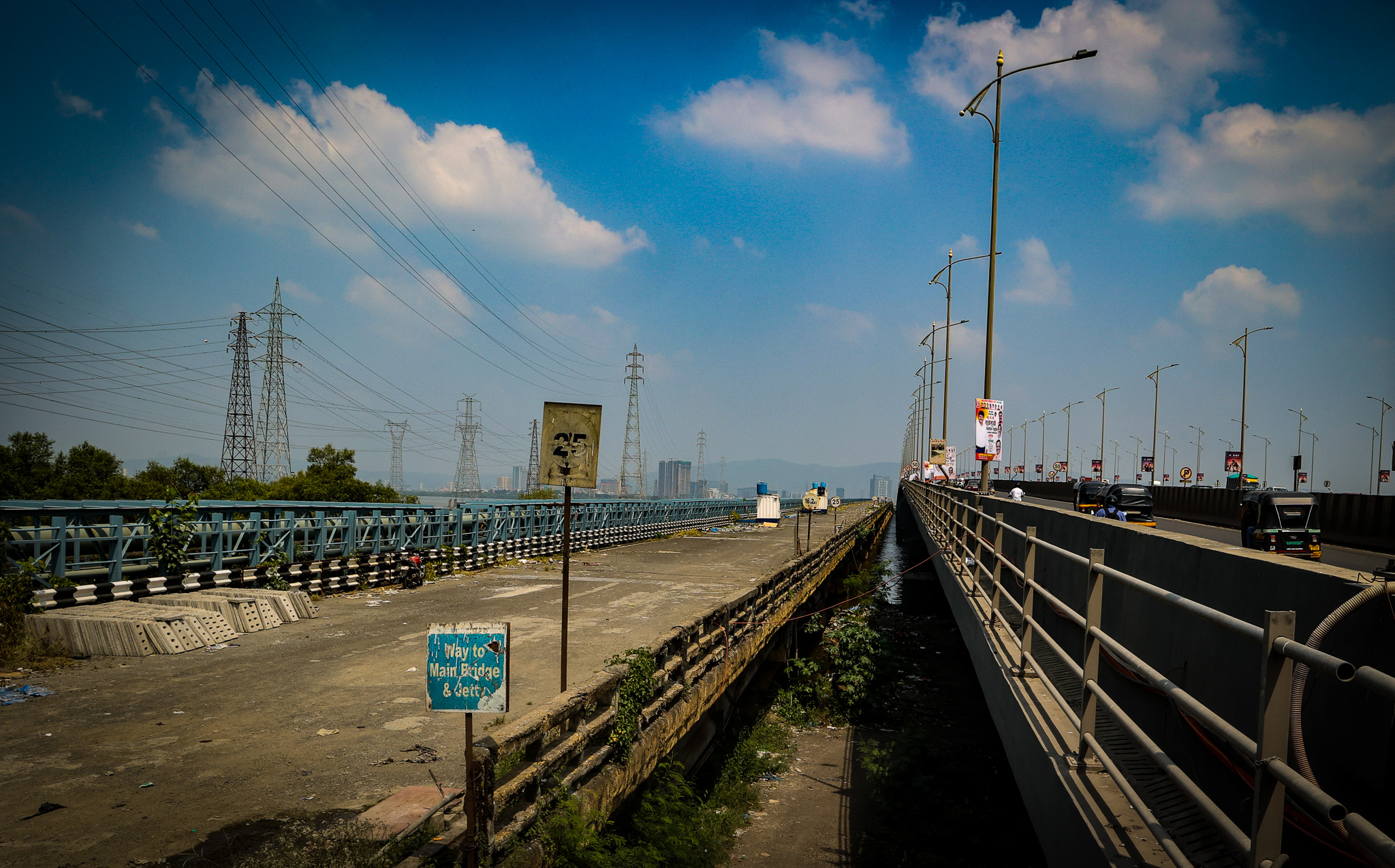
Drive out of Mumbai towards Navi Mumbai, over the Thane Creek, and you could miss it. The road is aligned to skirt past the old bridge, which is boarded up. It runs right alongside the new one you’re driving on. Glance out of your window and you’ll see it. Rusting weeds along its sides, the road signs washed out, a few cabins and some garbage the only signs of a past life. Now and then a local slips in to fish in the creek.
This is Thane Creek Bridge-1, which opened in 1973 as the only road link over the creek, connecting Mankhurd on Mumbai’s eastern edge to Vashi, the entry into Navi Mumbai, the planned city then being built across the creek to ease the pressure on Mumbai. Since then, it has been overshadowed by two newer bridges beside it, and is now caught in a custody battle between three agencies, none of which wants it.
The Maharashtra State Road Development Corporation (MSRDC), which built the newest bridge in the narrow gap beside it, has no use for it and wants to hand it off. The Public Works Department (PWD), its original owner, closed its chapter on the Thane Creek bridges years ago and dissolved the department that looked after them. A government order from November 2025 directs that the bridge go to the Navi Mumbai Municipal Corporation (NMMC). The NMMC says it does not fall in its jurisdiction.
 Almost a year on, the handover has not happened. The MSRDC has appointed a private consortium to maintain TCB-2. Nobody maintains TCB-1.
The bridge to nowhere
TCB-1 began as an idea in 1959, when the S G Barve-headed Study Group for Greater Bombay suggested a rail-cum-road bridge over the Thane Creek. It would open up land across the creek for a township and industry. Mumbai is an island city, and until the bridge was built, road traffic to the mainland had to loop north through Thane.
The idea returned in the 1960s, when the architect Charles Correa, the structural engineer Shirish Patel and the architect Pravina Mehta drew up the plan for a new city across the harbour, which became Navi Mumbai. The bridge itself was apparently proposed by Adi Kanga, a civil engineer who, according to the Parsi archival website Parsi Khabar, was general manager of CIDCO, the agency set up to build the new city, and is counted among Navi Mumbai’s early planners.
“For some years while the land procurement delays brought the project to a standstill, people called it “the Bridge to No Where”,” notes a tribute to Kanga by Rusi Sorabji on the website.
The two-lane, 1.8-km bridge opened in 1973. Within a few years, the salty creek water had acted on the structure and the bridge needed major repairs. Reports say it was shut soon after, and later repaired.
Story continues below this ad
With Navi Mumbai on track, a second bridge was needed. Determined not to repeat the mistakes of the first, the PWD’s consultants, STUP, took extra care. “In view of the highly aggressive and polluted marine environment, a number of precautions have been taken for enhancing the durability,” they noted in documentation preserved by the International Association for Bridge and Structural Engineering from its 1992 conference. These included a four-stage anticorrosive treatment for reinforcing bars, protective coatings and better drainage.
The six-lane TCB-2 opened in 1997 and took over as the main crossing. TCB-1, with its structural defects, was kept on as a backup, opened now and then to light vehicles and two-wheelers until the 2010s, when needed or while the newer bridge was under maintenance. Within ten years, even the newer bridge proved too small. In 2012, approvals came through for a third bridge over the creek.
Helping build its replacement
In 2020, TCB-1 found a new purpose. The state road corporation, MSRDC, had begun building the third bridge, TCB-3, as a pair of three-lane carriageways, one on each side of TCB-2. The carriageway nearest the old bridge had to be squeezed into a 22-metre gap, and the old bridge, shut to traffic, became a platform for the work. The creek was shallow, the tides unpredictable, and engineers had to avoid damaging the bridges on either side, which made it hard to move heavy machinery. At night, one lane of TCB-2 was shut to help the work along.
“The MSRDC was handed over TCB-1 and TCB-2 during the construction of the TCB-3, to aid in construction and access. As the old bridge was shut to traffic, we wanted to use it to help us during construction, possibly station some guards, park equipment and machines on it in the thick of construction,” said an MSRDC official. “But the old bridge was in a terrible condition.”
Story continues below this ad
Before using it, the MSRDC had the bridge surveyed, including an underwater inspection of its pillars. The findings, cross-checked by engineers at Mumbai’s Veermata Jijabai Technological Institute (VJTI), were clear: the bridge was unsafe. Its foundations were weak, and so were the steel cables inside the concrete that hold a bridge of this kind together. Even to put watch cabins and site offices on it, the MSRDC had to reinforce it by running new steel cables along the outside of the structure and tightening them. The cabins still standing on the bridge date from that time.
A government order, and no takers
TCB-3 opened in 2025, taking the crossing to 12 lanes. The MSRDC considered its job done. On November 3, 2025, its managing director Anilkumar Gaikwad wrote to Milind Mhaiskar, additional chief secretary of the state Public Works Department (PWD), which owned the first two bridges, asking the department to take over all three.
“Since the ownership of the TCB 1 and 2 rests with the PWD, it is proposed to transfer the bridges to the PWD for daily maintenance and repair,” the letter said. It asked the PWD to take TCB-3 too, even as the MSRDC continues to collect toll on it.
But the PWD had moved on. “By the time construction on the TCB-3 began, the custody of the TCB-1 and TCB-2 had been with MSRDC for a while. The TCB division, earlier stationed at Konkan Bhavan, was almost as good as defunct, with no work for it,” a PWD engineer said, referring to the department’s office at the government complex in Navi Mumbai. The division was dissolved in 2021 and its staff moved elsewhere.
Story continues below this ad
Within days of the MSRDC’s letter, on November 20, 2025, the PWD issued a government order transferring a list of roads, flyovers and bridges from the MSRDC to the municipal corporations in whose areas they fall. The order, which carried the chief minister’s approval, cited public complaints about the condition and maintenance of these structures. TCB-1 and TCB-2 were to go to the Navi Mumbai Municipal Corporation (NMMC).
Almost a year on, the handover has not happened. The MSRDC has appointed a private consortium to maintain TCB-2. Nobody maintains TCB-1.
“With the government order in, what is left for a handover is a joint inspection by both authorities, transfer of documents on the structures, and an agreement on what maintenance is to be done and which authority will foot the bill for it,” said a PWD chief engineer who has tracked the process, referring to the MSRDC and the NMMC. “The MSRDC has written to the NMMC for the handover, but it is yet to happen.”
Whose bridge is it?
The NMMC’s objection is about geography. The November 20 order that transferred the bridges to it also handed it three other structures, at Nerul, Vashi and CBD Belapur, all within Navi Mumbai’s limits. The corporation is accepting those three, even at a repair cost of Rs 75 crore. The Thane Creek bridges, it says, are different. Part of the Sion-Panvel Highway, a state highway, they begin in Vashi but end in Mankhurd, into the territory of the Brihanmumbai Municipal Corporation (BMC), and that, the NMMC argues, puts them outside its jurisdiction.
Story continues below this ad
“The bridges over the Thane Creek have one end in Vashi and one end in Mankhurd. But that doesn’t put it in the jurisdiction of the NMMC,” a senior NMMC official said. “The NMMC is ready and in the process to accept and take over the other bridges mentioned in the order, one at Nerul, Vashi and CBD, even as those come with a repair cost of Rs 75 crore, pending an approval from our general body. But as the TCBs don’t come in the NMMC jurisdiction, there is no cause for us to take over, do an inspection for it, or ponder what to do with it. After all, the MSRDC continues to collect the toll and has given away the advertising rights from the bridges.” The corporation has said as much to the MSRDC in writing.
Beneath the dispute is a bigger question, officials said: who should own and maintain infrastructure that sits across jurisdictions? The MSRDC keeps the toll and the advertising revenue from the Thane Creek bridges. How, the NMMC asks, can a city body then be handed the bill for their upkeep? The contrast is next door. Atal Setu, the 22-km sea bridge that also crosses the creek, was built by the state’s Mumbai Metropolitan Region Development Authority and stays with it.
What happens to it now?
Nobody has an answer. One idea is to repair it and reopen it to traffic. Another is to use it for the proposed Metro corridor between Mumbai and Navi Mumbai. Engineers are not hopeful about either.
“Repurposing the bridge for a Metro would not be possible. Nor would repairing or strengthening the bridge to handle light traffic make sense, as that would cost almost or just as much as building a new bridge,” said a retired engineer who worked with the MSRDC and other government agencies. “Bridge 1 is not in such as bad condition that it would collapse, and it also carries a pipeline across the creek. In its present state, it is not doing any harm.”
Story continues below this ad
The MSRDC official agreed. “Only the government or the authority that takes over the old bridge will be able to decide its fate,” he said. “But it is highly unlikely that it will be possible to salvage it for some other use, as the bridge is in too bad of a condition. If anything, it will be dismantled – but that order can only be given by the government. Perhaps the government could even want it dismantled to clear off space to build another bridge, as the corridor sees 1 lakh vehicles use it every day, and the bottlenecks add to the traffic. But till then, it is causing no harm; an extra set of pillars along with the rest.”
KioskNews shows a cleaned-up reading view extracted from the publisher’s page — the original always lives on their site, not ours.