Britain faces ‘new era’ of security threats from Iran and Russia, MI5 says
LONDON — Iran is escalating its campaign of threats on British soil, expanding attacks beyond dissidents abroad and Jewish sites to now focusing on harder military targets, the country’s domestic intelligence chief said Tuesday.
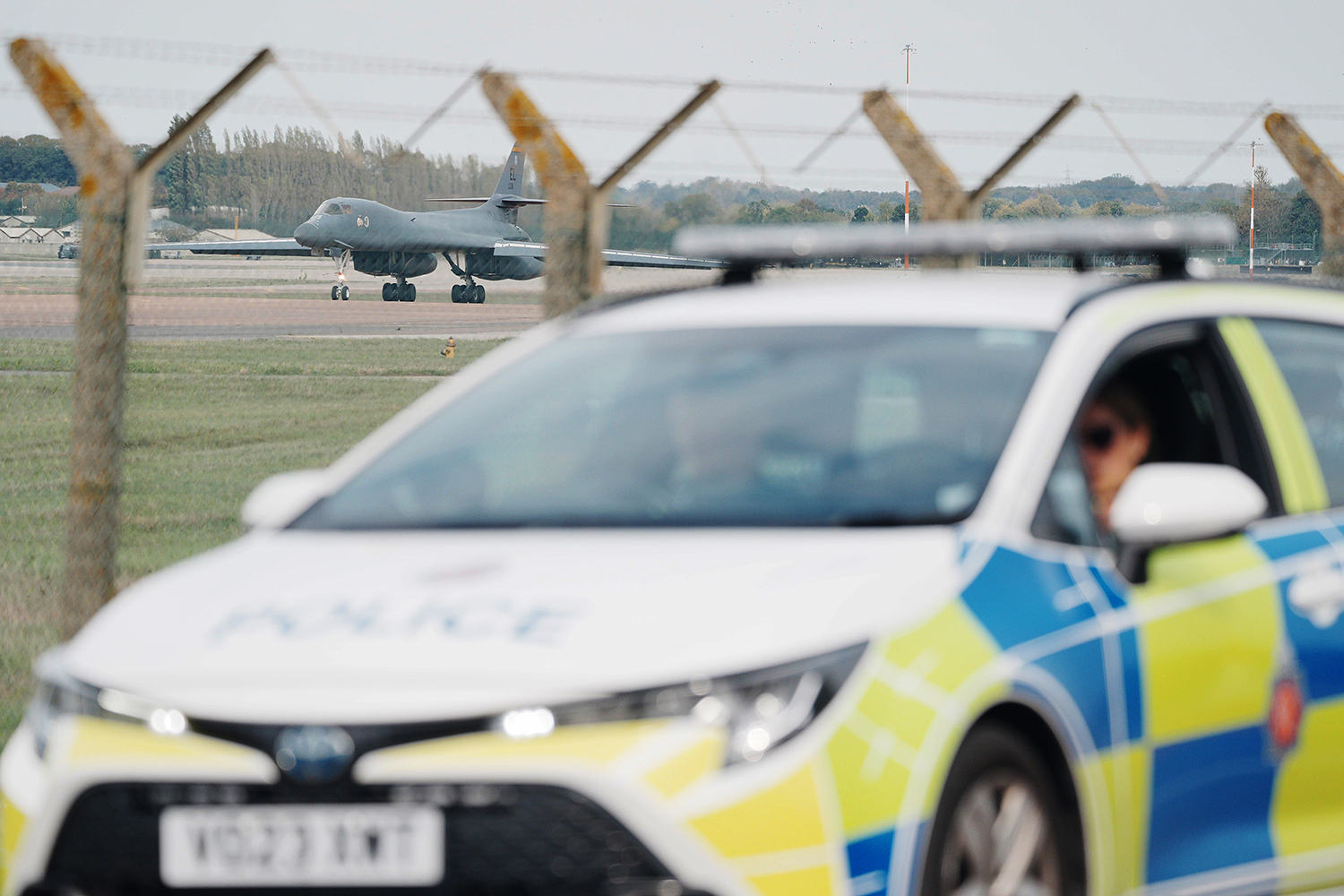
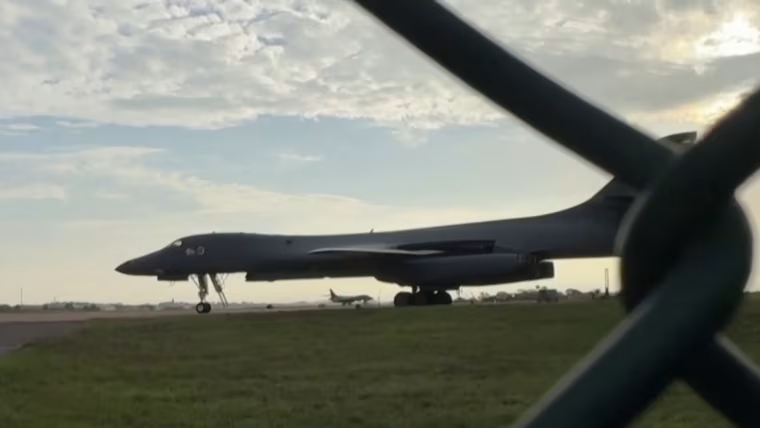
MI5 Director General Ken McCallum was speaking less than two weeks after the United States rushed to withdraw its bombers from a key air base in England, with American officials saying there had been reports of a possible Iranian drone attack.
Giving a wide-ranging “annual threat update” at MI5’s Thames House headquarters in London, McCallum warned that Britain and Europe had “entered a new era of national security,” which he likened to the shift that came after the terrorist attacks of Sept. 11, 2001.
00:52
His speech comes at a moment of tumult not just for the Middle East and Ukraine, which continue to be ravaged by war, but also the rest of Europe, which has suffered so-called hybrid aggression from Moscow and Tehran including sabotage, arson and cyberattacks. European governments are now openly telling people to stockpile food and prepare for more of their taxes to be spent on defense, warning that Russia may launch a direct attack on their soil.
MI5 is now devoting more resources than it had during the Cold War to countering threats from countries such as Russia, Iran, China and others, McCallum said.
“Russia remains aggressor No. 1, as Putin’s Kremlin continues to lash out at the U.K. and its allies,” he added.
But another arch belligerent is Iran, whose leaders have been “attempting to expand their hybrid campaign” of “using criminal proxies to try to intimidate oppositionists, Iranian media organizations and Israeli sites,” the spy chief said.
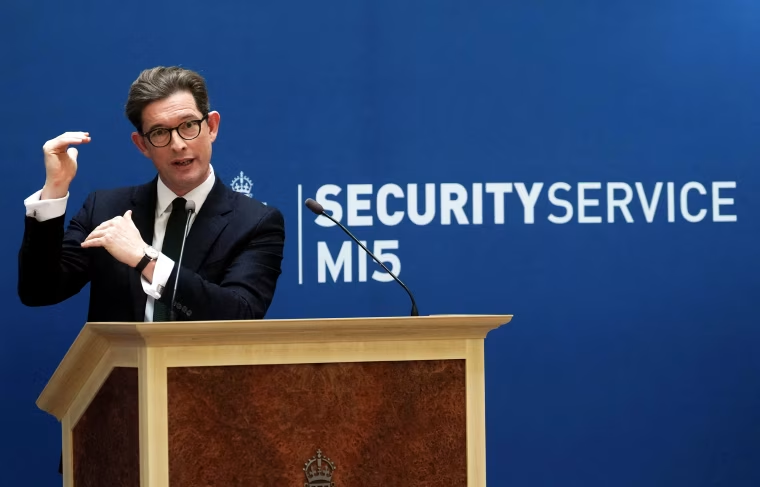
“Much of this aggression has been aimed at British Jewish communities, with whom I want to express solidarity,” he said. But this year has seen a shift of “Iranian ambitions to come at harder targets, like military sites.”
Over the past year, intelligence operations have led to more than 50 Iran-linked arrests in Britain, he said.
McCallum made reference to the incident last month at RAF Fairford, the military base in rural England from where the U.S. had been launching bombers involved in the assault against Iran. He declined to give details, citing ongoing investigations and operations, but said the case was “not unique.”
Details are hazy, but in the early hours of Sept. 27, a member of the public called the police after spotting three vans in a country lane near the base. Seven men in their 20s, one of them a dual British-Iranian national, have been arrested and released on bail. Authorities said they found only gasoline in the vehicles.
British Prime Minister Andy Burnham told lawmakers in Parliament on Monday that the incident “is highly likely to have been coordinated in Iran, almost certainly directed” by Iran’s Islamic Revolutionary Guard Corps, the powerful political, military and economic group that holds huge sway in the country.
A week after the incident, Washington hastily withdrew its bombers from the base because, according to two U.S. officials, of reports of a possible drone attack against the site.
On Tuesday, McCallum downplayed fears that Iran could mount such a complex attack, saying it has so far been hiring unsophisticated criminals for operations in the United Kingdom. But he warned that could change.
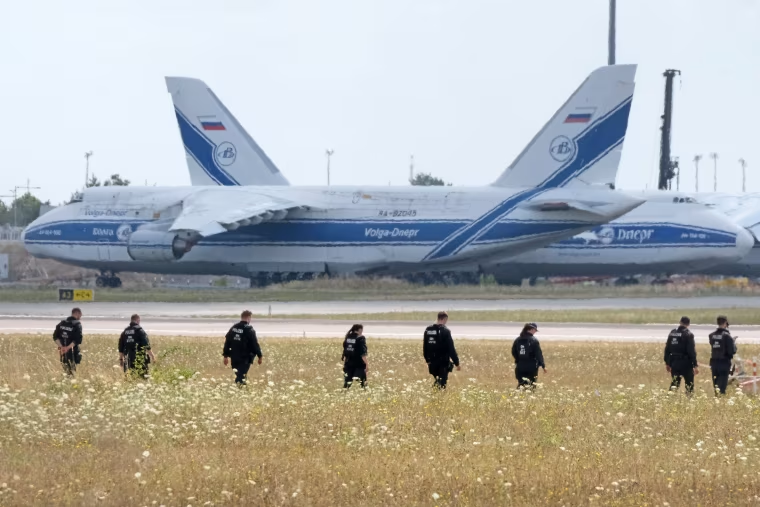
On Russia, McCallum said its military and intelligence services “are once again escalating their attempts at hybrid warfare,” being careful not to trigger NATO’s Article 5 threshold, in which other countries would be expected to defend their allies.
“We see them scrambling to pay criminals to do their bidding,” he said. “The whole aim of hybrid tactics is to try to intimidate us.”
Within the U.K.’s “multifaceted relationship with China” — Beijing is a major trading partner to London — MI5 has been focused on efforts by the Chinese government “to conduct espionage, coercion or democratic interference.”
On Al Qaeda and the Islamic State terrorist group, or ISIS, MI5 still has to respond “to attempts to carry out mass casualty attacks,” he said.
But perhaps the gravest warning came when it came to artificial intelligence, which he said in the future could be used by terrorist groups and other actors to create new “bioweapons.”
And “beyond misuse of AI by human adversaries sit the potential risks posed by AI itself,” he said.
“Put at its simplest, human history has given us no experience of facing an actor which is smarter than we are. Is capable of out-thinking us. This is genuinely novel. And deserves the serious attention it is getting, including in MI5.”
KioskNews shows a cleaned-up reading view extracted from the publisher’s page — the original always lives on their site, not ours.