A typewriter poet writes on the spot for strangers in Dumaguete
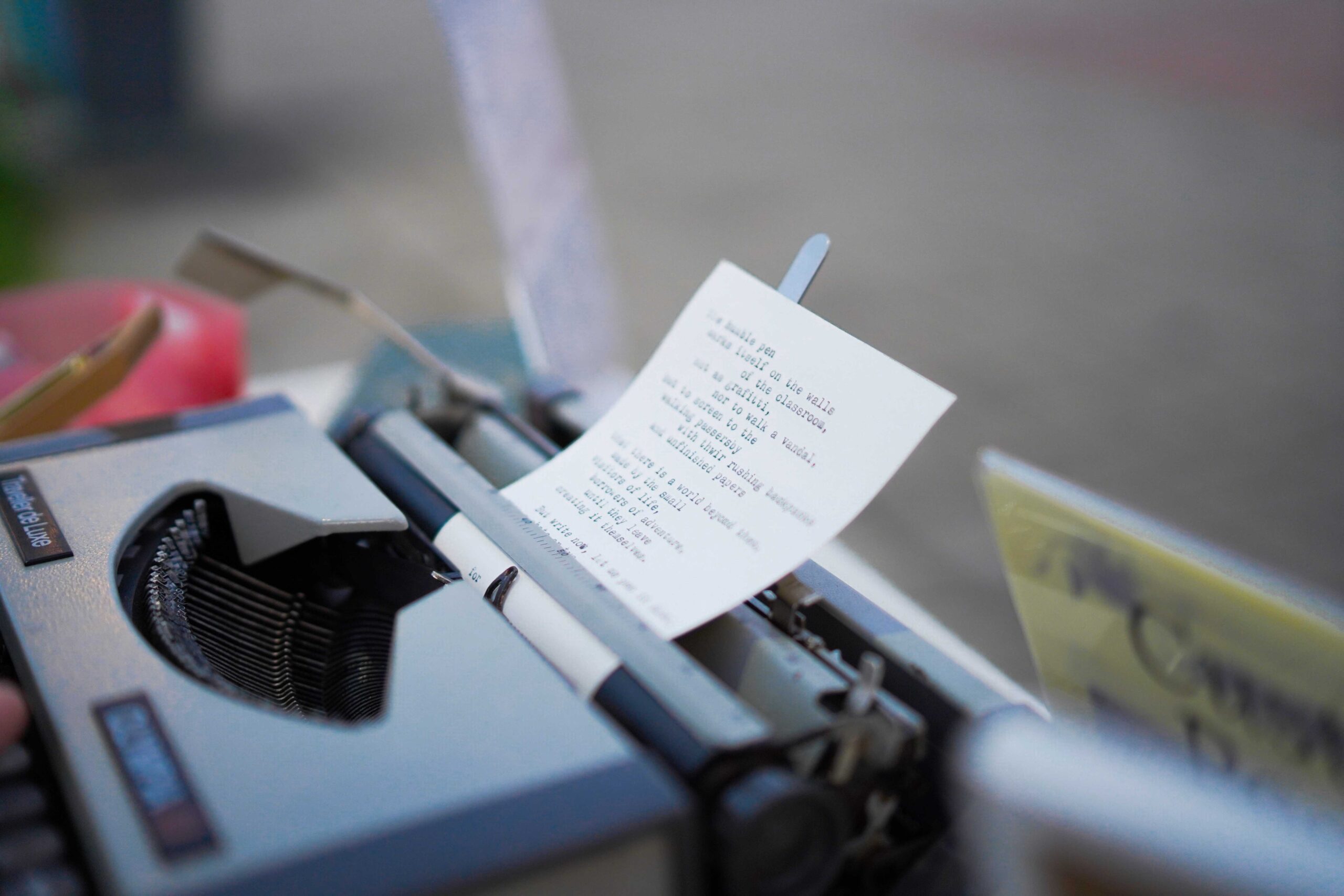
- Jecho Adrian Ponce, a 23-year-old poet in Dumaguete City, creates custom poems on a typewriter for passersby, capturing their personal stories and emotions.
- His journey began in middle school and evolved into a full-time pursuit, where he connects deeply with clients, often addressing themes of grief and childhood innocence rather than just romance.
- Despite his growing success and community support, Jecho is exploring the viability of poetry as a full-time career while preparing for a teaching licensure exam as a backup plan.
This is AI-generated. Read the article for full context. Report any errors.
“What can I write for you about?”
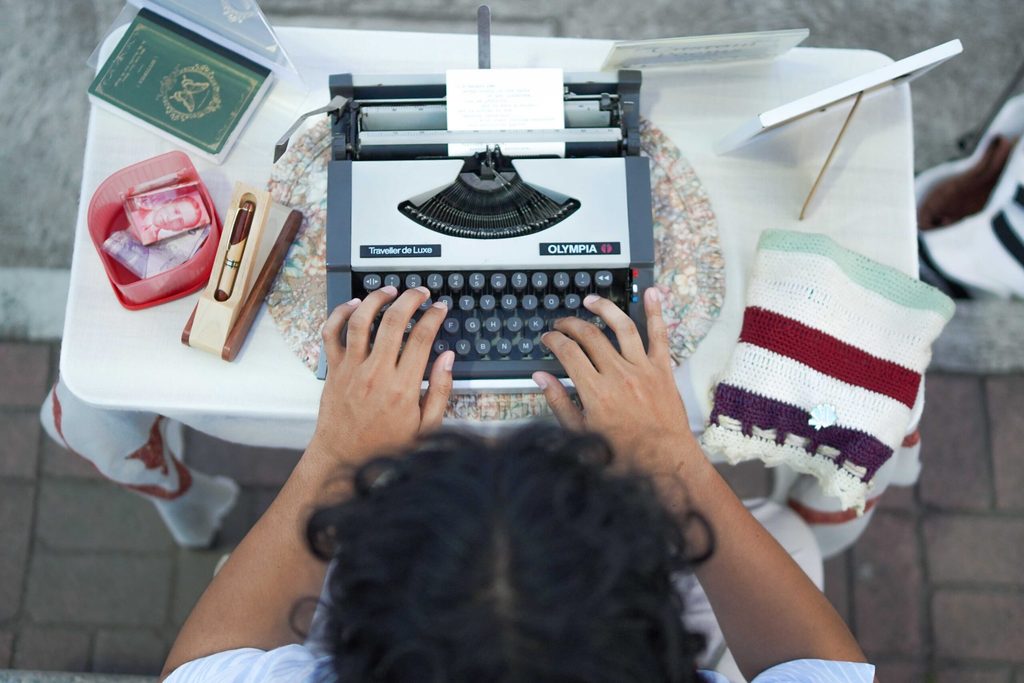
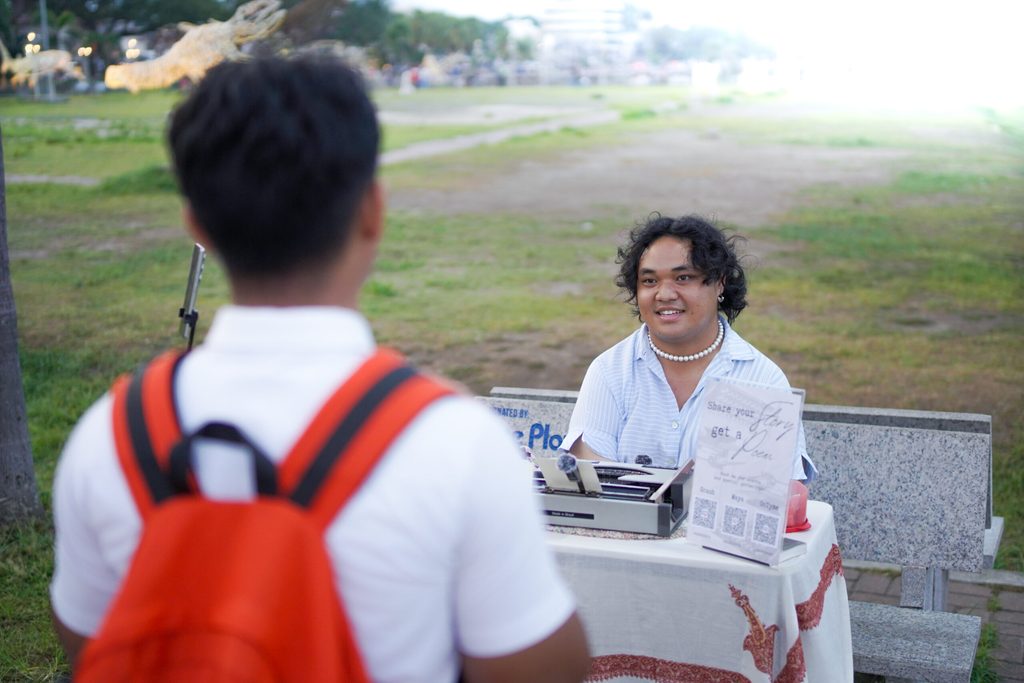
It is the question 23-year-old Jecho Adrian Ponce asks every time someone approaches his folding table in Dumaguete City, where his typewriter sits.
The answer can be a stuffed turtle. A real turtle. Grief. Bullying. Or a life decision too difficult to say aloud.
Jecho listens as they share their stories, then finds a way to put them into words. A few minutes later, they leave with a poem, written on the spot — no drafts, no delete key, no second attempts.
Writing in the moment
For him, the typewriter is just a tool. What matters more is the person in front of him.
“Most people just want to be heard,” he said. “We’re exchanging different forms of art. Mine is poetry, and yours is your own experiences as a person.”
His journey can be traced back eight years ago in middle school, when he was drawn to hugot lines — the emotional, wistful social media posts about heartbreak that were widely popular at the time.
After graduating with a degree in special needs education from Silliman University, he began exploring a more personal approach to his craft.
What started as a work in a one-off café session in 2024 evolved into steady paying gigs across neighboring islands and online orders from as far away as the United States and Japan.
By November of that year, he fully embraced the medium by purchasing his own typewriter, primarily to document his encounters and preserve the poems he once handed over to strangers and never saw again.
He eventually channeled that interest into spoken word poetry with Dipag Inc., a creative collective in his hometown of Dipolog City in Zamboanga del Norte.
His approach to writing was just as intentional in the beginning.
Before typing directly on the page, he drafted his poems in a journal to measure the stanzas. Eventually, he began typing directly, learning to handle mistakes by writing over them or crossing out extra letters.
“Some customers actually prefer it that way because it means there was a human behind the piece,”Jecho explained.
While letting go of perfection helped Jecho move past writer’s block, it also gave him room to focus on the person in front of him.
“You always have to connect to the person…I immediately go for images, because if you start with something concrete already, the figurative language starts forming itself,” Jecho said.
This spontaneous imagery often leads to depths that neither Jecho nor his subjects initially expect.
More than love poems
Passersby often expect romantic love poems to be Jecho’s most common request.
What most people do not know is that some strangers come to him carrying stories of grief, bullying, or struggles they have not been able to share with their family or friends.
He recalled one customer who paid him just P50 for a poem reflecting on personal questions and life choices. After reading the custom poetry, the customer walked away in tears.
“That can be more than enough,” said Jecho, adding that seeing someone leave happy matters more to him than the monetary value.
His favorite clients, however, are children, whom he tries his best never to charge.
One young girl returned to him three times. The first time, she asked for a poem about her stuffed turtle. The second was about her real turtle. The third was about her love for swimming.
“I love writing for children. It alleviates all of the pressure. It doesn’t have to be perfect, it just has to connect with the child,” he said.
But listening so closely to other people’s lives comes with its own weight.
When a stranger’s story lingers too long in his mind, Jecho journals. He uses the practice to let the emotional weight go once the paper has been pulled from the typewriter’s roller.
He calls it his disposal ritual.
“It’s not that I don’t care about the person,” Jecho explained. “It’s more a way for my body to keep doing what it does, so it doesn’t weigh me down. I go home smiling still, because I’ve done my part,” he added.
Making a life from poetry
Dumaguete City has long been celebrated as a regional cultural hub, earning the title of UNESCO City of Literature for its literary history and renowned writing workshops.

The city’s creative environment played a big part in his growth as a writer.
In Dumaguete, he found a community of writers and artists through groups like the Silliman Writers Bloc, Artista Sillimaniana, and the Bahandi Collective, where he was encouraged to explore creative freedom and experiment beyond rigid literary rules.
What started as sidewalk sessions has since taken Jecho beyond Dumaguete.
His ability to capture human emotion has turned casual encounters into loyal patrons. One regular customer even flew him to Bohol for a family reunion, covering his travel and lodging, while another booking took him to Davao.
He now accepts online orders, sending physical poems to local customers and digital versions to readers abroad. Some tourists have even messaged him that they booked trips to the region after discovering his work through his videos.
But as the work grows, Jecho is still figuring out if poetry can become a full-time career.
At the moment, he is reviewing for the national teacher’s licensure exam as a practical backup plan. For now, he has given himself a year to see how far poetry can take him financially.
Still, his goal is to write full-time. He hopes to eventually publish books and make writing a lasting part of his life.
“If I am still given the space to share people’s stories, I will push it as far as I can,” he said.
Until then, he will keep setting up his typewriter on the street, writing poems that are typed just once and never the same way twice. – Rappler.com
Jasper Dominic Miranda and Lysander Kendrick Tiu are staff members of The Weekly Sillimanian and Rappler volunteers or Movers based in Dumaguete City.
KioskNews shows a cleaned-up reading view extracted from the publisher’s page — the original always lives on their site, not ours.