From war games to crisis planning: Manila’s bid for a ‘Squad’ command hub
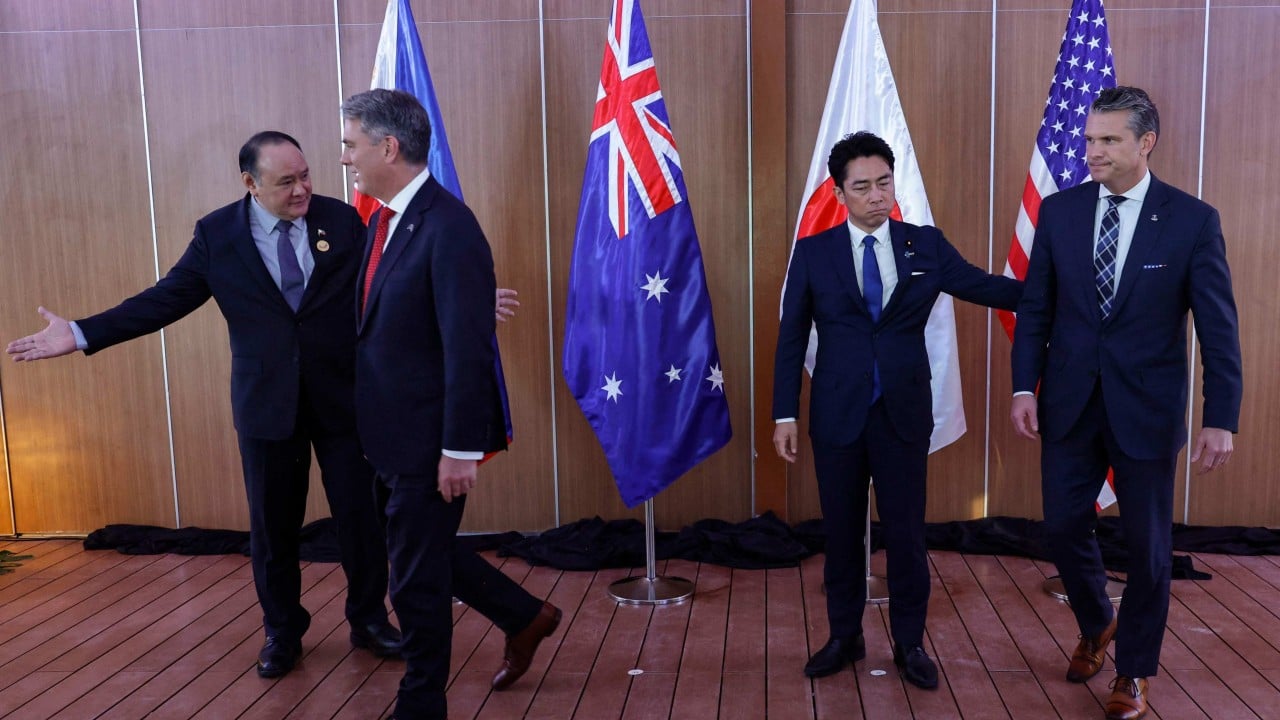
As the Philippines eyes a coordination hub with defence partners to bolster its regional security shield, analysts say Manila stands to gain greater stability – even if closer military ties do not guarantee allied intervention in a crisis.
The strategy hinges on a proposed Combined Coordination Centre (CCC) with “Squad” partners the United States, Japan and Australia. The hub is expected to give the Philippines faster access to intelligence, improved maritime surveillance and a more unified response to China’s growing regional footprint.
Coupled with a new defence pact with Canberra, the initiative underscores Manila’s push to secure more dependable backing from its partners amid a long-standing South China Sea territorial row with Beijing that has escalated into violent clashes at sea.
03:31
China and the Philippines trade accusations after clash in South China Sea
But observers say the hub’s effectiveness could depend on the trajectory of US-China relations, highlighting Manila’s delicate balancing act between strengthening deterrence and avoiding the crosshairs of superpower rivalry.
The Philippines’ Department of National Defence announced plans to establish the CCC in a statement on November 10. Philippine National Defence Secretary Gilberto Teodoro Jnr discussed the move with US Defence Secretary Pete Hegseth, Japanese Defence Minister Shinjiro Koizumi and Australian Deputy Prime Minister and Defence Minister Richard Marles in Cebu on October 28, on the sidelines of the Asean Defence Ministers’ Meeting-Plus.
According to Manila, Squad leaders committed to establishing the hub to synchronise defence investments and expand the scope and frequency of joint military drills. The department has not yet released details on the centre’s location, organisational structure, timeline or specific functions.
Rachel Vandenbrink, a senior analyst at the Australian Strategic Policy Institute (ASPI), said the centre would institutionalise coordination and allow the four nations to respond more rapidly to crises. Vandenbrink said the hub was expected to be housed at Camp Aguinaldo – the main headquarters of the Philippine military – and “staffed continuously”, adding that it could facilitate real-time intelligence sharing, maritime surveillance, contingency planning and more coordinated public messaging.
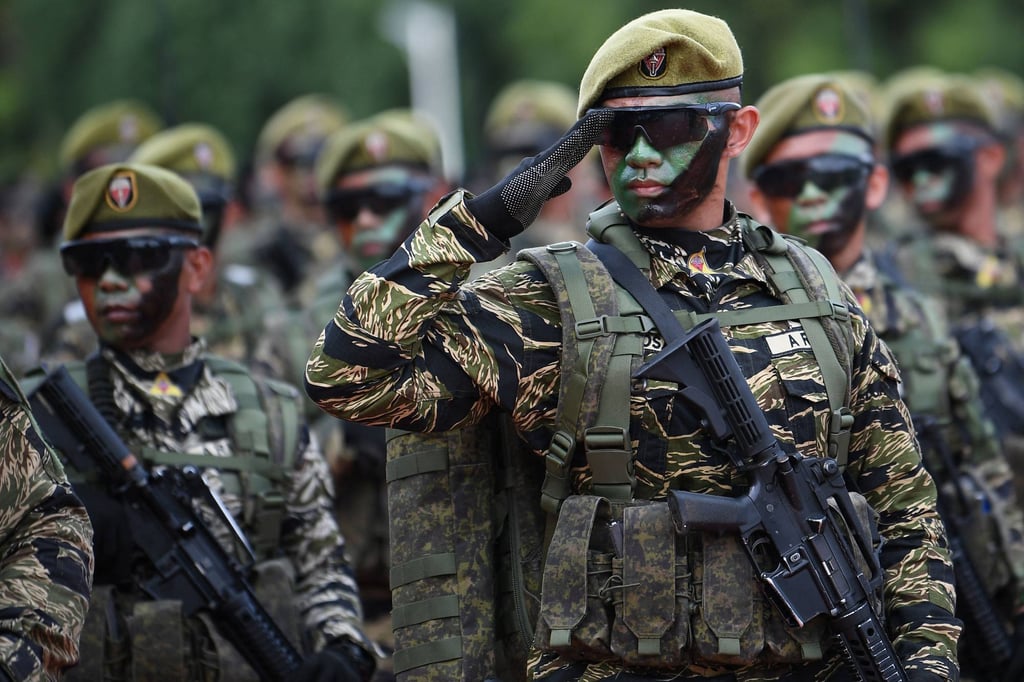
Vandenbrink noted that the initiative built on expanding joint drills, including Japan’s participation in Balikatan – the largest annual US-Philippines military exercise – and Manila’s growing role in Australia’s Exercise Pitch Black.
She added that the hub complemented the Australia-Philippines Defence Cooperation Arrangement signed on Sunday during the Asean summit, which commits both sides to mutual consultations during contingencies.
“The two developments are complementary, with the [arrangement] providing a framework for bilateral political consultation and the [centre] a platform for multilateral operational coordination,” Vandenbrink said.
Lucas Myers, assistant director at the University of Maryland’s School of Public Policy, said the hub strengthened Manila’s deterrence by upgrading its crisis-response mechanisms.
“By more directly integrating Australian, Japanese and US maritime forces, it signals to Beijing that coercion against Manila will draw a coordinated response from the other Squad countries as well,” Myers said, adding that Manila saw the CCC as “stabilising and reassuring” amid daily Chinese pressure and “a real risk of armed conflict”.
In September, a China coastguard vessel collided with a Philippine fisheries boat about 54 nautical miles off Palawan.
Timothy Heath, founder and principal researcher at defence consultancy Perceptum, said the hub could provide equipment and intelligence Manila would otherwise lack, giving it “a better picture of the situation in the South China Sea”.
While the US, Japan and Australia would have a mechanism to cooperate with Manila against major Chinese aggression, Heath stressed that the arrangement fell short of a Nato-style mutual defence treaty, as Tokyo, Manila and Canberra hold formal alliances only with Washington, not each other.
“However, they do have friendly ties and could cooperate with each other in a serious military crisis,” he added.
Sebastian Maslow, an associate professor at the University of Tokyo’s Institute of Social Science, said the hub reinforced the Defence Cooperation Council, a framework launched by Squad nations at Singapore’s Shangri-La Dialogue at the end of May to transition their security ties from ad hoc cooperation into an enduring structure.
“It further anchors the US in the region, thus helping to dispel uncertainty over [American] commitment vis-a-vis its regional allies and partners,” Maslow said.
However, with Sino-US diplomacy gaining momentum, Maslow warned that Washington might refrain from amplifying the Squad’s role. “The sustainability of such defence cooperation initiatives is dependent on the overall trajectory of US-China relations,” he said, adding that Squad partners would weigh their investments in arrangements like Squad carefully around this week’s Apec summit and next month’s G20 gathering.
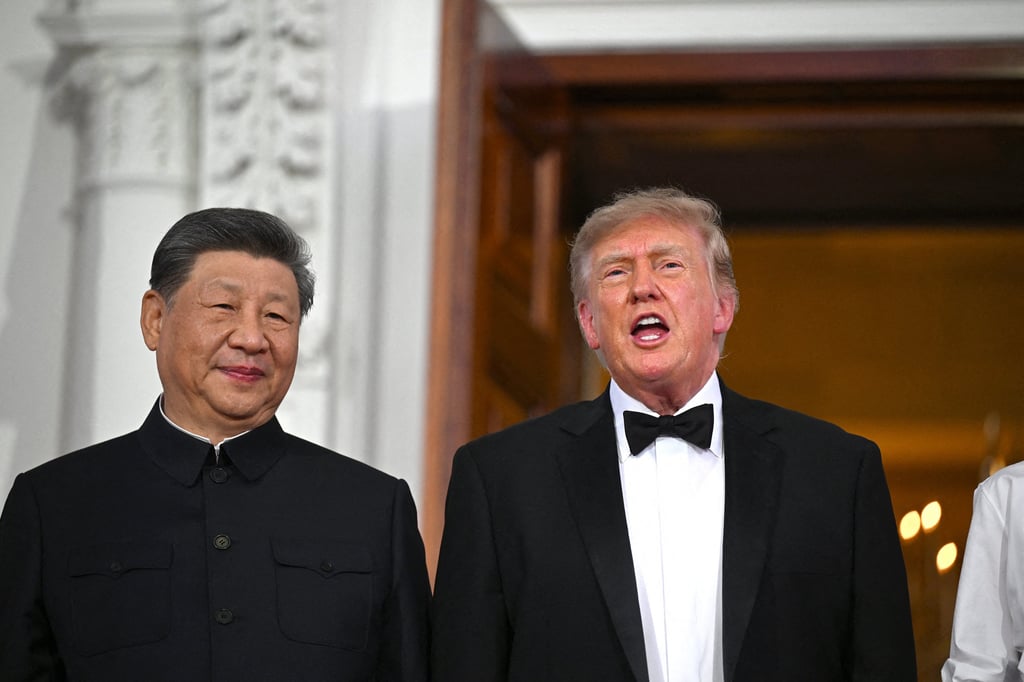
US President Donald Trump and Chinese President Xi Jinping are set to meet in Shenzhen on the sidelines of the Apec summit, marking their fourth in-person meeting in roughly a year.
Beijing has pushed back sharply against the minilateral grouping. Responding to joint US, Japanese and Australian air and maritime patrols near the Philippines earlier this year, Chinese Defence Ministry spokesman Zhang Xiaogang accused outside powers of travelling thousands of kilometres to “flex their muscles” and stoke tensions, warning that the Chinese military remained on high alert.
On Thursday, China’s nationalistic tabloid Global Times argued the CCC would turn the Philippines into “a geographic hub for external forces seeking to jointly intervene in Southeast Asian affairs, further placing the country at the centre of geopolitical tensions”. The commentary claimed Washington wanted to “weaken” China in its neighbourhood, Tokyo hoped to ease East China Sea pressure while Canberra aimed to obstruct Beijing’s South Pacific ties – concluding that “none of these calculations have anything to do with the Philippines’ interests”.
David Dutton, a senior resident fellow at ASPI, said the hub would strengthen Manila’s operational effectiveness and sovereignty through a network of international partnerships.
“The Philippines already faces sustained Chinese pressure in the South China Sea,” Dutton said, adding that its alliances are essential to preserving its sovereignty. “The Squad can contribute to regional stability by helping create a stable balance.”
KioskNews shows a cleaned-up reading view extracted from the publisher’s page — the original always lives on their site, not ours.