Turn WorldSkills wins into lasting gains for Africa
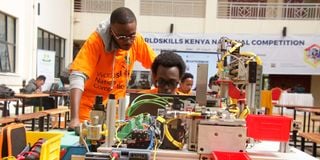
Students take part in Worldskills Kenya National Competition at Dedan Kimathi University of Technology in Nyeri County on August 31, 2023.
Photo credit: Joseph Kanyi | Nation Media Group

Director-General
TVETA
South Africa’s Matthew Bowen, who won silver in Aircraft Maintenance at WorldSkills Shanghai 2026 with 738 points, offers Africa a compelling lesson: young people can compete globally when equipped with quality training, modern technology, competent trainers and industry exposure.
South Africa fielded 29 competitors across 27 skills, exposing them to international standards that could strengthen national training systems.
Africa’s 1.4 billion people face high youth unemployment and skills shortages, demanding training that improves employability and productivity.
WorldSkills competitions expose gaps in equipment, curricula and trainer competence. Industry must co-develop curricula, support apprenticeships and provide equipment. EASTRIP and SIFA offer models for industry-responsive training.
Preparation must progress from institutional contests to WorldSkills Africa and International. Investment in trainers is essential, with returning Experts transferring global standards into curricula, assessment and institutional development.
WorldSkills Africa can advance benchmarking, Expert development, regional training camps and shared infrastructure. Affiliate Membership offers countries a pathway into WorldSkills International events and resources.
The Association of TVET Regulators in Africa (ATRA) could translate international benchmarks into reforms in standards, qualifications, curricula and quality assurance. Together, ATRA and WorldSkills Africa could link global standards to national TVET systems through an African Skills Excellence and Benchmarking Framework.WorldSkills International’s Vision 2035, which seeks to extend competition excellence into national skills strategies and TVET institutions, presents another opportunity. With Japan set to host WorldSkills Aichi 2028, following the handover at the Shanghai closing ceremony, African countries have a clear target for preparing competitors, trainers and institutions.
Success in 2028 must be measured by more than medals. Africa should seek wider membership, stronger national competitions, participation in more skills categories, more Medallions for Excellence, internationally benchmarked Experts and greater integration of WorldSkills Occupational Standards into curricula and assessment.
Industry must also play a bigger role in preparing young people for global competition. Bowen’s achievement demonstrates that African talent can compete with the world’s leading skills systems.
The challenge is to build the ecosystem that makes such success repeatable: stronger standards, capable trainers, modern equipment, sustained investment, industry partnerships and effective institutions. Shanghai 2026 should mark a shift from celebrating individual African excellence to building the systems that can produce it at scale.
Follow our WhatsApp channel for breaking news updates and more stories like this.
The author is a TVET and human capital development consultant.
KioskNews shows a cleaned-up reading view extracted from the publisher’s page — the original always lives on their site, not ours.