In both France and Spain, ruling parties must prove they can give young protesters hope

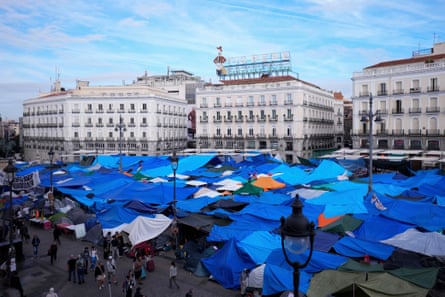
In Spain, tens of thousands of people in 50 cities have taken to the streets amid mounting fury over the country’s housing crisis, their feelings made plain on a banner at the burgeoning protest camp in Madrid’s Puerta del Sol plaza: “You can speculate on watches, jewels, crypto-bros and Ferraris. But not on our fucking homes.”
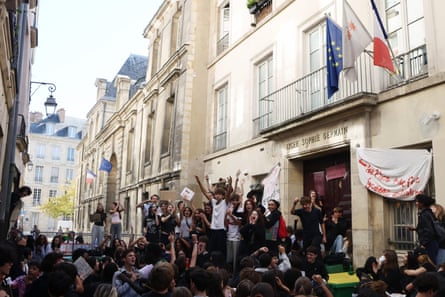
In France, as high school pupils clash with police in often violent protests over long hours, missing teachers, crumbling classrooms and an opaque university admissions system, the angry slogans include: “More hours in class than for sleep”, “Fund study, not repression” and “I’d like to be worrying about my maths exam, not my future.”
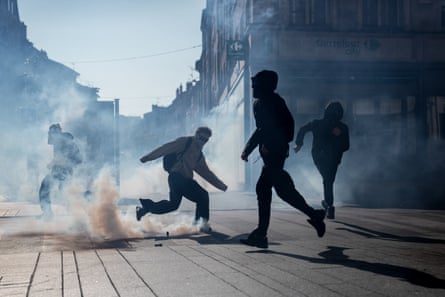
They may stem from different specific grievances, but the two waves of mainly youth-led protest exemplify a growing problem for western European governments: a generation of young people feeling increasingly denied the basic socioeconomic security that, by and large, their parents enjoyed.
The trigger in Spain, where rents have risen by 80% in a decade, was – perhaps ironically – the high-profile eviction of an 87-year-old woman in Madrid after an investment fund hiked her rent by 230%. For those spending over half their income on housing (the monthly rental on a one-bedroom flat can cost an entire median salary), enough was enough.
Rocketing rents, rampant property speculation, the boom in short-term tourist rentals and stagnant wages have combined to make an independent adult life increasingly unachievable for many young workers – and the state is seen not as a neutral mediator, but an active enabler of property speculation.
In France, the protests began in the northern Paris suburbs but quickly spread nationwide, fuelled by young people’s anger at an underfunded education system that, the data shows, entrenches social inequality.
Pupils routinely miss months of teaching owing to unfilled staff absences. Timetables run from 8am to 6pm – among the longest in Europe – in buildings with leaking roofs, cockroaches and collapsing ceilings. In Paris last week, students on high school barricades saw budget cuts as a straightforward assault on their future. In their eyes, a system meant to promote social mobility now prevents it.
Lacking parliamentary majorities and facing varying degrees of budgetary constraint, however, neither government has much room for manoeuvre. Spain’s socialist prime minister, Pedro Sánchez, on Monday called a snap general election after rightwing parties voted down his emergency housing legislation.
In France, as student protests – and more than 5,000 arrests – forced the closure of up to 500 secondary schools on Monday, the centrist prime minister, Sébastien Lecornu, has urged local authorities to prioritise filling long-term teacher absences and called urgent meetings to discuss repairing dilapidated school buildings
Taken together, the two crises highlight some core problems facing mainstream governments. First, young people in particular have come to see incremental measures – targeted tax credits, minor administrative reforms – as sticking plasters on altogether deeper socioeconomic wounds.
Second, facing mounting street pressure and opposition parties eager to exploit it, ruling coalitions – especially those that lack majorities – will struggle. And in France, heavy-handed policing risks alienating young voters from the mainstream even further.
after newsletter promotion
Meanwhile, radicalised opposition parties are actively weaponising the discontent. On the radical left, France’s Jean-Luc Mélenchon – backed by 47% of voters under 35– has sided openly with the street, while in Spain, leftwing parties Podemos and Sumar have blamed the housing crisis squarely on out-of-control financial capitalism.
At the same time, the populist far right is playing a law-and-order card, with Marine Le Pen’s National Rally (RN) in France seizing on footage of burning barricades to accuse centrist leaders of tolerating “unbridled violence” and Spain’s far-right Vox siding with the main conservative Partido Popular opposition to torpedo Sánchez’s emergency package, framing it as government overreach punishing landlords.
Squeezed from both sides, mainstream governments face a spiralling challenge. When an entire generation concludes that society’s existing frameworks guarantee them neither affordable homes nor functioning schools, political consent starts to evaporate and Europe’s establishment parties risk losing their legitimacy.
As Nando de Anguulo, a 26-year-old protester in Madrid, put it: the protests prove that as things stand, “it is us, the people, who have to adapt to the political parties – and not the politicians who have to adapt to what the people want. It can’t go on like that.”
KioskNews shows a cleaned-up reading view extracted from the publisher’s page — the original always lives on their site, not ours.