Joel Kinnaman Warns Against "Wars of Choice" After 'High Value Target: The Hunt for Saddam's Finale

Therese Lacson is a Senior TV Editor who has been with Collider since 2021. She got started in this business over ten years ago working primarily as an interviewer and critic. At Collider, she works closely with the features team to support the writers and also ideates and develops content daily. She has covered major industry events including Cannes Film Festival, Sundance Film Festival, SXSW, Toronto International Film Festival, and San Diego Comic-Con. Although she reviews and covers both film and television, her focus is in television and her expertise is in fantasy and sci-fi genre shows. Her favorite shows to cover include House of the Dragon, Bridgerton, Fallout, 9-1-1, and Rivals.
Sign in to your Collider account
Editor's Note: The following contains spoilers for High Value Target: The Hunt for Saddam's finale.After eight thrilling episodes following Joel Kinnaman's John Nixon in High Value Target: The Hunt for Saddam, the TNT series has finally concluded with John returning home to D.C. to brief President George W. Bush (Paul Ryan), while back in Iraq, Saddam Hussein (Waleed Zuaiter) faces execution after his capture. Throughout the series, we watched as Nixon aided in the hunt for Hussein before he began his conversations with the dictatorial president. The conversations between the two men, held to pressure Hussein into revealing where their WMDs were hidden, largely revolved around the history of the region and gave an intimate look at the enigmatic figure. By the end of the season, Nixon left the Middle East crowned not only as the man who found Saddam but with a surprisingly nuanced perspective on Hussein. Kinnaman sat down with Collider to break down how he prepared and got into the mind of the real-life John Nixon, what it was like working across from Zuaiter in their one-on-one scenes, the difficulties of filming in Cairo, and the biggest takeaways you should have after watching High Value Target.
Joel Kinnaman Reveals What Made Him Understand John Nixon
"It was really important to spend time with John, to talk to him, to really get under the hood on him."
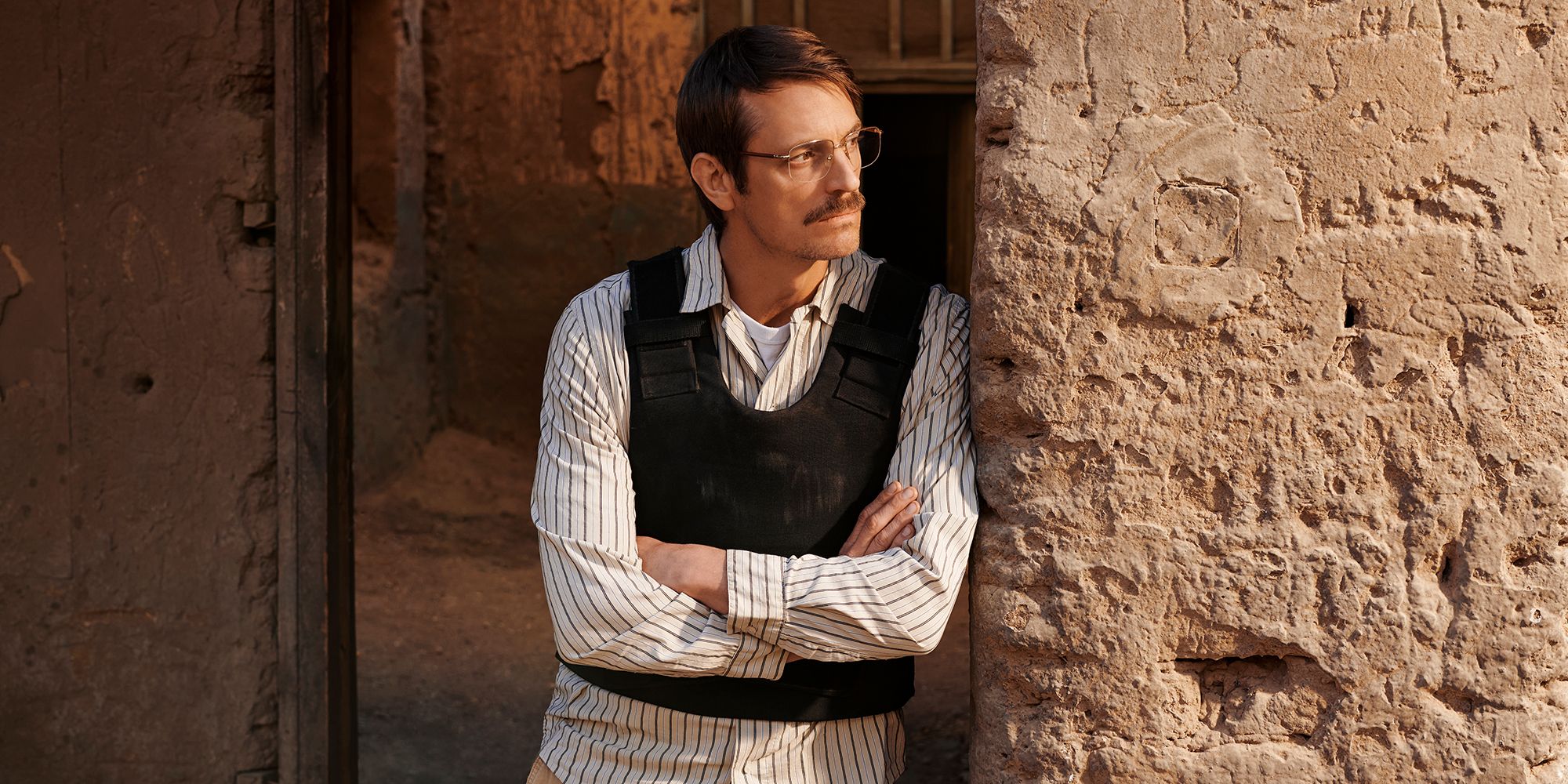
COLLIDER: It's not easy playing a real person, especially somebody like John Nixon who has been through such a unique experience. It's kind of hard to imagine a frame of reference. What for you was the moment where you really got the character? Did you have one of those moments where you were like, "I get it now"?
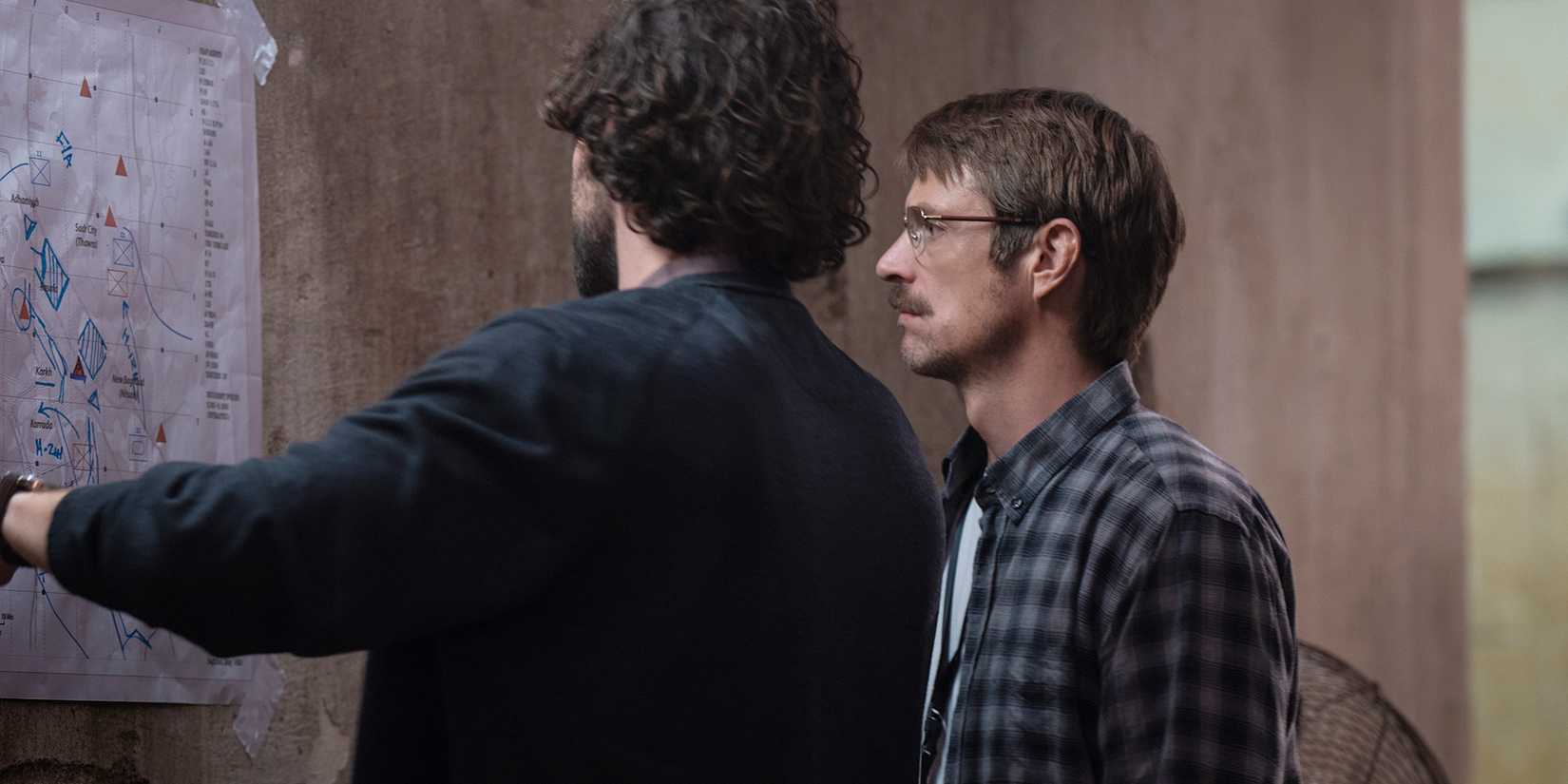
JOEL KINNAMAN: Well, there are two sides to it, because, on the one hand, you have the scripts where you approach playing a character as any other script. You sink your teeth into it, and you see the arc, and you see, okay, he's starting naive, and then over the course of the story he changes, and this is the point of no return. But then, of course, it becomes very different when you're portraying a real person, and there's a lot of flavor and thoughts that aren't in the script necessarily that I wanted to get in there.
For me, it was really important to spend time with John, to talk to him, to really get under the hood on him. It was also a real treat for me, because I'm very fascinated with politics, especially international politics and the Middle East, so it was incredible to have this conversation partner, and he was so generous with his time, and so I got to learn a lot and bounce ideas; it was really fascinating.
For me, I think a lot of what sank in with me about who John is was his relationship to his wife and his dedication to his wife. For me, that told me who he is; that said a lot about his essence. I think the conversation we had about relationships, and how you look at your life partner and your soulmate, those were the conversations that made me really understand him, and also love him. He's a very sweet man.
Kinnaman Discusses the Production of 'High Value Target' and Acting With Waleed Zuaiter as Saddam Hussein
"There's sometimes when it was backlit and at certain angles, I was like, 'Fuck, that's Saddam.'"
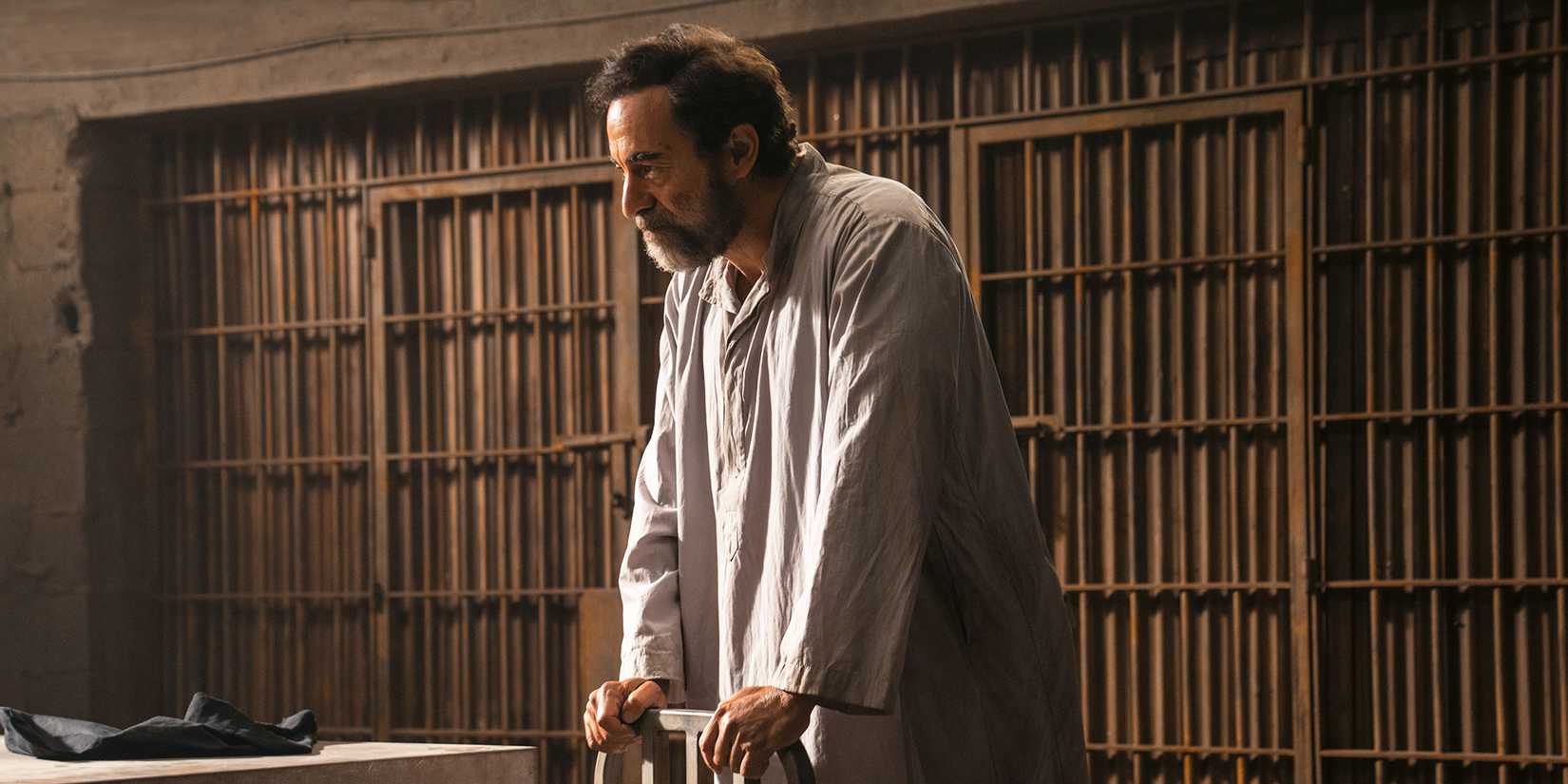
Did he give you any insight on playing out those scenes across from Waleed Zuaiter, who plays Saddam Hussein? After reading the script and then talking to him, did your perspective change at all on how you were going to approach those scene?
KINNAMAN: I was talking to him all the time about those scenes. When I was gonna go off to do this project, in my mind, it felt like I was gonna go sit in a room with Saddam Hussein for three months; that's what it felt like. But in actuality, I think we shot those scenes the first nine days or something, and then that was pretty much it for the Saddam scenes, because that's just how movie making is. Sitting in a room and talking, that doesn't take so long to shoot, but driving around and navigating camels out in the desert, in a sandstorm, with helicopters coming in — that takes time. It was a great ride.
I love getting to know John and to understand him. I've been fascinated with Saddam Hussein for many, many years, and then also this is a project that's been in development for many years, so I've had a lot of time to think about Saddam and read books about him. I felt like I knew a lot about Saddam going into it, and then it's pretty magical playing with Waleed, who gives such a great performance, but he also looks so much like Saddam. In that room, there's sometimes when it was backlit and at certain angles, I was like, "Fuck, that's Saddam." [Laughs] I have a wild imagination; I totally felt like I was stepping into history.
'High Value Target' Filming Days in Cairo Faced Multiple Obstacles
"The hardest days were like one to 100."
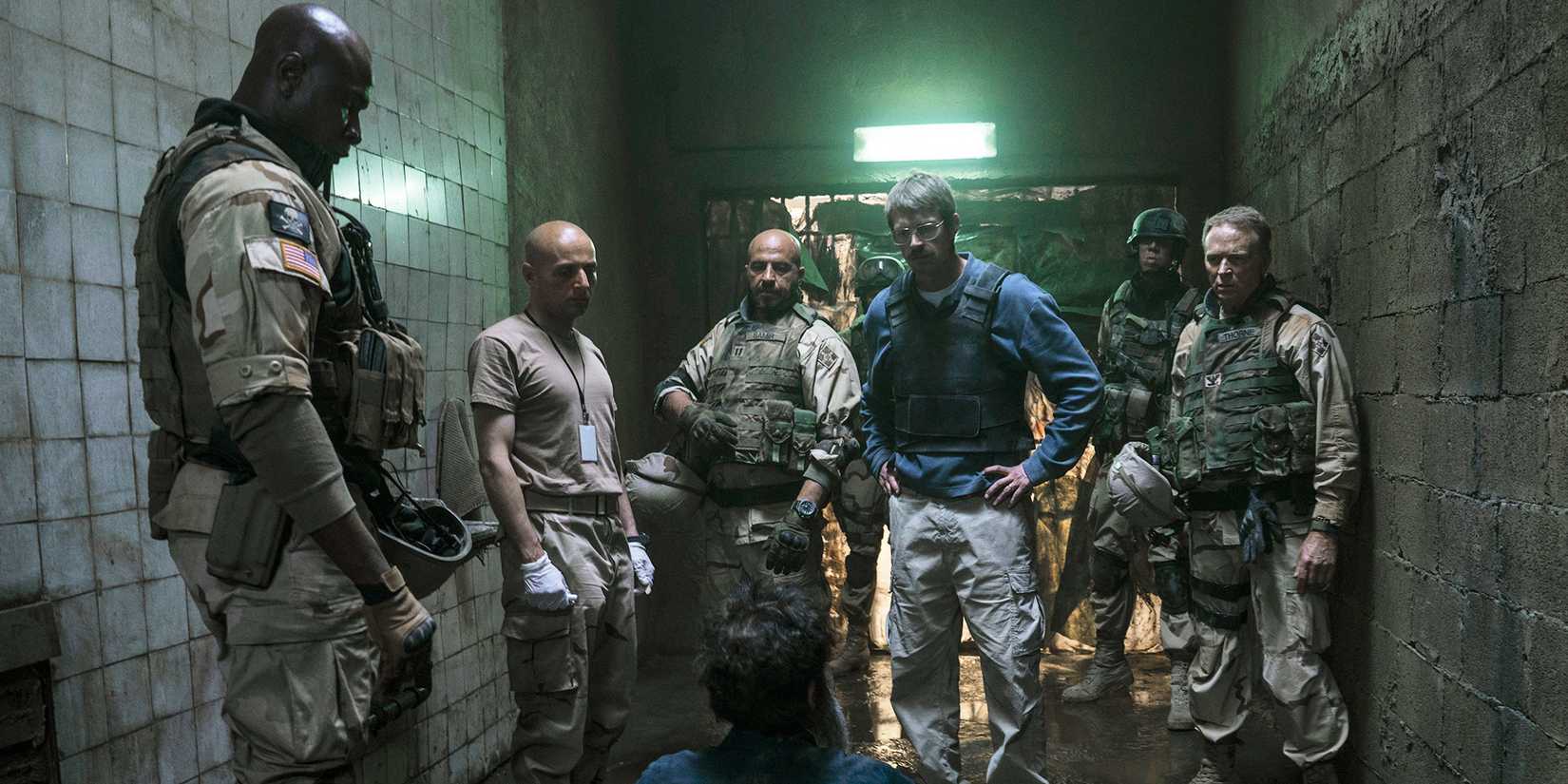
I know that you've mentioned that this was one of the most challenging shoots you've done while filming in Cairo. Can you talk about a particularly difficult day that you remember shooting, or what makes the show different from some of the other similar projects that you've done?
KINNAMAN: The hardest days were like one to 100. [Laughs] No, it was really tough. I really had to work hard on this one.
Was it the physical aspect or was it the technical stuff?
KINNAMAN: Egypt is a tough place to shoot. They do things in their own way, and it works for them. They have a very vibrant film culture there; a lot of the Middle Eastern stuff gets shot in Cairo. But in Egypt, you would lose a couple of hours because, "Oh no, the generators didn't come today," and then [Laughs] it's like, "Okay, so then we have no power. Okay, cool." It was something like that every day.
But there's a charm to it as well, and I met a lot of incredible people in Egypt, and I have a lot of love for people there too. We didn't have a very big budget on this, and we tried to do a lot. I don't need to throw numbers out there, but when you're really trying to do a lot with a little, that adds extra pressure. It was tough. It's also unfortunate in Cairo that they have such trouble with trash. It's very dirty everywhere, and it wears on you. It was still a great experience, but I had to work hard.
Kinnaman Reveals His Own Outlook Change After 'High Value Target'
"America has been cooperating with at least equal monsters in many other ways..."
The show gives a very intimate look at Saddam Hussein, who's this figure that we have a very different interpretation of. Has working on the show shifted your own personal perspective when it comes to looking at these international conflicts?
KINNAMAN: Yeah, for sure, it changes my outlook because I read a ton about it and really did a deep dive on it. I had a lot of conversations with very knowledgeable people, so that really pulls back the veil of what's going on and why we keep ending up in these tragic wars of choice, what mechanisms are behind it, and what narratives are being created to sway the public into supporting them, even though there's no real benefit for any normal people. There's other interests that are benefiting and power games that no one is asking for, or that necessarily are American interests.
Saddam was such a fascinating historical figure, and he's done horrible things. He gassed the Kurdish people in Halabja; he's murdered, and his sons are just sadistic murderers, raping and murdering tons of people — it's not a stretch to call him a monster at all. But, in terms of international politics, America has been cooperating with at least equal monsters in many other ways, so that's not a motivation enough really for it. When you get to know the character of Saddam through the eyes of John, then his persona, his personality, and his views become the biggest argument against the invasion.
When he's talking about his reaction to 9/11, that he was relieved because that, for him, signaled this is going to be the incident that finally is going to make the U.S. and Iraq come together because now they'll see that we actually have a common enemy, and then the narrative in the U.S. is that he's behind it, which couldn't be more false. And then also a lot of people were frustrated in the West of how he was responding to the IAEA weapons inspectors and that he wasn't fully, fully cooperating, that he was evasive, and he would justify that in conversations with John like, "Well, if I proved without the shadow of a doubt that I don't have any weapons, then as soon as these inspectors leave, and the American gaze moves somewhere else, then Iran will invade, and I'm defenseless." Of course, from his perspective, that makes total sense.
So it's fascinating conversations that you haven't heard; you haven't seen his perspective, you haven't heard his perspective, and actually his perspective makes a lot of sense, and you can see why he acted the way that he did, and why American behavior was so baffling to him for so many years. Because, actually, the United States was very dishonest in the way that they dealt with Saddam. They supported him, and then all of a sudden they're giving weapons to the Iranians, and you find there's so many incidents of this two-faceness of American foreign policy that I think a country should lead with the morals they espouse.
Kinnaman Breaks Down What Your Biggest Takeaway Should Be From 'High Value Target'
"It's completely avoidable."

In the finale, John goes in to debrief President Bush, and they preface ahead of time like, "Oh, he doesn't really care about the nuance of it all. He just wants black and white. Should we do this or should we not?" It was frustrating to watch from John's perspective, especially with how much knowledge he has. The episode can feel disheartening, and I felt like, "Oh great, the world still sucks and will always suck." But what do you want viewers to take away from the finale and the scope of this entire show?
KINNAMAN: Well, I mean, especially said in the context of the Iran War, it's that these are some of the mechanisms that we still have in government where there are special interests, there's interest from other governments — so-called allies — and the military-industrial complex that is pushing narratives and politicians into thinking that this is in any way a justifiable way to use American power. We have somewhat of a democratic system, and — this is not like really a political mouthpiece — but we need to get away from these terrible wars of choice that are ruining our economy, killing a lot of people unnecessarily, and causing havoc and instability around the world, and it's completely avoidable.
This interview has been edited for length and clarity.

- Release Date
- 2026 - 2026-00-00
- Network
- TNT
- Directors
- Krzysztof Skonieczny
Cast
-

John Nixon
-

Lena Góra
Polly Stevens
-
Waleed Zuaiter
Saddam Hussein
-
Paul Ryan
George W. Bush
KioskNews shows a cleaned-up reading view extracted from the publisher’s page — the original always lives on their site, not ours.