‘Marauding army’: Officials raise alarm over Bijnor’s rising leopard numbers
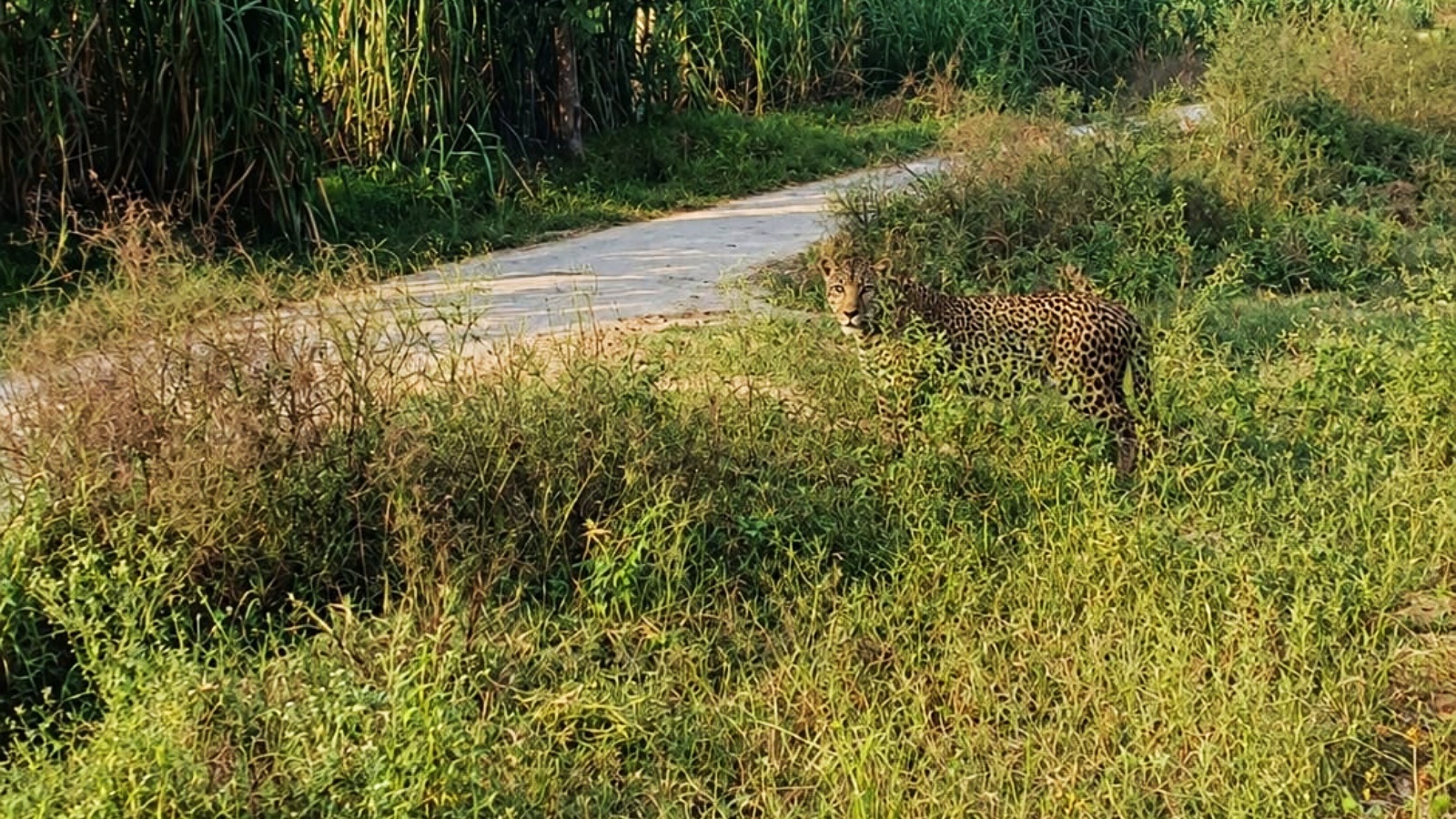
Not far from where the National Capital Region’s limits end, Bijnor district in Uttar Pradesh is fighting what alarmed forest officials call a “marauding army” – comprising leopards.
“If their growing population is not checked, toh ye ek marauding army ki tarah tabahi macha denge (they will wreak havoc like a marauding army). They will enter cities and attack people. It will be difficult to stop them,” says a senior forest official posted in the area.
A survey by the Forest Department last year put the number of the feline species in Bijnor, a district spread over 4,000 sq km, at 444 in the “affected areas”, and expected to triple in five years if left unchecked. Leopards are also turning up now in neighbouring Moradabad, with the two districts accounting for 11 deaths and injuries to 30 in leopard attacks this year alone.
Avtar Kumar of Beeruwala village, who lost one of his two children after a leopard attacked them, told The Indian Express: “The animals have started entering our villages and streets. They can even be seen moving around during the day. We don’t step out at night.”
While the Forest Department has captured 92 leopards in Bijnor and Moradabad (of them 67 in Bijnor) since the start of the year – last year, the number was 52 – officials warn that it is a losing battle, with this sugarcane belt providing leopards an amenable habitat.
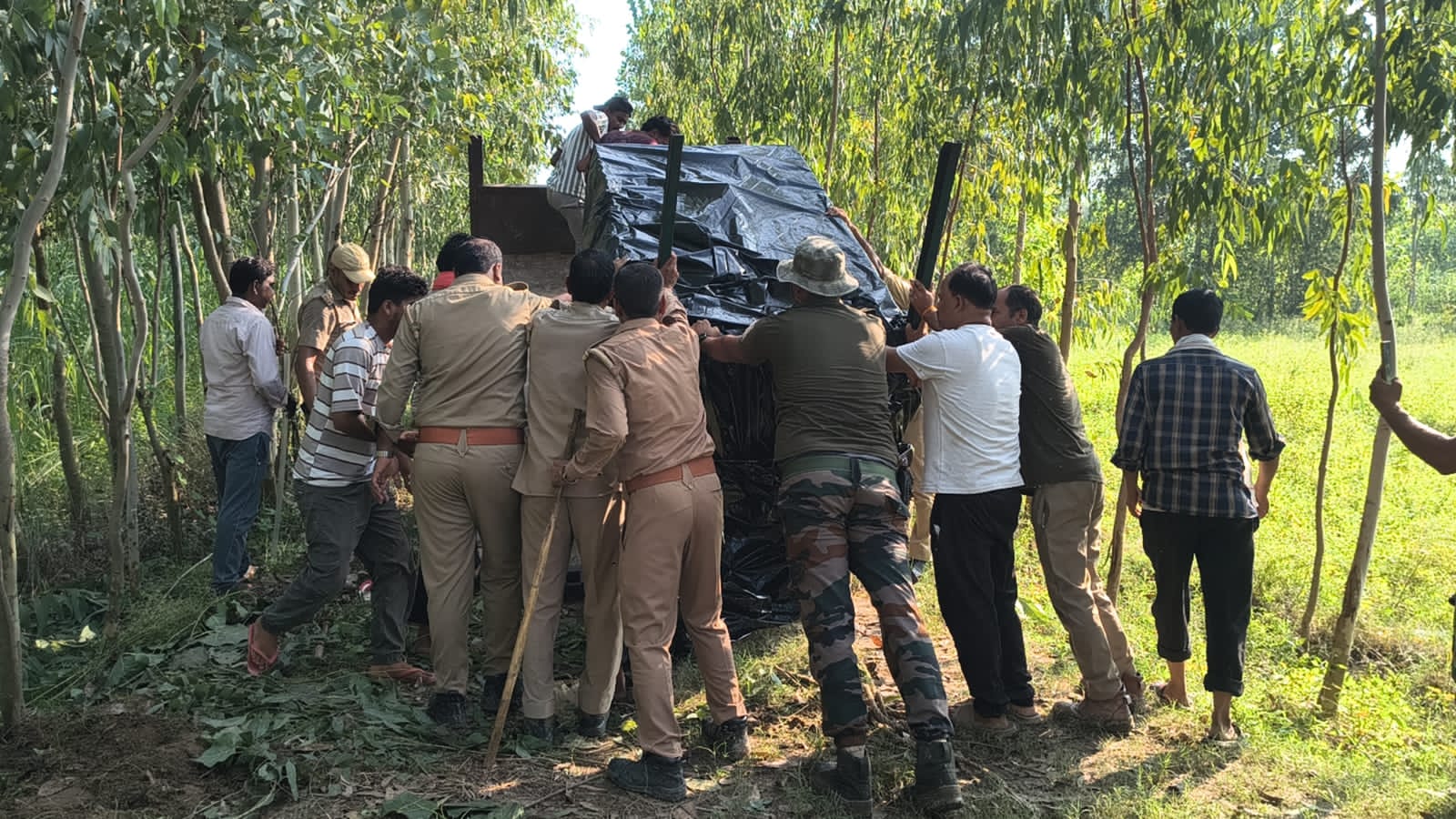 Forest officials capturing an adult male leopard using a trap cage in Malikpur Semli village in Moradabad. (Express photo)
The “sugarcane leopards”, as they are dubbed by officials, use the cover provided by tall sugarcane stalks and dense vegetation to move between Bijnor and Moradabad along the Ramganga river. An estimated 786 villages in the two districts are now reporting leopard movement.
While most of the deaths this year in leopard attacks have been reported in Bijnor (7), the number of injured is much higher in Moradabad (21). Last year, Moradabad recorded 1 death and 1 person injured, while Bijnor’s numbers were 9 and 22, respectively.
Story continues below this ad
Officials said one reason for the leopards moving into the non-forested areas of Bijnor district is the effective conservation efforts in nearby Rajaji Tiger and Corbett Tiger Reserves, leading to an increase in tiger populations there. Plus, nearly half of Bijnor’s agricultural land is covered by dense, large sugarcane fields, and the livestock in surrounding areas ensures a steady supply of prey.
The increasing human-animal conflicts as leopards venture into areas inhabited by humans mean that the number of such incidents in Bijnor has surged from 7 in 2015 and 11 in 2016, to 172 in 2024 and 122 in 2025.
Leopards reared in sugarcane fields also gradually lose their natural fear of humans, officials said, which further increases the chances of conflict.
In a report it submitted to the headquarters in Lucknow last year, the Forest Department proposed sterilisation as a scientific measure to manage the leopard population, adding that without such intervention, their numbers could go up to 1,336 in Bijnor in the next five years. It recommended sterilisation of 75% of the leopard population in this period, at a rate of 15% each year.
Story continues below this ad
P P Singh, the Chief Conservator of Forests of the Rohilkhand Zone that covers Bijnor and Moradabad, told The Indian Express that in the report, they recommended that the state government consider the sterilisation proposal and approach the Union Ministry of Environment, Forests and Climate Change for a go-ahead.
“The problem needs to be addressed. The situation may become worse in the coming years as leopard movement spreads to other districts. Even Moradabad earlier reported only a few incidents,” Singh said.
Officials said they don’t see any other effective solution, and recommended that sterilisation should be followed by relocation of some leopards to areas designated by the authorities.
Uttar Pradesh Chief Conservator of Forests Anuradha Vemuri said she had written to the Centre to consider the sterilisation proposal.
Story continues below this ad
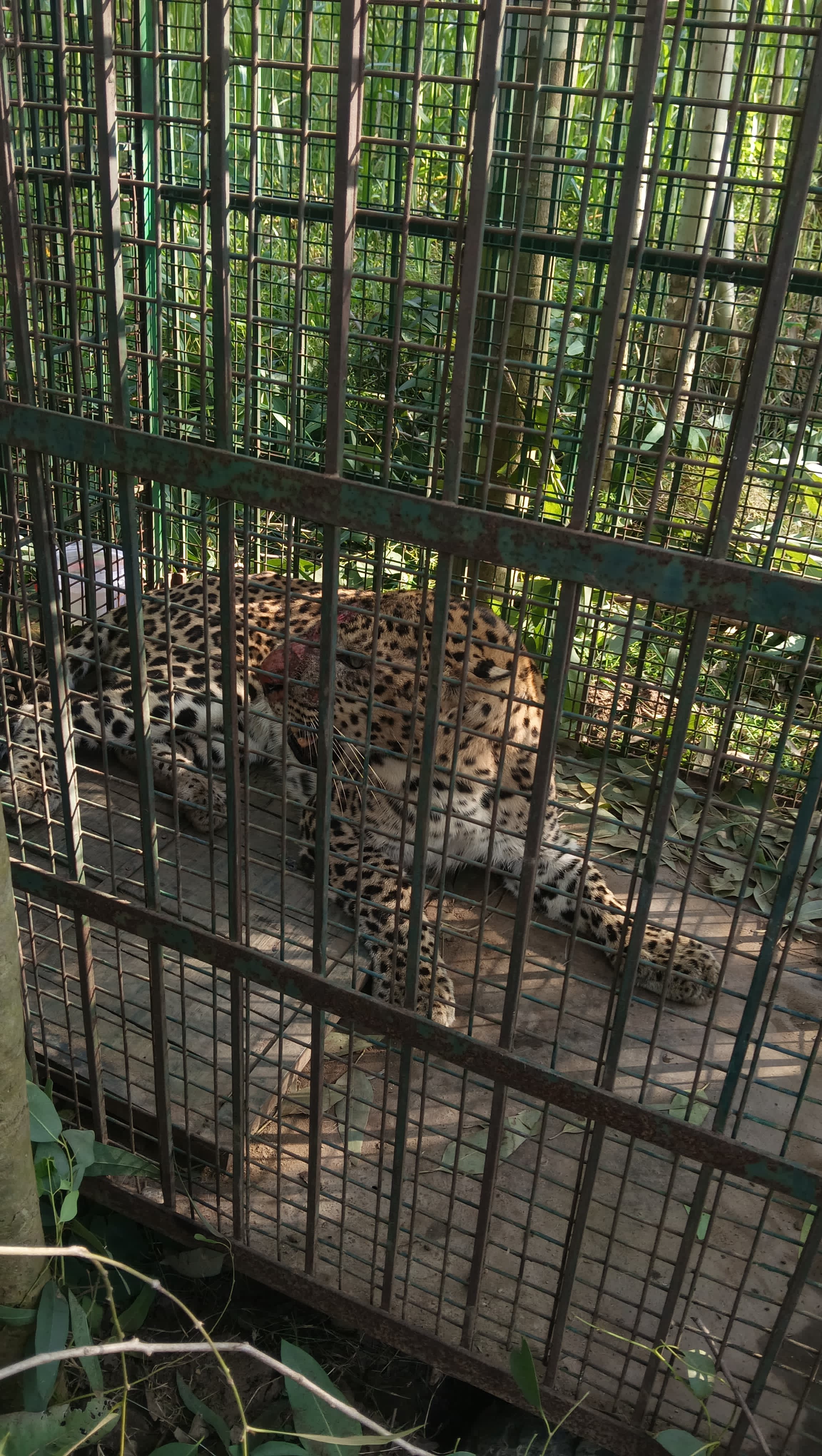 Forest officials capturing an adult male leopard using a trap cage in Malikpur Semli village in Moradabad. (Express photo)
Of the leopard population of 444 in Bijnor last year, estimated on the basis of direct and indirect sightings over a one-year period, 222 were females. Of the female leopards, half were of breeding age. Leopards generally breed once every two years, with a litter comprising two to four cubs. While an estimated 80% of the cubs survive, the annual mortality rate among adult leopards is 10%. If 15% leopards were sterilised every year, officials said, they could contain the population to around 755 in five years before it stabilises.
Talking about the leopard menace, Amit Singh, the Station House Officer of Najibabad Police Station in Bijnor, said they are often called upon to accompany forest officials when a leopard is spotted.
Dr Dilshad, a medical officer at the Community Health Centre in Najibabad, said while injured people are usually rushed to nearby hospitals, “they are provided first aid and referred to the district hospital, if required”.
Nafees Ahmed, a sweet shop owner and the husband of former pradhan Bano Begum of Alipur village in Bijnor, said the leopard problem has intensified over the past six months. “Locals believe there are at least three leopards in our area. The Forest Department has been trying to capture them and has placed three cages, but so far, none has been trapped.”
The ‘sugarcane leopards’ of UP
Estimated Bijnor numbers, 2025: 444
Leopards captured in Bijnor, nearby Moradabad, 2026: 92; 2025: 52
Villages reporting leopard movement across the two districts: 786
KioskNews shows a cleaned-up reading view extracted from the publisher’s page — the original always lives on their site, not ours.