Almost 1000 NSW teachers were asked if screens helped students learn. Only 53 per cent said yes
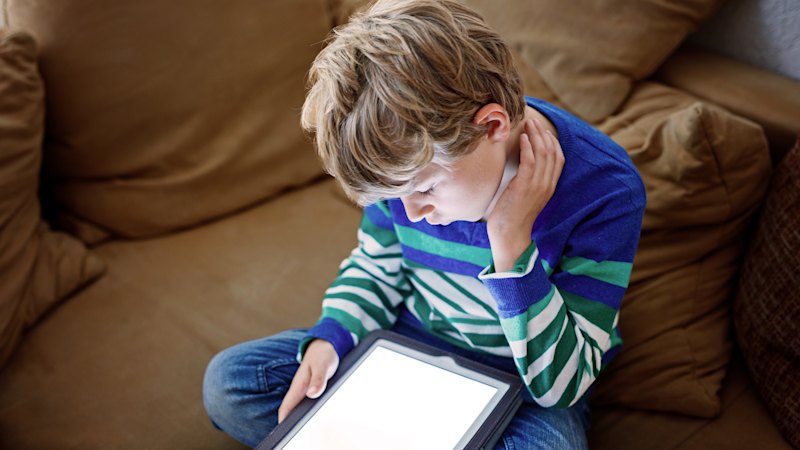
School students are failing to regulate their use of screens and devices both in and outside the classroom as teachers say digital distraction is detrimental to pupils’ focus and their interactions with peers.
Landmark research into screen use commissioned by the NSW government has found usage explodes once students reach the upper years of high school, with pupils spending more than seven hours on screens for schoolwork, social media and playing games.
The NSW government last month capped screen time in schools to as little as 15 minutes a day for the youngest students – a sharp reversal of decades of policies that have seen more technology embedded into classrooms in a bid to bolster digital literacy and better prepare students for the future.
The Macquarie University-led research, Best Practice in Screen Use for Education report, is based on surveys with 900 teachers, 1000 students and 1600 parents.
It found half of teachers reported students were frequently distracted while only 42 per cent said students were able to shift their attention away from screens when asked.
When high school leaders were asked, only 10 per cent believed students could self-regulate their use of technology when learning.
“Overall, these findings suggest that managing attention and minimising off-task screen behaviour remain persistent classroom challenges, with many teachers reporting impacts on both student focus and peer interactions,” the report said.
NSW Education Minister Prue Car said the concerns about the impact of screens in the classroom and the evidence of the benefits of reading and writing with pen and paper had driven the decision to cap screen use.
“The excessive use of technology and its impact on children’s mental health and education is a major concern for parents and schools today,” she said.
“Students benefit from the use of screens and technology in schools when they are used in an intentional way with a specific and age-appropriate educational purpose.”
The research revealed how screen time surged once a student started secondary school, growing from fewer than two hours a day in the early years of primary school to more than seven hours in high school, both in and outside of school.
The average student in years 9 and 10 reported spending 38 minutes outside of school on social media apps,increasing to 61 minutes per day for students in year 11 and 12.
As students got older, they were more likely to report they sometimes spent too much time on screens. Many struggle with self-regulating their behaviour, with only 59 per cent of secondary students saying they would always stop using screens immediately when asked.
It also found 80 per cent of primary and 82 per cent of secondary students reported their parents were on screens “at least sometimes” when they were trying to talk to them.
Screen use in the classroom could be beneficial for learning, students said, but 84 per cent of high school students and 57 per cent of primary students also indicated they were at least sometimes distracted when using screens.
When teachers were asked whether digital devices helped students learn, 53 per cent agreed, 27 per cent were neutral and 20 per cent disagreed.
“Overall, the findings point to a clear shift in students’ screen use as they move through their schooling: time on devices increases, the mix of activities becomes more complex, and the boundaries between learning, leisure and social connection become harder to distinguish and manage,” the report said.
Professor Matt Bower, lead author of the research, said since the Rudd government’s Digital Education Revolution almost 20 years ago, educators now understood it was erroneous to think simply putting technology in classrooms improved learning outcomes.
“It was naive at the time to think we would give every student a laptop, and they would automatically be prepared with digital literacies that would make them successful,” he said.
He noted the importance of developing students’ ability to think critically and deeply which he said was “hard work” and often “more than watching a video”.
“But if we just also have an old-fashioned education – where we throw away digital devices and use a textbook, we miss an opportunity to know things better by watching a video about life in Ancient Greece, doing science simulations, and analysing data sets that often helps students form a [greater] understanding than reading a static textbook.”
The research showed parents of students with special needs often had particularly positive views of technology use.
“A lot of adults would agree having kindergarten to stage 2 students on screens for an entire day is not a good thing. The trick is how to provide teachers with enough autonomy to decide.”
Start the day with a summary of the day’s most important stories. Sign up for our Morning Edition newsletter.
KioskNews shows a cleaned-up reading view extracted from the publisher’s page — the original always lives on their site, not ours.