10 Greatest Classic American Sitcoms, Ranked

Michael Block is a 14 time GLAM Award nominated writer, producer, and host of the podcast Block Talk. Throughout his time in the entertainment industry, he has worked on and off Broadway as a stage manager, written several produced plays, critiqued hundreds of theatrical performances, drag and cabaret shows, and has produced events randing from drag competitoons to variety concerts!
On Block Talk, he interviews nightlife personalities, covers the wide world of entertainment through features, ranking episodes, and recaps ALL of Drag Race, as well as Dragula and Survivor. He has interviewed hundreds of RuGirls that span the globe at DragCon NYC, DragCon LA, and DragCon UK.
In his free time, he makes one-of-a-kind jewelry and gift baskets with his mom. He is a proud member of the LGBTQ+ community.
Sign in to your Collider account
The landscape of sitcoms on television might look drastically different had it not been for the classics that pioneered the genre. Network television has hosted countless incredible, long-running series, but only a handful are truly great. Whether you caught them in real time, found them via Nick at Nite, or discovered them on streamers today, these American sitcoms completely changed the genre while establishing a blueprint still used today.
From workplace ensemble series to domestic comedies, these ten shows each brought their own brand of funny that kept us laughing from beginning to end. There are certainly many fan favorite shows that came just shy of making our list. We’re here to celebrate the very best of all time.
10 'The Andy Griffith Show' (1960-1968)
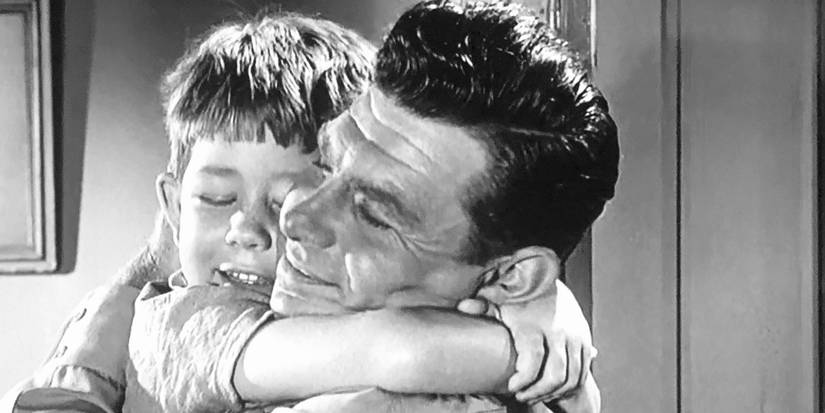
Perhaps the most iconic whistle-based theme song in television history, The Andy Griffith Show is as wholesome as it gets. Created by Sheldon Leonard, the eight-season series follows Andy Taylor (Andy Griffith), the wise and easygoing widowed sheriff of the fictional, slow-paced town of Mayberry, North Carolina. He balances his modest law enforcement duties with raising his young son, Opie (Ron Howard), with the help of his aunt and housekeeper, Bee (Francis Bavier). Together with his well-meaning but bumbling deputy, Barney Fife (Don Knotts), Andy navigates the daily quirks and warm-hearted misdeeds of the community's eccentric townspeople. Earning its place as an all-time great, The Andy Griffith Show blends gentle humor, rich character dynamics, and an enduring sense of nostalgic community.
The Andy Griffith Show’s enduring legacy comes from unmatched chemistry and wholesome storylines in a timeless setting. The series relied on relatable human moments, gentle moral lessons, and tight, character-driven plots. Set in the idyllic town of Mayberry, the show evoked a comforting atmosphere of simpler living that resonated with audiences, even amid the societal upheavals of the 1960s. Viewers across decades continue to watch the series in syndication, celebrating its portrayal of fatherhood, decency, and strong community bonds. With a cast of individuals who went on to continue to play a key part in other timeless sitcoms, The Andy Griffith Show’s ability to warm hearts six decades later speaks to the brilliance of the show.
9 'Seinfeld' (1989-1998)
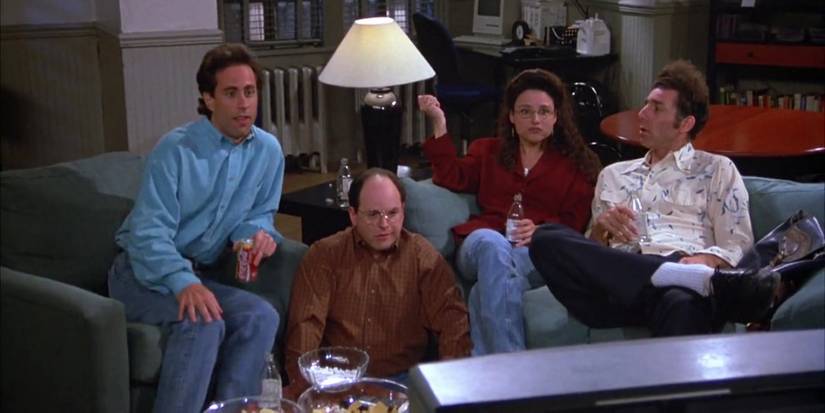
For a show about nothing, Seinfeld sure lasted quite a long time! Created by Larry David and Jerry Seinfeld, the series follows a stand-up comedian and his three eccentric friends as they navigate the petty annoyances and social absurdities of daily life in 1990s New York City. The series operates on a "no hugging, no learning" rule, trading sentimental life lessons for trivial everyday misadventures. Seinfeld earned a reputation as a great sitcom by breaking television rules, subverting sentimental formulas, and turning mundane social anxieties into high-comedy art.
Seinfeld rejected traditional sitcom plots where characters learn lessons, fall in love, or grow emotionally. Episodes mined humor from petty grievances, awkward social etiquette, restaurant culture, and the minor annoyances of urban life. Unlike the idealized families or tight-knit moral circles of other shows, Jerry, George Costanza (Jason Alexander), Elaine Benes (Julia Louis-Dreyfus), and Cosmo Kramer (Michael Richards) were defined by their vanity, pettiness, and lack of genuine empathy. At its peak, the show dominated American culture, permanently entering the national lexicon with catchphrases like "Yada, yada, yada," "No soup for you!" and "Serenity now!" Its legacy stems from a willingness to feature unlikable characters who face karmic, often hilarious ruin rather than cheap redemption. It’s why the series finale was so perfectly played.
8 'The Dick Van Dyke Show' (1961-1966)
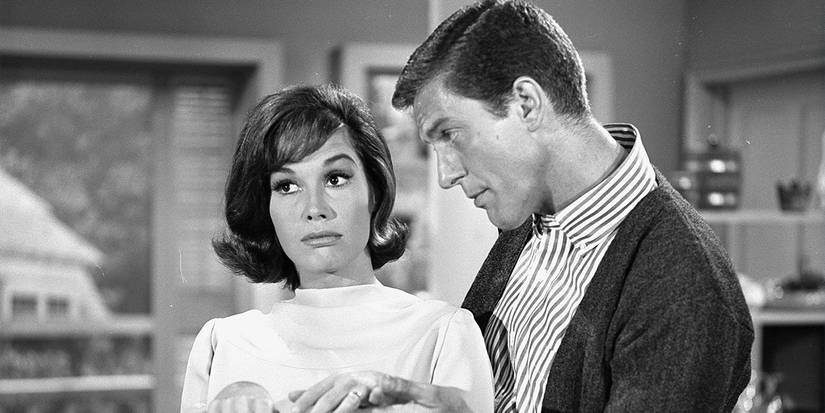
Very few families were as delightful as the Petries on The Dick Van Dyke Show. Created by Carl Reiner, the five-season series centers on Rob Petrie (Dick Van Dyke), the head writer for a fictional New York television variety program, as he navigates a hectic work environment alongside his eccentric co-writers. At the same time, the sitcom humorously balances his urban career with his suburban home life in New Rochelle, New York. He shares this domestic life with his wife, Laura (Mary Tyler Moore), and their young son, Ritchie (Larry Matthews), capturing typical mid-century family and workplace dynamics. A gold standard for balancing family and domestic life, The Dick Van Dyke Show revolutionized how sitcoms blended smart writing, physical comedy, and modern domestic realism.
Created from Reiner's real-life experiences as a writer for Sid Caesar’s Your Show of Shows, the series combined sophisticated workplace humor with grounded suburban family life, marrying sitcom tropes with genuine realism. Rob and Laura Petrie defied the trope of the bumbling husband and nagging wife, instead portraying a genuinely loving, modern, and equal partnership. Van Dyke brought Broadway-level physical comedy paired with rapid-fire, literate dialogue from a stellar ensemble cast including Rose Marie as Sally Rogers, Morey Amsterdam as Buddy Sorrell, and Richard Deacon as Mel Cooley. The show modernized the image of the American woman and set a structural blueprint for decades of smart television that followed, including a show we’ll discuss shortly.
7 'The Honeymooners' (1955-1956)
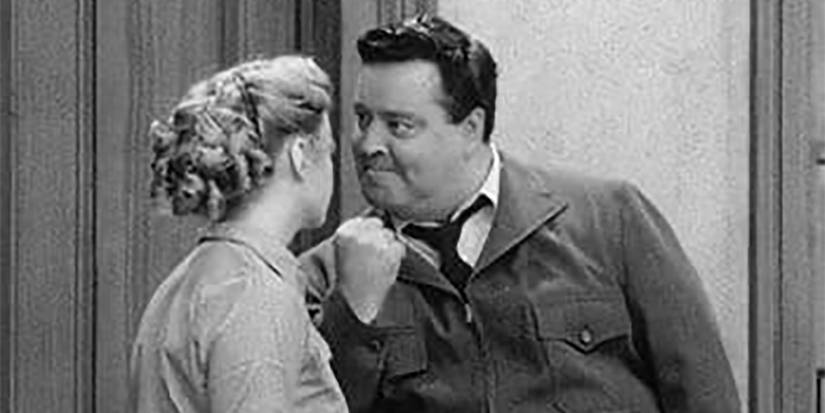
If you’ve heard the phrase “To the moon, Alice” and didn’t know where it came from, you have The Honeymooners to thank. Created by and starring Jackie Gleason, the classic working-class sitcom centered on Ralph Kramden (Gleason), a loudmouthed but good-hearted New York City bus driver living in a modest Brooklyn apartment with his sharp-tongued wife, Alice (Audrey Meadows). Alongside his eccentric upstairs neighbor and best friend, sewer worker Ed Norton (Art Carney), Ralph constantly dreams up wild get-rich-quick schemes to improve their financial standing. These ill-fated plans inevitably end in comedic disaster, leaving Alice and Ed's wife, Trixie (Joyce Randolph), to watch with weary patience and keep their husbands grounded. A masterwork of comedy, The Honeymooners became a foundation for sitcoms by exploring raw, working-class realities.
Unlike the sanitized, affluent suburban families seen in contemporaries like Father Knows Best or Leave It to Beaver, The Honeymooners set its stories in a cramped Brooklyn tenement. It focused its comedic antics on the rooted realities of get-rich-quick schemes to escape their blue-collar reality. The show deliberately kept both couples childless to keep the focus squarely on the raw dynamics of marriage and financial stress. The series crafted classic sitcom archetypes: the blustery protagonist and the levelheaded housewife. The Honeymooners defied what would be tradition today by only running a perfect single season comprising of 39 strong episodes.
6 'All in the Family' (1971-1979)
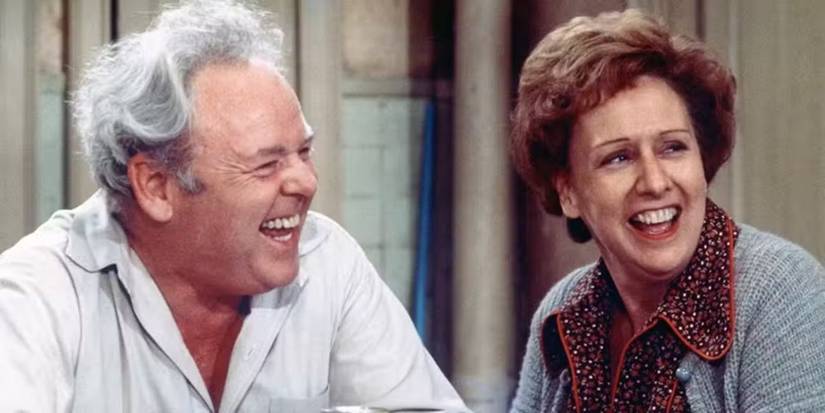
A good sitcom entertains. A great sitcom can spark conversation. That’s exactly what All in the Family did. Created by Norman Lear, the sitcom follows Archie Bunker (Carroll O’Connor), a working-class bigot living in Queens, New York, and his clashes with his rapidly changing social and political surroundings. His traditional, reactionary views are constantly challenged by his progressive son-in-law, Michael “Meathead” Stivic (Rob Reiner), and his feminist daughter, Gloria (Sally Struthers), while his sweet and naive wife, Edith (Jean Stapleton), tries to keep the peace. The landmark series broke ground by weaving raw dramatic conflicts and taboo social issues, such as racism, sexism, and the Vietnam War, into mainstream comedy.
All in the Family shattered safe, sanitized conventions of the 1960s sitcom, forcing American primetime to confront real-world social and political turbulence. Instead of clean-cut moral lessons, episodes embraced discomfort and complex humor, reflecting actual kitchen-table arguments happening across the country. The series proved so culturally fertile that it launched a wave of successful spin-offs, including The Jeffersons, Maude, and Good Times. Perhaps its greatest cultural impact on America is its ability to engage both conservative and liberal viewers, changing how television addressed cultural change.
5 'The Golden Girls' (1985-1992)
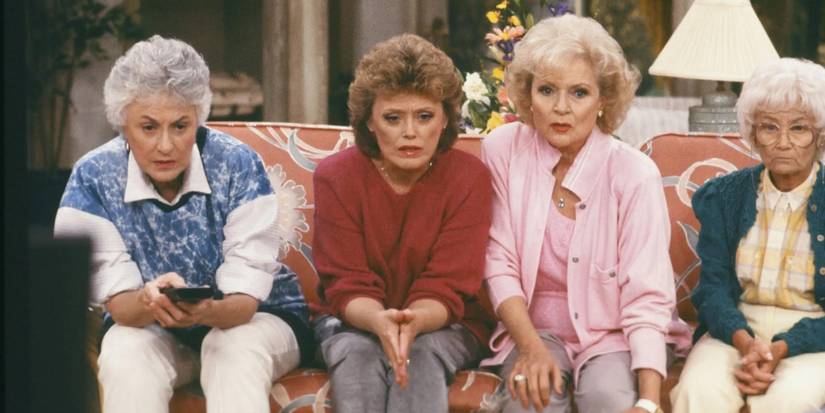
Putting four older women at the center of a sitcom was literally a novel idea. And yet, Susan Harris did so, forever changing television forever. The Golden Girls follows four older women—sharp-witted Dorothy Zbornak (Bea Arthur), naive Rose Nylund (Betty White), flirtatious Blanche Devereaux (Rue McClanahan), and Dorothy's sharp-tongued mother, Sophia Petrillo (Estelle Getty)—who share a house in Miami, Florida. As they navigate the ups and downs of aging, romance, and daily life, the quartet relies on an unbreakable bond of friendship. The Golden Girls is celebrated for its sharp humor and willingness to tackle important social and personal issues.
A historic masterpiece, The Golden Girls was a masterful character-driven comedy with groundbreaking storytelling and enduring chemistry. Unlike other ‘80s sitcoms, The Golden Girls regularly balanced heavy topics with heartfelt warmth, often over a late-night slice of cheesecake. The series fearlessly tackled progressive and complex subjects for primetime television, including the HIV/AIDS epidemic, LGBTQ+ inclusivity and civil rights, aging, loneliness, menopause, and financial hardship later in life. With rare critical and award pedigree, every single principal cast member won a Primetime Emmy Award for their performances.
4 'M*A*S*H' (1972-1983)
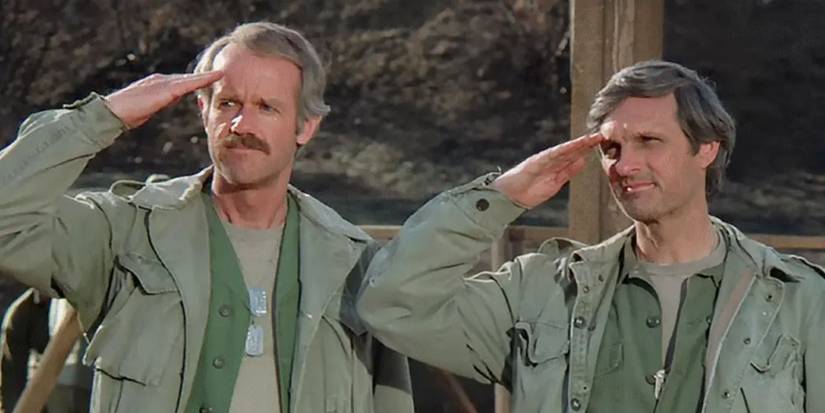
One might not have believed a military-based sitcom would be so beloved, but M*A*S*H defied the odds. Spun off from the 1970 film, the Larry Gelbert-developed series follows the doctors and support staff of the 4077th Mobile Army Surgical Hospital as they treat the wounded during the Korean War. To survive the daily tragedies and psychological toll of the front lines, the staff relies heavily on sharp wit, gallows humor, and practical jokes. M*A*S*H fundamentally redefined what a half-hour comedy could achieve, shifting from a standard joke-driven format into a profound dramedy that blended sharp wit with the devastating realities of war.
Before M*A*S*H, sitcoms mostly stayed in the light-laugh lane. M*A*S*H shattered expectations using humor as a psychological defense mechanism. It pioneered the use of parallel stories in a half-hour format, typically pairing a lighter, zany camp prank with a serious, high-stakes medical or moral dilemma. Over its 11 seasons, the show transitioned from broad caricatures into deeply human, psychologically complex arcs. With a celebrated ensemble cast led by Alan Alda, Wayne Rogers, Loretta Swit, and McLean Stevenson, the characters brought maturity and shifting emotional tones to the camp. Premiering during the Vietnam War era, the show offered biting commentary on military bureaucracy, loss, and brotherhood through a period-set story. The series finale, "Goodbye, Farewell and Amen," drew an unprecedented number of viewers, proving how impactful the series truly was.
COLLIDERInteractive
Five wards on call
TV/Medical Drama/Shift Assignment
Collider · TV Medicine
Which Fictional Hospital
Would You Work Best In?
Eight questions · five wards · one assignment
Five hospitals. Five completely different ways medicine goes sideways on television: brutal, chaotic, romantic, brilliant and ridiculous. Only one of them is the ward your instincts were built for, and eight questions will work out exactly where you belong. Wards accepting
PTMCThe Pitt
CGHER
GSMGrey's Anatomy
PPTHHouse
SHHScrubs
Rhythm strip01 / 08
Question 01 of 08APPROACH
01 A critical patient comes through the door. What is your first instinct? Medicine under pressure reveals who you really are.
Keys 1 to 5 or A to E · Enter to advance
Rhythm strip02 / 08
Question 02 of 08MOTIVATION
02 Why did you go into medicine in the first place? The honest answer says more about you than the one you would give in an interview.
Keys 1 to 5 or A to E · Enter to advance
Rhythm strip03 / 08
Question 03 of 08COLLEAGUES
03 What do you want most from the people you work with? Who you want beside you under pressure is who you are.
Keys 1 to 5 or A to E · Enter to advance
Rhythm strip04 / 08
Question 04 of 08LOSS
04 You lose a patient you fought hard to save. How do you carry it? Every doctor who has worked a long shift has had to answer this one.
Keys 1 to 5 or A to E · Enter to advance
Rhythm strip05 / 08
Question 05 of 08STYLE
05 How would your colleagues describe the way you work? Your reputation on the floor is usually more accurate than your self-image.
Keys 1 to 5 or A to E · Enter to advance
Rhythm strip06 / 08
Question 06 of 08RULES
06 How do you feel about hospital protocol and procedure? Every institution has rules. What you do with them is a choice.
Keys 1 to 5 or A to E · Enter to advance
Rhythm strip07 / 08
Question 07 of 08TOLL
07 What does this job cost you personally? Nobody works in medicine without paying a price. What is yours?
Keys 1 to 5 or A to E · Enter to advance
Rhythm strip08 / 08
Question 08 of 08PURPOSE
08 At the end of a long shift, what keeps you coming back? The answer to this one is the most honest thing about you.
Keys 1 to 5 or A to E · Enter to advance
Assignment madeYou belong in
PTMC · Admitted The Pitt Pittsburgh Trauma Medical Center This ward asks whether you can stay in the room for the whole shift, and come back tomorrow.
You are built for the most unsparing version of emergency medicine television has shown, the one that puts you inside a single long shift and does not let you look away. You need your work to be real rather than romanticized, and you find your purpose inside the work itself rather than in the chaos around it. You have made peace with a job that takes from you constantly and gives back in ways that are harder to name. What this ward asks of you
- Meaning over drama, honesty over aesthetics.
- The discipline to stay present when the department is at its worst.
- A tolerance for weight that does not get put down at the end of the day.
From the Collider file
- Each episode covers roughly one hour of the same emergency-department shift, in order.
- Noah Wyle has now won the lead drama actor Emmy for it twice, in 2025 and again in 2026.
- It reunites the ER team of Wyle, John Wells and R. Scott Gemmill, thirty years on.
Fully present No romance Built to endure
CGH · Admitted ER County General Hospital, Chicago This ward asks whether you can hold the line long enough for the next person to take it.
You are the one who keeps the whole floor moving. Not the most brilliant in the room, possibly the most essential. You show up, do the work, absorb the losses and come back the next day without needing the job to be anything other than what it is. You care about patients as individual people rather than as cases to solve or dramas to live inside, and you believe in the system even on the days it fails you. What this ward asks of you
- Reliability above brilliance, every single shift.
- Faith in a structure that is visibly imperfect.
- The stamina to treat the hundredth patient like the first.
From the Collider file
- Fifteen seasons and 331 episodes, from 1994 to 2009, created by Michael Crichton.
- It holds the record for the most Emmy nominations of any drama series, with 124.
- George Clooney, Julianna Margulies and Noah Wyle all broke out of County General.
Shows up Endurance Patient first
GSM · Admitted Grey's Anatomy Grey Sloan Memorial, Seattle This ward asks whether you can do the work with your whole self in the room.
You came to medicine with everything you have, your ambition, your feelings, your relationships and your history, and you have never quite managed to leave any of it at the door. You form deep attachments to the people you work with, and your personal and professional lives stay permanently, chaotically tangled. That tangle drives both your worst disasters and your most remarkable saves, because you understand that extraordinary medicine often happens where clinical skill meets human connection. What this ward asks of you
- A willingness to feel all of it rather than seal any of it off.
- Colleagues who become family, with everything that costs.
- Comfort with mess, in the OR and everywhere else.
From the Collider file
- Shonda Rhimes' series passed ER to become the longest-running primetime medical drama on US television.
- It is on season 22, with ABC having already renewed it for a twenty-third.
- Ellen Pompeo has played Meredith Grey across three decades of television.
Feels everything Found family Beautifully messy
PPTH · Admitted House Princeton-Plainsboro Teaching Hospital This ward asks whether you can be right when everyone in the room needs you to be wrong.
You are drawn to the problem above everything: the symptom that does not fit, the diagnosis hiding underneath the obvious one. The patient as a person is not your first motivation, though you are capable of caring more than you would admit. You work best when the stakes are highest and the standard answer is wrong. Princeton-Plainsboro exists to house one extraordinary and impossible mind, and everyone near it is there because they can keep up. What this ward asks of you
- Thinking harder than anyone else in the room, then defending it.
- A high tolerance for being disliked while you are right.
- Interest in the puzzle that outlasts your interest in being comfortable.
From the Collider file
- Eight seasons built on Sherlock Holmes: House and Holmes, Wilson and Watson, and an apartment at 221B.
- Hugh Laurie taped his audition in a hotel bathroom in Namibia while shooting another film.
- By 2008 it was the most-watched television show on earth, with an audience around 82 million.
Chases the puzzle Difficult on purpose Usually right
SHH · Admitted Scrubs Sacred Heart Hospital, California This ward asks whether you can hold the tragedy and the absurdity at the same time.
You understand that medicine is devastating and ridiculous in roughly equal measure, and that the only sane response is to carry both at once. You are warm, self-aware and funnier than most people in your field. You use humor to get through terrible moments, which at Sacred Heart is a survival strategy rather than a flaw. You lean on the people around you and let them lean back, because here the laughter and the grief are inseparable. What this ward asks of you
- Humor that never curdles into cruelty.
- The honesty to admit you are still learning how to do this.
- People you can lean on, and the willingness to be leaned on.
From the Collider file
- Nine seasons from Bill Lawrence, filmed largely inside a real decommissioned hospital in North Hollywood.
- Working doctors have repeatedly named it the most accurate medical show on television.
- Zach Braff, Donald Faison and Sarah Chalke returned for an ABC revival that premiered in February 2026.
Laughs to cope Still learning Leans on people
Shift report · your top three
1
2
3
Copied to your clipboard
Chart signed byCOLLIDERCollider.com · The TV Desk
3 'Cheers' (1982-1993)
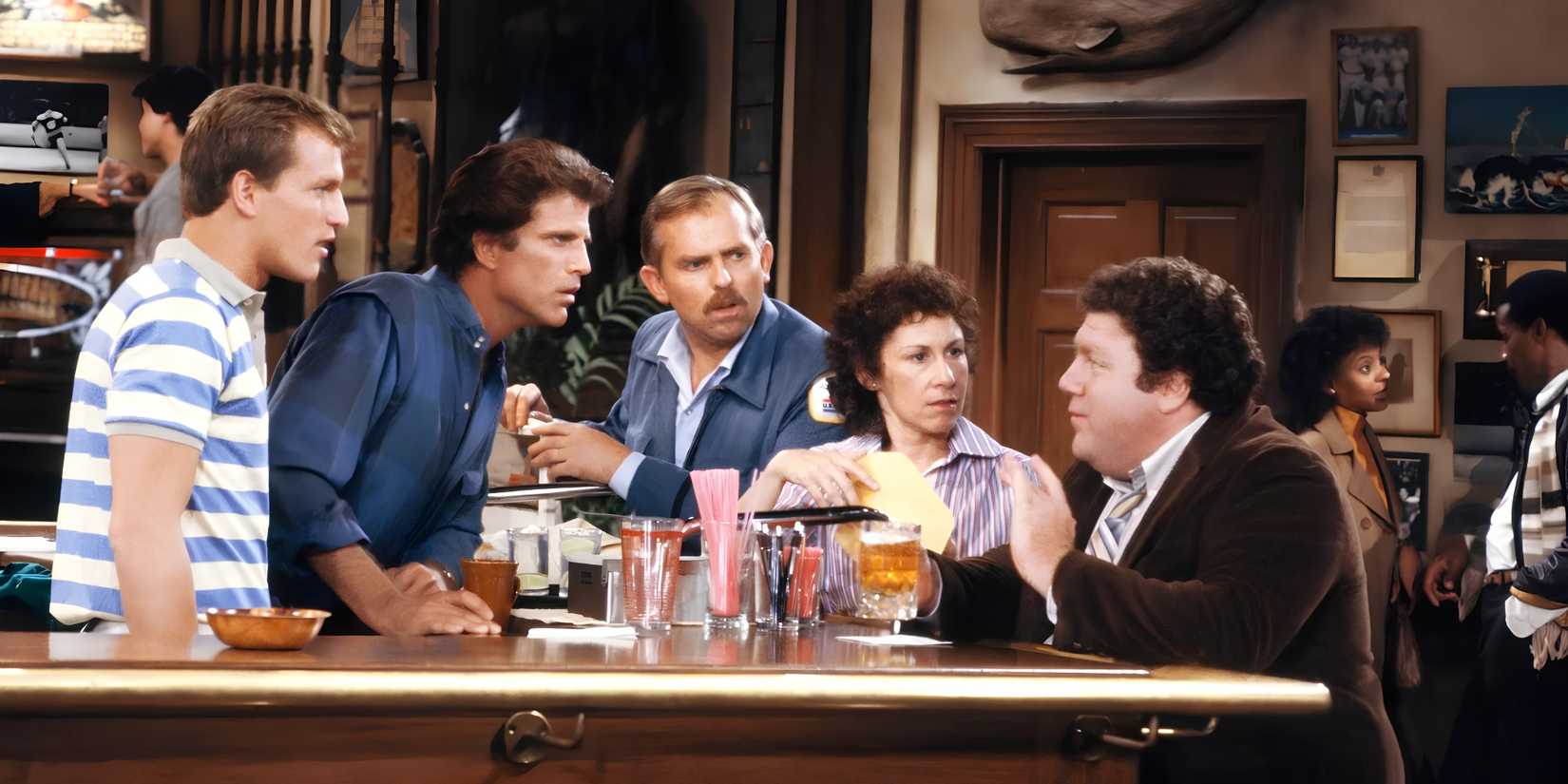
The theme song alone pushes Cheers toward the top because it’s true: sometimes we want to go where everybody knows our name! Created by Glen Charles, Les Charles, and James Burrows, the 11-season series is set in a cozy Boston neighborhood bar where locals gather to drink, socialize, and escape their daily troubles. The story centers on the bar's owner, former Boston Red Sox relief pitcher Sam Malone (Ted Danson), and his on-again, off-again romantic tension with intellectual waitress Diane Chambers (Shelley Long). Alongside a colorful group of staff and eccentric regulars, including cynical waitress Carla Tortelli (Rhea Perlman), lovable accountant Norm Peterson (George Wendt), and know-it-all postman Cliff Clavin (John Ratzenberger), they form a tight-knit workplace family. Cheers is a masterclass in comedy, combining sharp writing, a deeply lived-in ensemble cast, and a revolutionary single-location format.
Set almost entirely inside a cozy, subterranean Boston bar, the show created an immediate sense of intimacy and place. As the theme song promised, it was a place that allowed viewers to build an authentic, long-term relationship with the characters. Rather than relying on a single joke machine, the high-caliber roster functioned as a distinct pillar of blue-collar barroom camaraderie. Cheers bridged the gap between old-school joke-a-minute episodic sitcoms and modern serialized storytelling. Characters grew, got married, changed jobs, and suffered real setbacks over 11 seasons while balancing sharp, rapid-fire wit with genuine heart and melancholy. Nominated for the Emmy for Outstanding Comedy Series in all 11 of its seasons, its unprecedented success formed a lasting cultural footprint that endured long after its final episode.
2 'The Mary Tyler Moore Show' (1970-1977)
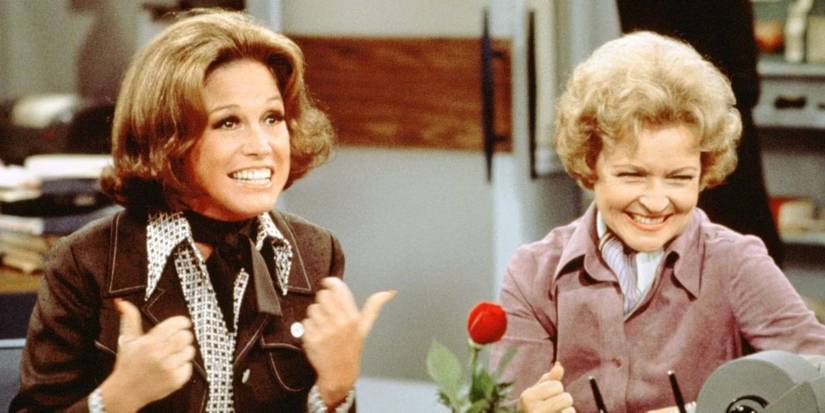
All it took was a groundbreaking female lead to reshape television forever. Created by James L. Brooks and Allan Burns, The Mary Tyler Moore Show follows Mary Richards (Mary Tyler Moore), a 30-year-old single woman who moves to Minneapolis for a fresh start after a broken engagement. She lands a job as an associate producer for the evening news at WJM-TV, where she navigates her career alongside a colorful, eccentric newsroom staff led by her gruff boss, Lou Grant (Ed Asner). Outside the office, Mary builds an independent life while supported by close friends and neighbors in the city. The Mary Tyler Moore Show became a highly influential series for its mix of groundbreaking feminist storytelling, elite comedic writing, and a legendary ensemble cast.
The Mary Tyler Moore Show revolutionized television by centering the story on a single woman who sought to further her career rather than find a husband. If she found a partner, it would have been icing on the cake. Mary was the first independent female lead on TV who wasn't defined by being a wife, mother, widow, or daughter. Though there was discussion of making her a widow, the creators felt that some audiences would have wrongly connected Moore to her character on The Dick Van Dyke Show, meaning Rob Petrie had died. Nevertheless, the decision to make her a working woman was fruitful. The series shifted away from silly domestic tropes into a sophisticated, realistic office setting, whose DNA would be felt in later iconic comedies like The Office and Parks and Recreation. The series quietly pushed boundaries by addressing adult topics, including equal pay, birth control, and the realities of being single. With one of the greatest casts in television history, the series launched three spin-offs for Asner in Lou Grant, Cloris Leachman in Phyllis, and Valerie Harper in Rhoda. If one classic series has a perfect track record of episodes, it's The Mary Tyler Moore Show. It's a series that guarantees absolute joy.
1 'I Love Lucy' (1951-1957)
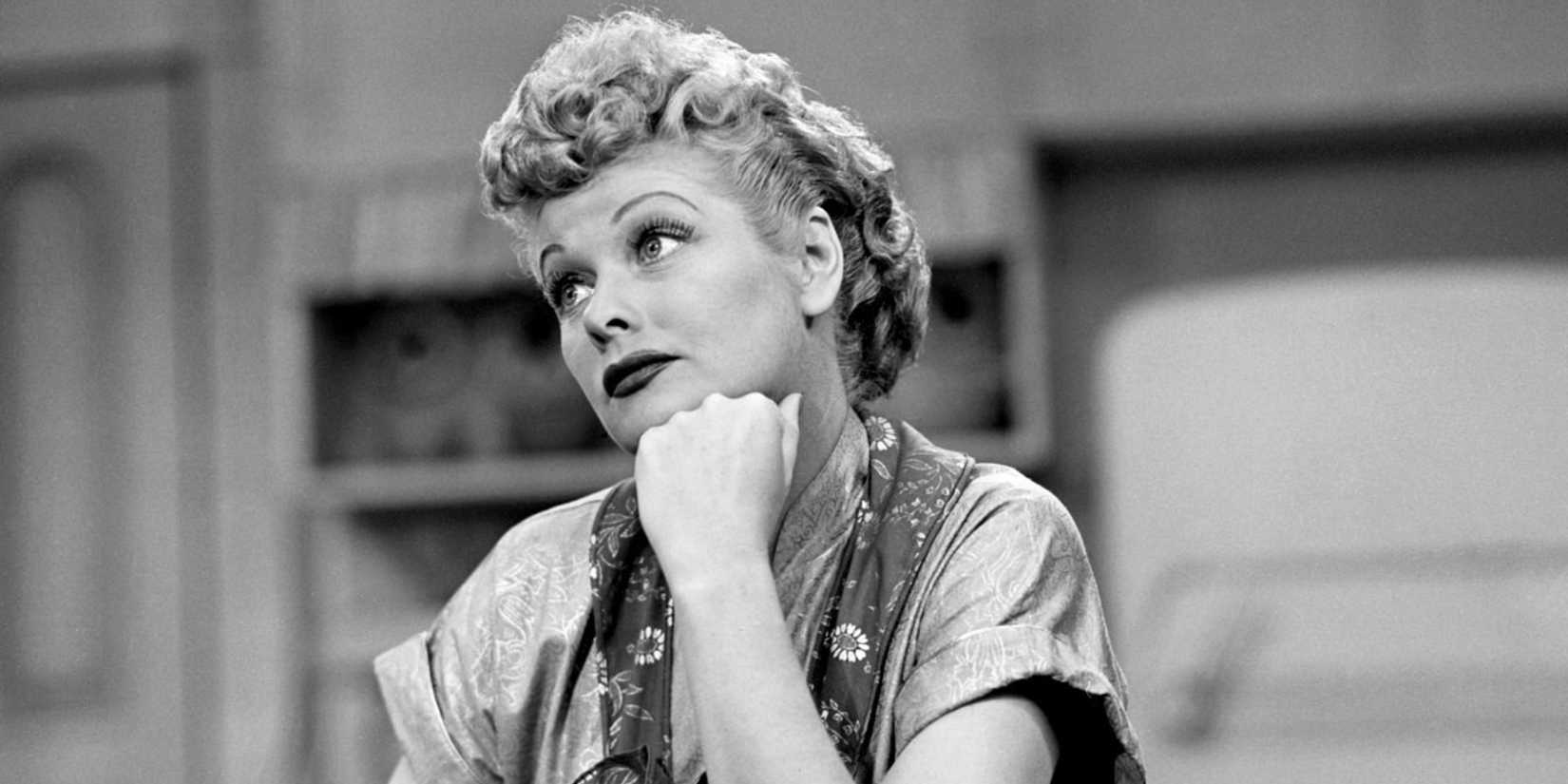
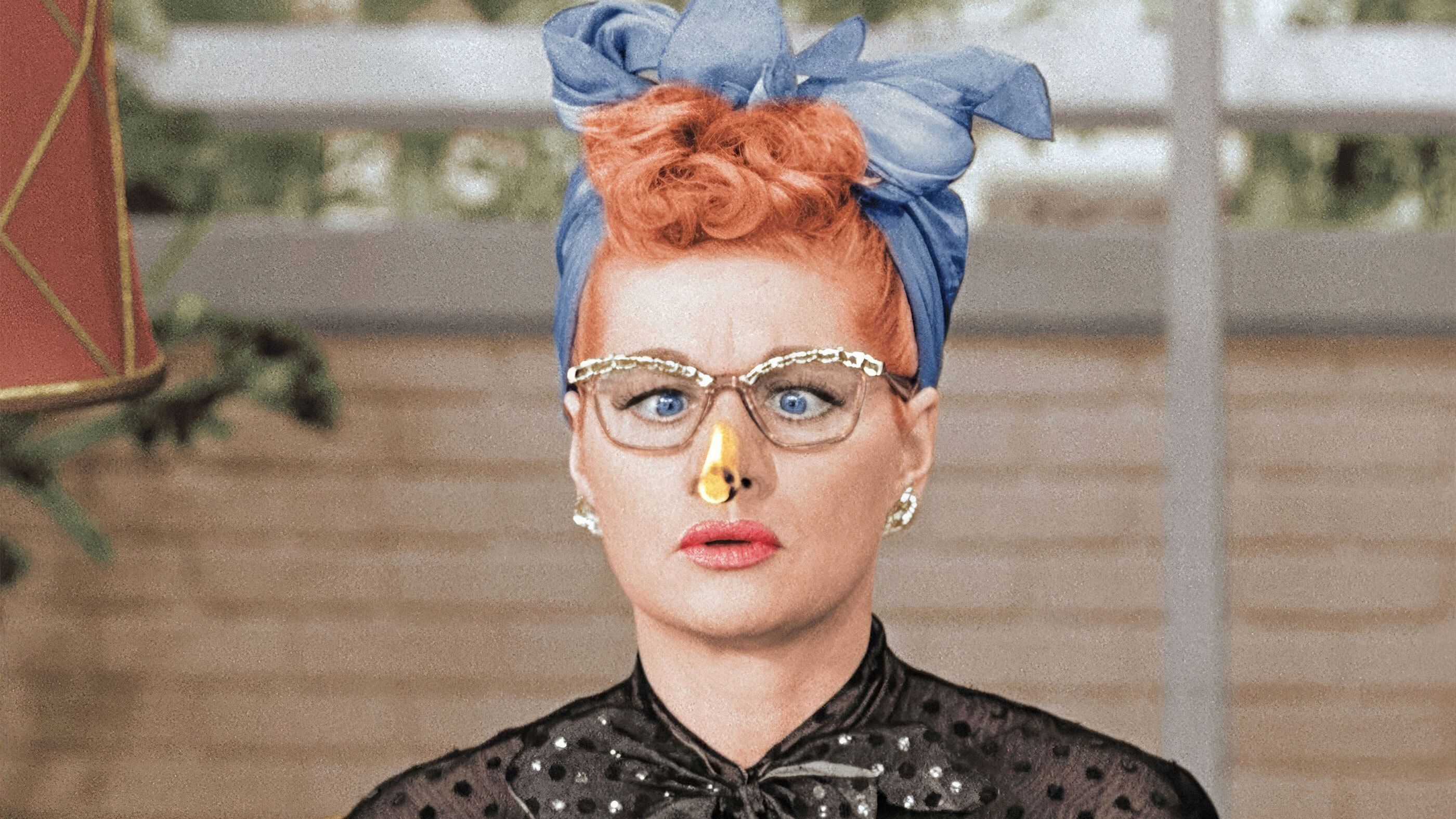
No other American sitcom is more iconic than I Love Lucy. The classic sitcom follows Lucy Ricardo (Lucille Ball), a zany and ambitious New York City housewife with a constant hunger for show business stardom. Alongside her Cuban bandleader husband Ricky (Desi Arnaz), and their best friends and landlords Fred and Ethel Mertz (William Frawley and Vivian Vance), Lucy constantly concocts wild schemes to break into the entertainment industry. Her well-intentioned plans almost always spiral out of control, resulting in chaotic domestic mishaps and classic physical comedy. I Love Lucy combined Ball's unmatched comedic mastery with revolutionary technical and cultural breakthroughs that established the blueprint for modern television.
Co-created by Desilu Productions, I Love Lucy pioneered filming with 35mm cameras in front of a live studio audience, replacing flat, live single-camera broadcasts with high-quality film and dynamic angles. Then, with Desilu retaining ownership of the film negatives, they invented the concept of television syndication, allowing the show to be rebroadcast endlessly for generations. The series featured television's first prominent intercultural marriage with the show's real-life couple. When Ball was pregnant, rather than trying to hide it, the show infamously integrated it into the storyline, becoming a daring decision for 1950s network television. With Ball's exceptional physical comedy creating iconic scenes, I Love Lucy pushed slapstick comedy to the forefront of sitcoms. Her ability to use her face, body, and energy proved her total fearlessness. A ratings juggernaut, I Love Lucy's legacy has been passed on for generations.
I Love Lucy
- Release Date
- 1951 - 1957-00-00
- Network
- CBS
- Directors
- William Asher, Marc Daniels
- Writers
- Bob Carroll Jr., Madelyn Pugh, Bob Schiller, Jess Oppenheimer, Bob Weiskopf
KioskNews shows a cleaned-up reading view extracted from the publisher’s page — the original always lives on their site, not ours.