There is no getting around the scope of this failure - both for Chris Bowen and the world
The explosion of the international climate negotiations has been a long time coming. The tension between the action the world knows it must take on climate change and that which a handful of oil rich nations will allow it to take has been growing for years.
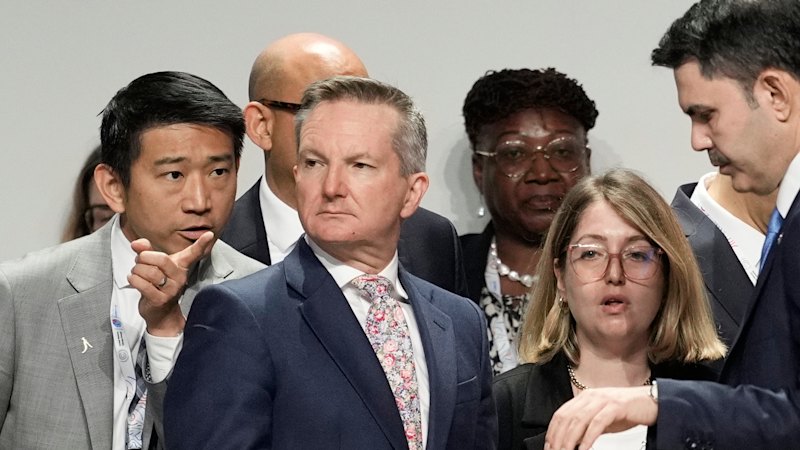
It almost blew up the process at talks in Brazil last year. Instead, it blew up in the face of Climate Change and Energy Minister, Chris Bowen, in the role of president of negotiations at 31st round of talks in Turkey last night.
“Australia left nothing on the field, trying to find solutions to reach what I now see as unbridgeable red lines,” Bowen said minutes after leaving the plenary session where diplomats and envoys were still laying out the entrails of their disagreement.
“The situation coming into this COP was the most complicated and fraught geopolitical environment in living memory.”
That’s probably true, but it was Bowen’s series of decisions that placed him in the blast zone.
Having failed to secure the right to host the talks, it was Bowen who created and secured for himself the role of ‘president of negotiations’ to work alongside summit’s president, Turkey’s Environment Minister Murat Kurum.
The pair insist the working relationship has been close and cooperative, but in the fraught dying hours of the talks the need for translation slowed processes where speed and agility was most needed, says one close observer. Some delegates have complained it was not clear who held ultimate authority as the negotiations faltered.
It was Bowen who insisted that this round of talks should include a final agreement, known in United Nations parlance as a cover decision, and which was to have been known as the Antalya Pact. There’s nothing in the structure of the COP summits – the acronym is shorthand for the Conference of the Parties to the United Nations Framework Convention on Climate Change – that mandates the meetings end with overarching agreements.
Bowen took the view that such a deal was necessary. It would give crucial momentum to lagging climate action and structure and strength to his goal of addressing the existential climate threat posed to Australia’s Pacific neighbours.
It was also Bowen who chose to release an early draft of the cover decision that was riddled with those same red lines he referenced at the COP’s conclusion. In keeping to a promise that he would run transparent negotiations, Bowen also set the world up for a collision on the summit floor.
For all that, it was not clear that the summit would collapse until the final session was well underway. COP talks are not like the diplomatic theatre we often see play out, where key decisions have all been taken long before principals arrive to grip-and-grin. They are fought down to the wire. On Sunday afternoon in Antalya Bowen’s team was still working on new inclusions to the text as the plenary began. As had happened in the past it was still possible that nations would vent for the cameras before signing.
Those hopes ended when Darragh O’Brien, Ireland’s Environment Minister intervened to reject the deal on behalf of the European Union.
“We will not endorse a cover decision, or an Antalya Pact, that does not even mention fossil fuels, which is the key driver of climate change, and we will not accept negotiating backward in time, and we will not accept a COP that greenwashes fossil fuel,” he said.
Saudi Arabia had led a bloc of nations that refused to endorse a deal that mentioned fossil fuels, arguing that they had already been woven into the cover decision at the previous round of talks in Dubai in 2023.
True, but since 2023 the climate impacts accelerated and the scientists have confirmed we are heading into “overshoot” – a world in which the Paris 1.5 degree target has been blown.
Progressive nations and populations in the EU – and elsewhere around the world – could not stomach a deal that did not reference the cause of all this – fossil fuels.
“I think the 1.5 overshoot, combined with the climate impacts that we’re seeing around the world, really increased the ambition of some parties, and I share that ambition,” said Bowen. “But that made those red lines irreversibly reconcilable.”
What he did not say is that it is becoming harder to contain the excesses of oil producing nations without the might of the United States’ diplomatic machine. In previous negotiations, where the Arab Group negotiators gave ground, the US had been there to whisper in their ears. The US has now abandoned the field.
Bowen insists that much was still achieved, highlighting the voluntary pledge on electrification signed by 90 nations. Others note that work progressed in the hundred odd other negotiating streams the COP deals with.
Following the carnage in Antalya, many observers have argued that the collapse was necessary because defending an empty agreement to preserve COP’s unwieldy consensus would have been worse than blowing it up.
Among them was Christiana Figures, one of the chief architects of the COP’s most substantial achievement, the Paris Agreement.
“Let’s be clear about what happened in Antalya: more than 130 countries refused to sign a deal that would have belied the true state of our crisis. Today nations stood up for what science and justice demand,” she said.
But there is no getting around the scope of this failure. It will be used by the populist right around the world that is demanding an end to global coordinated climate action and celebrated by the oil companies that sustain that movement. It will be up to Bowen to explain how Australia benefited from the $150 million spent on the effort.
Either way, the work of the forum will not end, especially as the cost of fossil fuels keep growing while that of renewables falls and as climate change continues to bite harder.
Get to the heart of what’s happening with climate change and the environment. Sign up for our fortnightly Environment newsletter.
KioskNews shows a cleaned-up reading view extracted from the publisher’s page — the original always lives on their site, not ours.