Supreme Court leans toward LGBTQ exclusion for publicly funded Catholic preschools
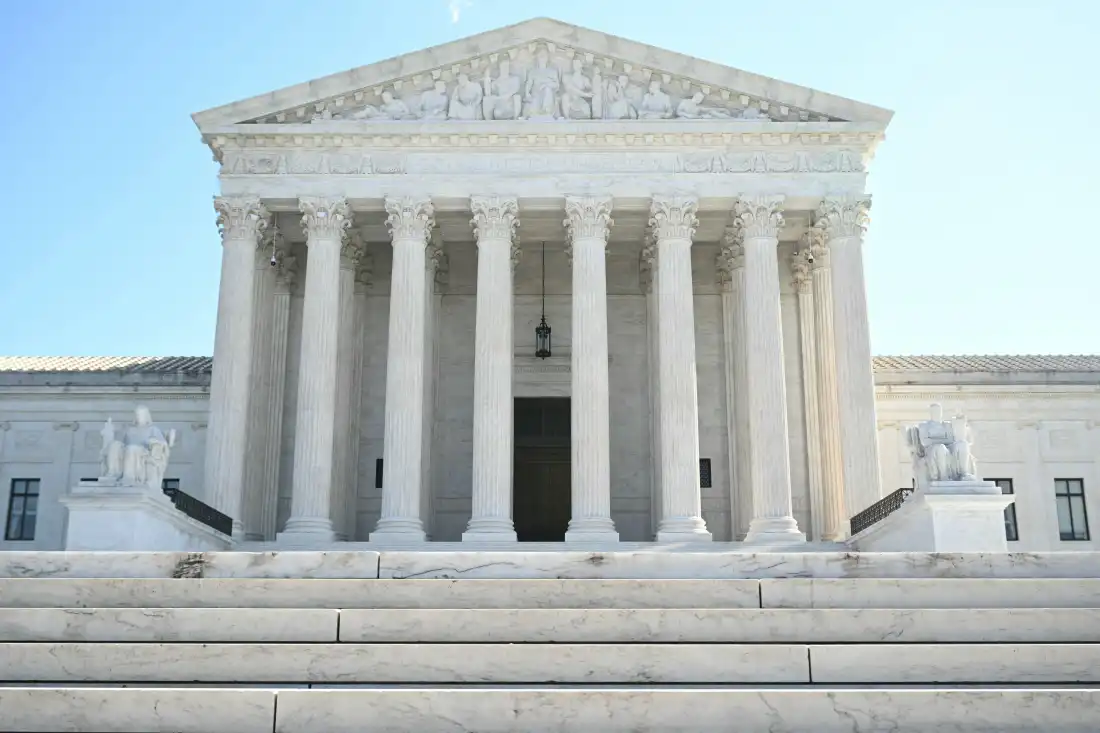
A view of the Supreme Court in Washington, D.C., on Oct. 14, 2026. Saul Loeb/AFP via Getty Images hide caption
Saul Loeb/AFP via Getty Images
The Supreme Court's conservative majority seemed inclined Tuesday to rule that the four-year-old children of gay and trans parents can be barred from a state-funded pre-K program.
In 2022, Colorado adopted a state-wide program to provide all four-year-olds with an early education. The program, paid for by the taxpayers to the tune of $6,300 per child per year, was open to all, including religious groups. The only caveat was that the preschool program had to comply with the state law barring discrimination based on race, religion, ethnicity, or other categories.
Although the Catholic Church initially supported the program, and the nonprofit Catholic Charities still participates in it, the Denver archdiocese maintained that compliance with the state's nondiscrimination mandate violates the Constitution's guarantee to the free exercise of religion.
The Denver archdiocese — though not all others in the state — wants an exemption from the law so that it can obtain state funding while at the same time barring from its program the children of gay and trans parents.
The conservative justices on Tuesday seemed likely to oblige their request. Justice Neil Gorsuch angrily suggested that Colorado was deliberately defying an earlier series of decisions, inquiring whether "we were just wasting our time for the last ten years on those cases."
And Justice Amy Coney Barrett seemed to question the state's good faith. "It's hard to imagine that Colorado couldn't have seen this coming," she opined.
Justice Brett Kavanaugh agreed, referring to Colorado's law as a provocation.
"Why not seek the win-win," he asked. "There are 2,000 schools. There are only 34 Catholic schools. There are plenty of opportunities to respect the rights of the religious believers and respect the ability of LGBT parents to find among the 2,000 schools [an] appropriate fit for their children."
Justice Samuel Alito followed up, contending that "we have little evidence of a practical problem. Little evidence, if any evidence…that there are LGBTQ couples who cannot find other preschools to send their children to."
But Colorado Deputy Solicitor General Helen Norton pointed to the specific case of a rejected student, and disputed assertions that these schools are easily interchangeable.
"Think of the parent who needs a school that opens at 7 a.m. so she can get the bus that takes her to work. Think of the parent who needs a school that will take all three of her kids, so she doesn't have to shuttle them among three different schools," she said.
The court's three liberal justices signaled strong disagreement with the conservatives.
Justice Ketanji Brown Jackson put her views this way: "There's no principled basis, I think, to distinguish between an entity that says, 'My religious faith says my children can't go to school with the children of gay people,' from a religious entity that says, 'my religion says my children can't go to school with the children of Black people.'"
Justice Elena Kagan, barely suppressing her sarcasm, added that, "Even though religious people are being treated the same way on the face of the statute, that's not enough. They need a special accommodation. They need to be treated differently from other people."
And Justice Sonia Sotomayor directly challenged the lawyer for the archdiocese, Nicholas R. Reaves.
"Bottom line is your school can reject a child because their parents are homosexual," she addressed him.
Of the court's conservatives, only Chief Justice John Roberts expressed any skepticism at all about the archdiocese's argument.
All six of the court's conservatives were raised Catholic. So too was liberal Justice Sotomayor.
KioskNews shows a cleaned-up reading view extracted from the publisher’s page — the original always lives on their site, not ours.