Avalanche tore 2.2 sq km mountain face, crashed into valley: Nepal flood study
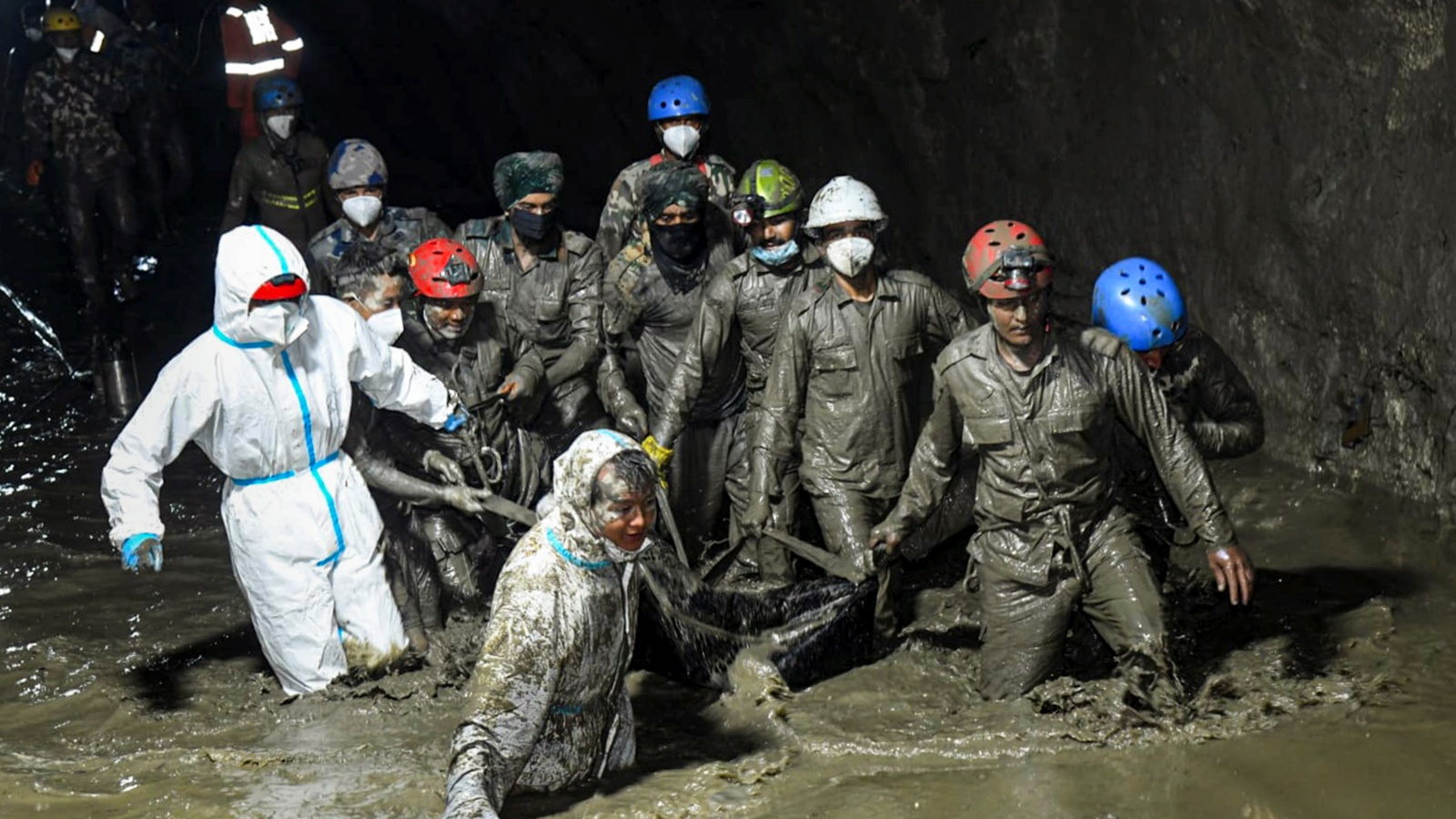
During a rescue operation from a tunnel in Nepal’s Rasuwa, Wednesday. The death toll has crossed 1,400. (PTI)
Tracking the cause of last month’s Nepal flash floods, a new study by a team of international scientists has said that an estimated 110 million cubic metres of rock and ice crashed down the Langtang Lirung peak, tearing off a huge part of the mountain’s northern face measuring 2.2 sq km in area, with a depth of 50 metres. It has said that rather than a single extreme weather event, this was likely caused by a “compound crisis” involving climatic and geological factors, worsened by the impacts of climate change.
To put the numbers in perspective, the area is roughly equivalent to 300 football fields, filled with rock and ice up to a depth of 50 metres. The World Weather Attribution (WWA) study has said that the rock and ice avalanche fell 1,400 metres from a height of 5,150 metres, before slamming into the valley floor, leading to an impact that got measured as a seismic shock of 5.2 magnitude.
The WWA is an international scientific collaboration, comprising a group of scientists who analyse and communicate the possible influence of climate change on extreme weather events.
The factors that likely contributed included glacier thinning, thawing of permafrost (frozen rock and earth), impact of the 2015 earthquake, high temperatures and increased meltwater, and warming due to climate change, it said.
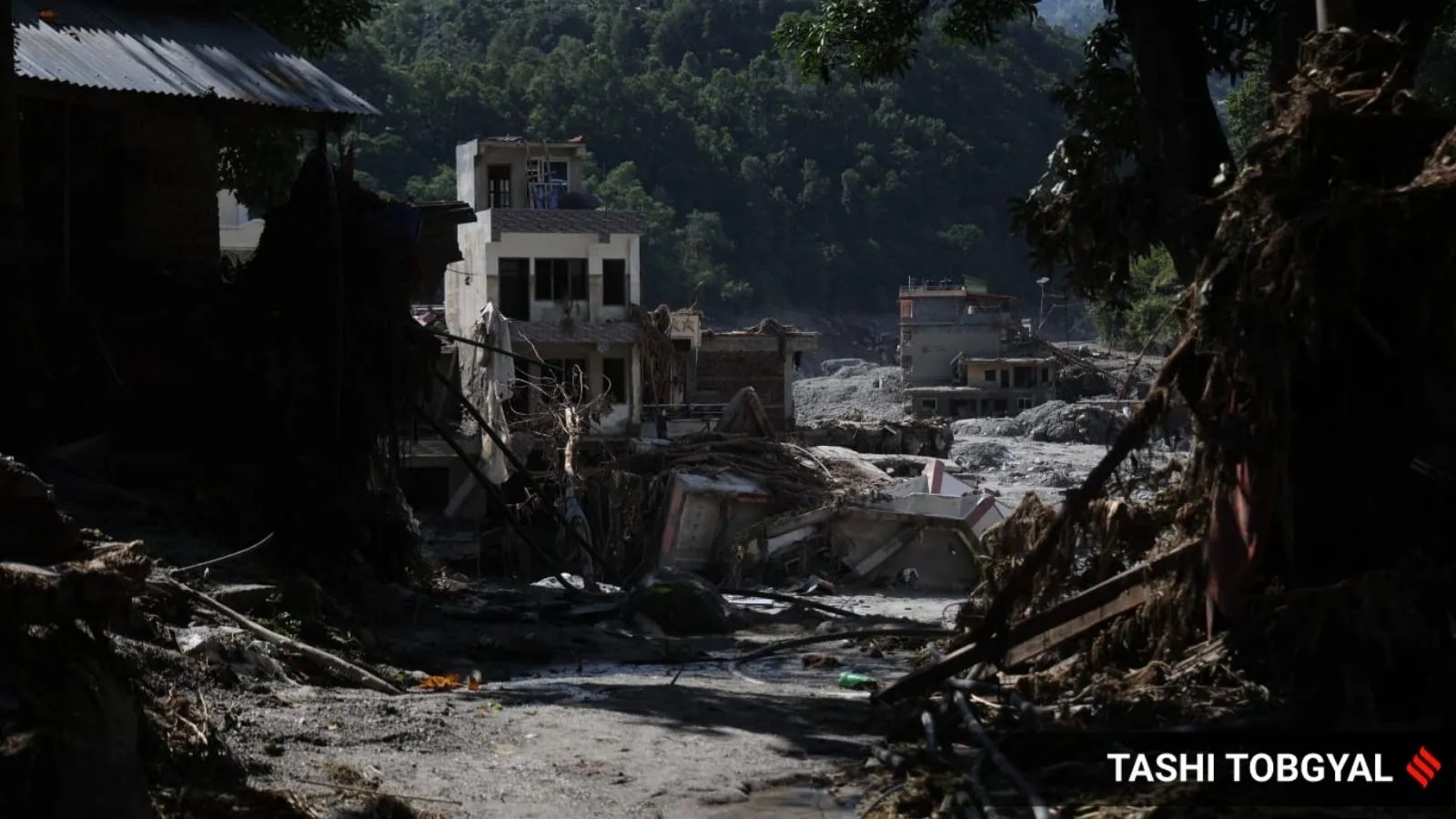 Nepal after flooding and widespread damage emerged. (Express Photo by Tashi Tobgyal)
The team analysed climate models, actual temperatures including localised trends, glacier thinning data and precipitation trends.
While the 7.8 magnitude earthquake in 2015 may have weakened the rock mass, its specific contribution to the disaster was not confirmed. The study said the 2015 earthquake may have “pre-conditioned” the slope for failure.
“There is absolutely no doubt that human-induced climate change played a role here in the pre-conditioning of the disaster, through permafrost thawing, through thinning of the glaciers, through having more rainfall instead of snow in the precipitation,” said Friederike Otto, Professor of Climate Science, Imperial College London, during a briefing on the analysis.
Story continues below this ad
Rock avalanches of this size are rare, estimated to occur once in 1,000-10,000 years, the study said.
The avalanche eroded and gathered more material, including buried glacier ice from the valley bottom, thereby increasing debris volume as it barrelled down. It took just seven to eight minutes for the debris flood to reach Gyirong Port in Tibet from the valley bottom, with an average velocity of 170 kilometres per hour, the study said.
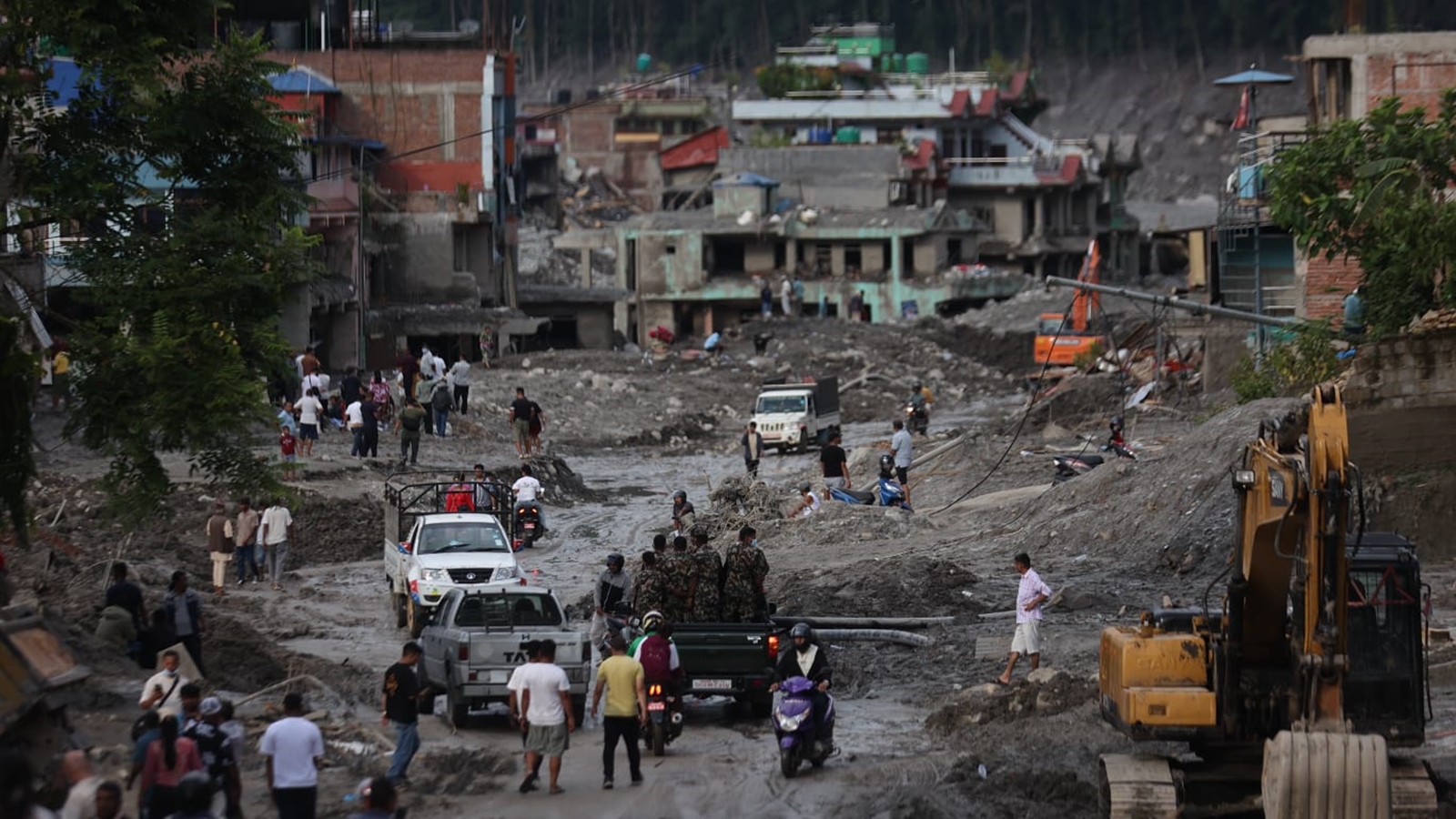 Residents return to check their homes after the floods, at Trishuli in Nuwakot district, Monday. (Express photo by Tashi Tobgyal)
Warming and permafrost degradation likely weakened the source rock wall by increasing bedrock temperatures, and thawing ice within fractures, it said. “Climate change is thus best understood as a destabilising factor acting on a pre-existing geological predisposition, rather than a fundamental cause of the failure,” the study stated.
“Climate change from the burning of fossil fuels is pushing the freezing line — the zero-degree isotherm — upward by roughly 100 metres per decade, exposing perennially frozen ground and bedrock to thaw conditions that are longer and warmer than before. When you combine high-elevation permafrost degradation with glacier retreat and record summer heat, the structural integrity of these mountain walls is compromised,” said Professor Walter Immerzeel, Mountain Hydrologist, Utrecht University.
Story continues below this ad
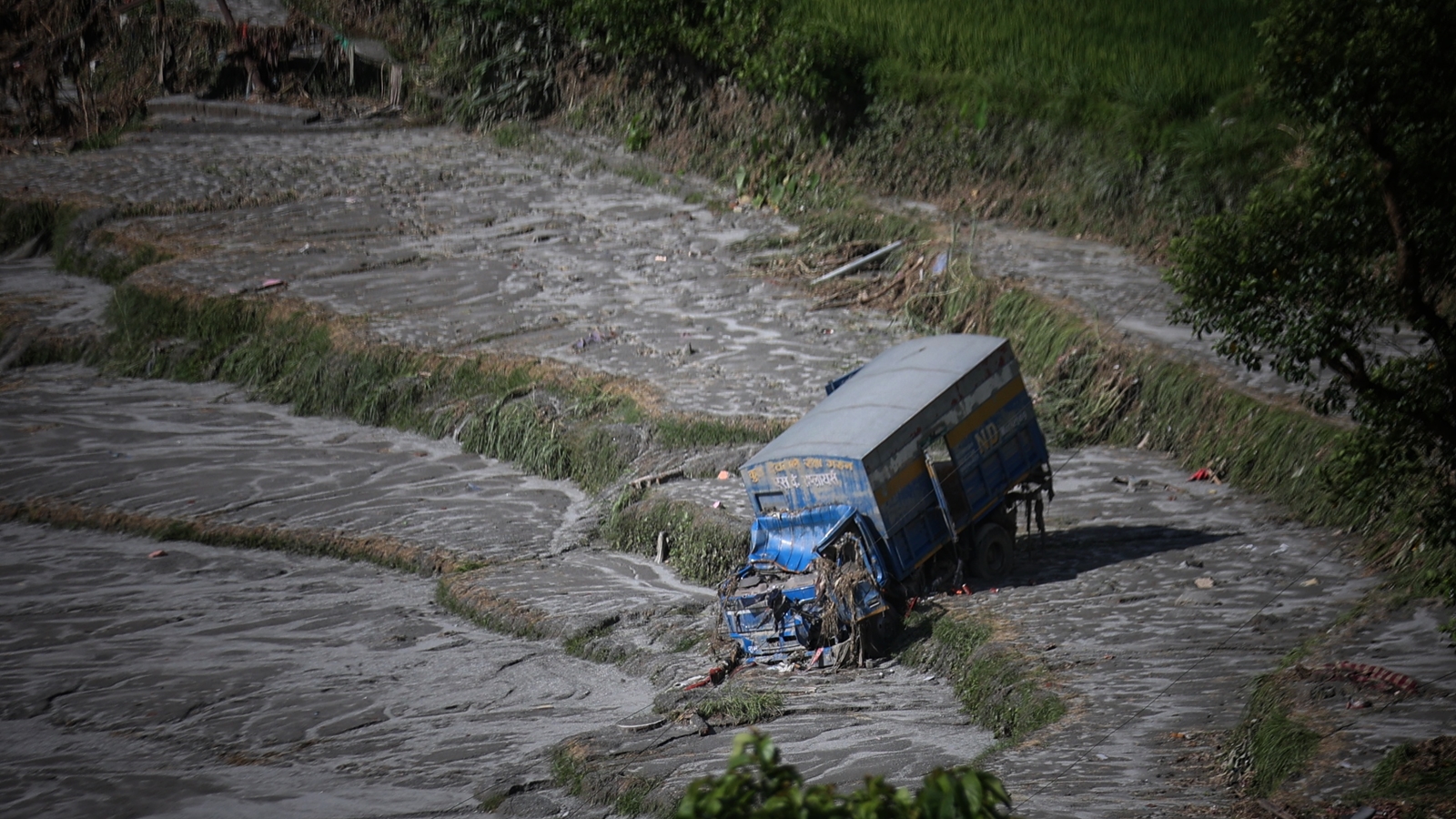 Visuals of the devastated Baitrawati Rasua border where bodies were located by the army in Nepal on Sunday. A few relief trucks arrive while the region remains highly unreachable . Videos and Photos by Tashi Tobgyal 300826
On the thinning of glaciers, the study said they have been losing mass for decades at about half-a-metre per year. Since 2010, the rate of recession of the Langtang Lirung glacier extent has accelerated, increasing from 0.5% per annum over the previous two centuries to 1-2.3 % per annum in the past 16 years, it said.
The assessment called for strengthening of high Himalaya earth observation, hazard monitoring, and trans-boundary data knowledge sharing. It said that minimising future risks requires a rapid transition away from fossil fuel use and delivering on climate finance commitments for adaptation.
“This is particularly important in the Himalaya and other high mountains, where glacier decline and permafrost degradation are expected to continue even without further warming, meaning that some of the impacts of past warming have yet to fully emerge,” a summary of the findings said.
© The Indian Express Pvt Ltd

An award-winning journalist with 14 years of experience, Nikhil Ghanekar is an Assistant Editor with the National Bureau [Government] of The Indian Express in New Delhi. He primarily covers environmental policy matters which involve tracking key decisions and inner workings of the Ministry of Environment, Forest and Climate Change. He also covers the functioning of the National Green Tribunal and writes on the impact of environmental policies on wildlife conservation, forestry issues and climate change. Nikhil joined The Indian Express in 2024. Originally from Mumbai, he has worked in publications such as Tehelka, Hindustan Times, DNA Newspaper, News18 and Indiaspend. In the past 14 years, he has written on a range of subjects such as sports, current affairs, civic issues, city centric environment news, central government policies and politics. ... Read More
Stay updated with the latest - Click here to follow us on Instagram
KioskNews shows a cleaned-up reading view extracted from the publisher’s page — the original always lives on their site, not ours.