New motherboards, old RAM, plenty of life left in yesterday's PCs
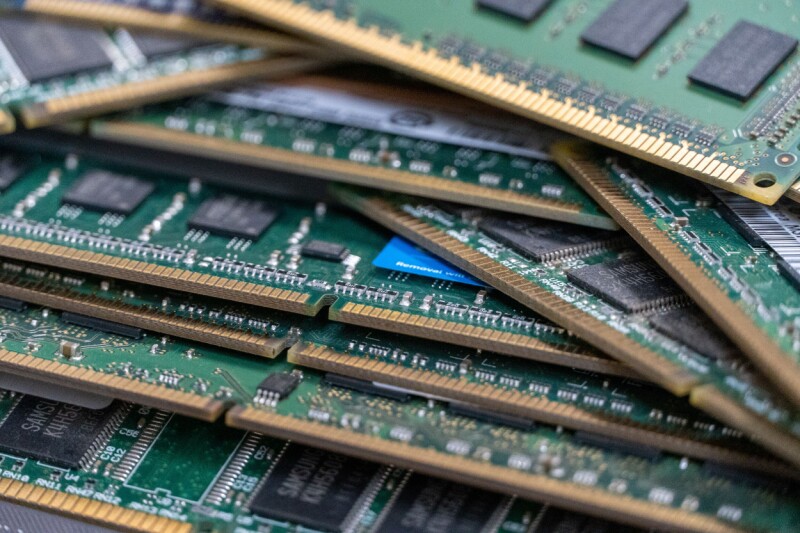
DDR4 makes a comeback as component costs rise, while Linux offers an escape from forced upgrades
Gigabyte recently announced new motherboards that use DDR4 RAM, a standard that launched in 2014, and other vendors support even older standards in brand-new kit.
Earlier this year, AMD released a Ryzen 7 5800X3D anniversary edition to mark ten years of AM4. For AM4 processors, Gigabyte offers the new B450M H ARGB, with two DDR4 slots, and the B550 X-Eagle with four slots. Those who prefer Intel chippery can now buy a B760M Aorus Elite.
This is notable because of the age of the DDR4 spec. In case you lose track of these things, The Register first described the new DDR4 spec back in 2012, and a few months later urged the keen to wait a year or two.
REG AD
DDR5 supports higher transfer rates, and The Reg predicted its arrival in 2017. The DDR5 standard was agreed in 2020, with mainstream PC adoption following in 2021.
REG AD
Over in the People's Republic of China, several vendors will sell you new DDR3 motherboards for 15-year-old server CPUs, such as Huananzhi's X79-4D or X79 Supreme, or the Machinist X79 V2.82H. These use Intel's LGA-2011 socket – named for the number of pins, but coincidentally launched in 2011. This Chinese SMZDM community discussion is about whether the circa 15-year-old Xeon E5 is still worth buying – a CPU The Reg covered in 2012.
This is partly due to the current price rises and component shortages induced by large-scale, cloud-based LLMs – but also "training" those "open-weight" models that run on your own kit. Those too are constructed in giant datacenters stuffed full of GPUs, ingesting all the human-written material they can get their hands on, rarely asking for consent. And not just stuff put online either.
Once you wipe the sluggish, bloated commercial OS from your computer's storage, you discover two things. First, you don't need the latest hardware any more. Secondly, the older the PC (or Mac), the better the chances that it will work fine with Linux – or indeed the other FOSS OSes out there.
Current and recent hardware is the most problematic for FOSS developers because most manufacturers prioritize Windows testing, while restricted documentation and proprietary drivers can complicate open source support for new hardware. Together, these things mean that if you're happy without high-powered local LLMs, or three-digit frame rates, second-hand kit is more usable than ever.
(For those who can't do without one or two Windows-only apps that won't run under Wine, we remind you that desktop VMware is free now… and for better desktop integration, we looked at WinApps and WinBoat earlier this year.)
The Reg FOSS desk is based in the British Isles, close enough to order stuff inexpensively from the UK. We've been using online vendors of depreciated ex-corporate kit for decades: we've bought several machines from Morgan Computers, and occasionally from Tier1 Online and Bargain Hardware. Other vendors are available. There are also special-purpose price-comparison sites, such as LowCostMiniPCs.com, which searches other sales sites for bargains.
When we were based in Czechia, we bought a few things from GigaComputer, and we know of others we didn't try, such as Refurbed.cz. Other such European sites include Computershop.eu.
The usability of kit that can only officially run Windows 10 was the entire point of the End of 10 campaign. Microsoft cites security benefits for Windows 11's hardware requirements, but in this vulture's opinion, those benefits don't justify excluding an entire generation of otherwise capable hardware.
REG AD
Keeping older hardware in service is welcome. If digital sovereignty gives organizations another reason to consider open source alternatives, so much the better. ®
KioskNews shows a cleaned-up reading view extracted from the publisher’s page — the original always lives on their site, not ours.