‘My family should not have to leave’: New shelter aims to help S’pore men in crisis
SINGAPORE - When Emi came home from work in September, he was met with an unfamiliar silence.
His 15-month-old son, whose laughter usually filled the house, was gone. So was his wife.
She had taken their son to a women’s shelter, unable to endure Emi’s verbal abuse whenever he took drugs. Over the phone, she told him she wanted a divorce.
“Why am I not the one who had to go, instead of my family? I made the mistake, they should not have to leave their home,” said Emi, 44, who relapsed into drug use after periods of staying clean.
A new crisis shelter, to be piloted in the second quarter of 2027, hopes to give men like Emi the option to remove themselves from a situation where they may hurt their loved ones.
The initiative by non-profit organisation Fellowship of Men Singapore (FMS) also aims to help men experiencing abuse themselves, displacement, or those at risk of self-harm.
FMS plans to use budget hotels to house up to three men at a time during the pilot, which aims to help as many as 50 men over a year. Each man can stay for up to seven nights, at no charge.
The group aims to have its own dedicated facility within five years.
FMS founder and director Ismail Didih Ibrahim said the idea arose from cases of men who had suddenly left their homes with nowhere to go.
Some slept under void decks, in cars or on the streets. Others remained alone while experiencing severe emotional distress.
But the group also wants to reach men whose behaviour could be putting their families in danger.
Helplines
Mental well-being
National Mindline: 1771 (24 hours) / 6669-1771 (via WhatsApp)
Samaritans of Singapore: 1-767 (24 hours) / 9151-1767 (24 hours CareText via WhatsApp)
Singapore Association for Mental Health: 1800-283-7019
Silver Ribbon Singapore: 6386-1928
Chat, Centre of Excellence for Youth Mental Health: 6493-6500/1
Women’s Helpline (Aware): 1800-777-5555 (weekdays, 10am to 6pm)
The Seniors Helpline: 1800-555-5555 (weekdays, 9am to 5pm)
Tinkle Friend (for primary school-age children): 1800-2744-788
Mindfull Community HQ (for caregivers, families and persons in recovery): 6460-4400 (weekdays, 9am to 5pm)
Counselling
Touchline (Counselling): 1800-377-2252
Touch Care Line (for caregivers): 6804-6555
Counselling and Care Centre: 6536-6366
We Care Community Services: 3165-8017
Shan You Counselling Centre: 6741-9293
Clarity Singapore: 6757-7990
Care Corner Counselling Centre: 6353-1180
Online resources
In family violence situations, women and children may have to leave home to seek shelter. FMS wants to explore whether, in suitable cases, the man could instead leave temporarily and receive support before matters escalate, said Didih.
“We want to ask the men to take themselves out,” he said.
Removing the wife and children, while necessary for their safety, may leave the underlying behaviour unresolved if the man does not receive any help, he added.
By intervening earlier, the hope is that the man has time to regulate his emotions, take responsibility for his behaviour and seek help.
For Emi, his family packing up to leave was a painful wake-up call.
He had endured a troubled childhood. After cigarette burns were discovered on his body, he was removed from his birth parents and placed with an adoptive family.
He fell in with the wrong crowd and started taking drugs at the age of 11.
He managed to quit when he met his wife, but relapsed during their marriage.
When under the influence of drugs, he became suspicious of his wife, repeatedly accused her of wrongdoing and verbally abused her.
Emi told The Straits Times he could not stand the thought of his wife and son residing in a shelter because of his actions.
But without anyone to turn to, he returned to old friends and drugs, hoping to numb his feelings. He had been working as a cleaner, but lost his job after an altercation at work.
“If I have a place to go at the first place, I don’t think I would find my old friends or relapse,” he said.
A safe temporary place could have given him room to reflect and speak to someone about what was happening.
Emi eventually met an FMS member who introduced him to the group. He said he threw away the drugs he still had with him and began opening up to other men about his struggles.
He is currently rebuilding his relationship with his family.
Didih said the shelter is not meant to excuse abusive behaviour.
All prospective residents will be assessed, with the safety of their partners, children and others taking priority.
Men assessed to pose an immediate risk of suicide or violence, or who have acute psychiatric or urgent medical needs, will be referred for emergency or clinical intervention instead.
During their stay, residents will be paired with trained FMS mentors and linked to services such as counselling, social work or legal help where needed.
The group has about 40 trained mentors, many of whom first came to FMS seeking help themselves.
FMS is seeking to raise $36,500 for the pilot. This is based on a cost of about $100 a night for each man to cover accommodation, his mentor’s transport, and food.
It will hold a boxing and Muay Thai fundraiser on Nov 7 at 4.30pm at 225 Joo Chiat Road.
The shelter will also serve men experiencing abuse themselves.
Some of these men - who face physical and emotional abuse, or may be displaced from their homes - struggle to confide in friends or relatives, said Didih.
“A lot of men don’t have that kind of depth in the relationship,” he said.
A man may have colleagues he talks to about work or gym mates he exercises with, he added, but nobody he feels comfortable being vulnerable with.
The number of husbands reporting spousal violence has risen. In 2025, there were 337 cases with husbands as victims, up 12 per cent from 302 in 2024, according to the Ministry of Social and Family Development’s latest Domestic Violence Trends Report released in October.
Men accounted for 18 per cent of spousal violence victims in 2025. Physical violence was the most commonly reported primary form of abuse, followed by emotional and psychological abuse.
For Anthony Joshua, 27, the danger was possibly hurting himself.
The professional chef and amateur boxer began struggling with anxiety and depression in 2022, while in a difficult relationship.
His mental health deteriorated and he attempted suicide that year. He sought treatment at the Institute of Mental Health in 2023, where he saw a counsellor and psychiatrist for about a year.
But self-harming thoughts returned in 2026 after he experiened infidelity in a relationship of nearly four years.
“My whole world came crashing down,” he said.
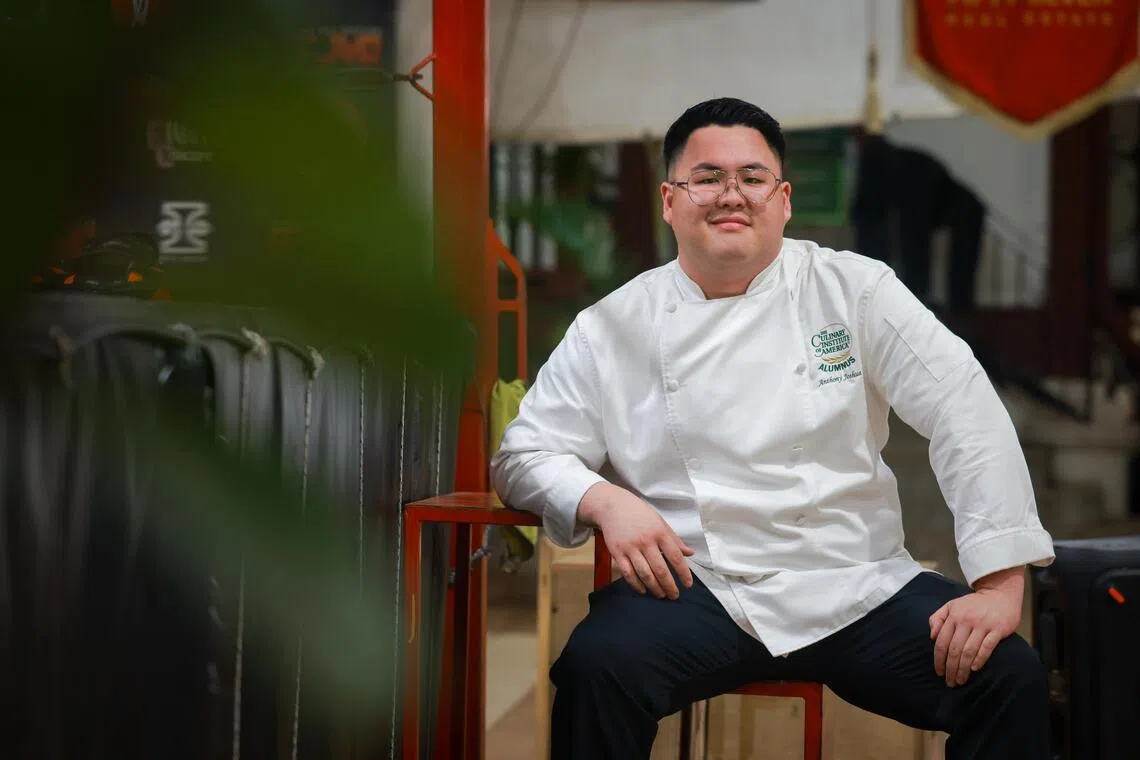
AJ dealt with suicidal thoughts after experiencing infidelity.
ST PHOTO: JASON QUAH
This time, however, he had people to turn to. He had joined FMS about two months earlier and was training with members for the group’s charity boxing even.
“Honestly, we cannot solve each other’s problems. Sometimes just being there and listening helps a lot also,” he said.
Knowing that the other men were fighting their own battles made him feel less alone.
His thoughts of self-harm have since subsided. Looking back, he thinks a men-only crisis shelter would have helped him when he was at his lowest in 2022.
Going to IMH had felt like a major step because he worried about the stigma surrounding psychiatric treatment and initially feared that seeking help could affect his employment.
A men’s shelter might have felt like a less intimidating first door to walk through, he said.
Didih said this is why FMS sees the seven-night stay as only the beginning. The aim is to help men obtain some stability during a crisis and move them towards longer-term support.
Anthony said asking for help can be difficult for men used to keeping their struggles to themselves.
“It takes more courage to ask for help than to remain silent,” he said.
KioskNews shows a cleaned-up reading view extracted from the publisher’s page — the original always lives on their site, not ours.