Australia claims it is a global pioneer in preventing online harm - should other countries follow suit?
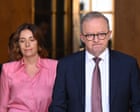
Statesmen, shysters, dictators. Over the years, the United Nations has seen all kinds of world leaders.
But when he arrives in New York on Monday for the annual general assembly, Anthony Albanese will be looking for collaborators.
Determined to rein in the power of social media giants harming the lives of children, the Australian prime minister believes only a concerted effort by countries around the world will be enough to force change.
Attending the UN leaders week in September last year, Albanese hosted a stylish event in a room overlooking the East River, talking up Australia’s world-leading moves to ban children under 16 from having social media accounts.
That day, the European Commission president, Ursula von der Leyen, said the world was watching Australia. There to hear from families of children who had taken their own lives after online bullying, the leaders of Greece, Fiji, Tonga and Malta agreed it was time for change.
A year later, the ban is responsible for the closure of as many as 5m accounts in Australia. And, as countries as diverse as France, Brazil and Indonesia follow suit, Albanese is taking the next step.
Earlier this month he announced plans to legislate a digital duty of care, and rules to allow social media users to opt out of the powerful algorithms splintering communities, overheating political debates and targeting vulnerable people.
“We took action because the community said ‘enough was enough’, and we would no longer let Australian kids be treated as commodities instead of children,” Albanese said, anticipating a fight domestically and on the world stage.
Australia, a middle power and a long way from many of the world’s big diplomatic questions, is portraying itself as the leader in tackling big tech’s reach into all our lives.
Albanese believes he is helping spur “a global movement” for change, using public pressure, big fines and diplomacy to correct harm playing out online, as well as in the real world.
“Australia is working to prevent online harm, particularly for our children, and I am proud that Australia is setting the world standard for digital safety,” he said on Friday.
As he flies to the US, where one of his first stops will be at Apple’s California headquarters for talks with its chair and former chief executive, Tim Cook, Albanese will be buoyed up by polling showing two-thirds of voters (66%) support opt out requirements for algorithms. A DemosAU poll this week found only 13% were opposed to the plan.
The majority of respondents believed social media companies should be legally required to reduce foreseeable risks to users, even if it meant more restrictions on their business models.
But the polling is set against a parallel, less positive conversation about AI and Australia’s datacentre boom, with growing disquiet among communities exposed to the country’s 160-odd datacentres and about how they will be powered. To feed the AI that depend on those developments, Albanese appears open to negotiating trading Australian copyright protections in order to do business with the same companies he has taken to task over social media.
In the digital safety space, Tama Leaver, a professor of internet studies at Curtin University in Perth, says Australia has shown a level of leadership not always expected from a smaller country.
“It is something that gives them a level of credibility, even if the world-leading nature of some of these plans might be slightly overstated,” he told Guardian Australia.
Leaver points to the Netherlands, where a legal challenge found Meta was not compliant with the European Union’s Digital Services Act.
A court ordered the company to add an easily accessible option for Facebook and Instagram users to block algorithmic recommendations, backed up by fines. Even by European standards, Dutch social media users have more power to shape their feeds.
Similarly, last month, Meta agreed to a US$18bn settlement with state governments across America to resolve claims that Facebook and Instagram harmed children. Meta will also implement a suite of changes to better protect children online, including default daily time limits and night-time blocks.
Labor sources describe the government’s online safety push as part of Albanese’s view of Australian leadership in an uncertain world. Acting with key partners, harnessing the concerns of parents and showing that even small countries can have an outsized voice when they’re prepared to lead.
Albanese, and his communications minister, Anika Wells, want to strengthen the coalition of support.
Wells says the wealthy owners of platforms including Google, Meta, TikTok and Snapchat have been “running real-time, unregulated product testing on Australians” for too long.
“There is a global reckoning coming for big tech,” she says.
Under the next round of reforms, users over 16 will be given new tools to turn off algorithm-driven content, with fines of more than A$100m for platforms breaking the rules. The rules have been dubbed “my feed, my way”.
Children under 18 will be given new protections from specific harms, shielding them from pornography; posts promoting or encouraging eating disorders; misogynistic content; depictions of crime and dangerous stunts; and content likely to cause mental health problems, including abuse and bullying.
Wells is also targeting so-called “nudify apps”, which create fake naked images. Regulators say this kind of abuse has grown more than fivefold since 2019.
“We must move the burden of reporting online harm from the shoulders of victims and stop that harm at the source,” Wells says.
“We must hold big tech accountable for the tools they are creating and putting out to market, including to children.”
after newsletter promotion
But the draft legislation has had a difficult rollout.
The Coalition says Labor is trying to give itself huge powers to censor conservative voices online, with insufficient checks and balances. The Greens, on whom Labor will rely to pass the laws through parliament, say the plan isn’t strong enough. Instead of opt-out ability, they want Australians to proactively opt in to algorithms.
And political risk is waiting for Albanese in the US, too. The White House flagged possible pressure on Australia to stop targeting US-owned tech companies, saying Donald Trump’s administration would raise concerns with trading partners.
Labor has pledged to take time to consult, with the legislation expected to be introduced before Christmas. Albanese will discuss the plans on a series of overseas trips planned before the end of the year: after the UN, he will attend meetings of Commonwealth leaders, as well as the Asean and Apec blocs and the G20 in December.
While Australia’s social media ban has been watched around the world, in the 10 months since it came into effect, questions have been raised about its effectiveness.
Research has found more than 80% of teens under 16 were still on social media following the ban. The government has passed laws to double the fines, and give the eSafety commissioner new powers to investigate compliance.
Even if not completely effective, Greece, Britain and Denmark are advancing plans for similar bans, while restrictions already exist in countries including China, Indonesia and Malaysia.
In a major speech this week, von der Leyen said it was time for Europe to follow Australia, proposing a new “EU Kids Act”.
“I am aware that many perceive the power of big tech as overwhelming. And impossible to roll back,” she said. “I disagree.”
The Australian eSafety commissioner’s office told a parliamentary committee last month that the ban “seeks to unwind more than 20 years of entrenched industry practice”.
Wayne Holdsworth, father of Mac – a teen sextortion victim who took his own life – told the parliament that it would take three to five years to determine the ban’s success.
“We have handed a poisoned chalice to our children that is dangerous and has had a significant negative impact on our kids – in some cases, fatal,” he said.
“When seatbelts were introduced in the late 1970s, some adults didn’t wear them, because it creased their shirt as they threw their cigarette out the window whilst balancing their can of beer on their lap.”
Jason Trethowan, chief executive of the youth mental health organisation Headspace, said: “You have to start somewhere.
“You have to put a line in the sand and then work towards getting those percentages down. And it’ll be a positive.”
Dr Rob Nicholls, a senior researcher associate at the University of Sydney’s centre for AI, trust and governance, said the ban would probably work better over time – particularly as the 13 to 15-year-olds who had social media before the ban aged out of it.
Nicholls said the Albanese government could help other countries follow in its footsteps.
“It’s great to get on a plane to New York to skite about ‘leading’,” he said. “I think that the fast followers of the Australian lead will use the issues that have been found here to hone their legislative approaches.”
And Australia need not seek to lead in all facets of social media regulation globally.
“Australia is best served by sharing the lead with other middle powers, even if we thought of it first.”
Trethowan believes if the changes work, Australia will empower other countries to demand similar features from platforms.
“I think the technology companies are having to defend themselves or make changes to their algorithms and the way in which they design features to mitigate their potential fines,” he said.
“Australia’s set it up for other countries to take on similar things.”
KioskNews shows a cleaned-up reading view extracted from the publisher’s page — the original always lives on their site, not ours.