'Gets Difficult When Everyone Claims To Be A Journalist': Supreme Court
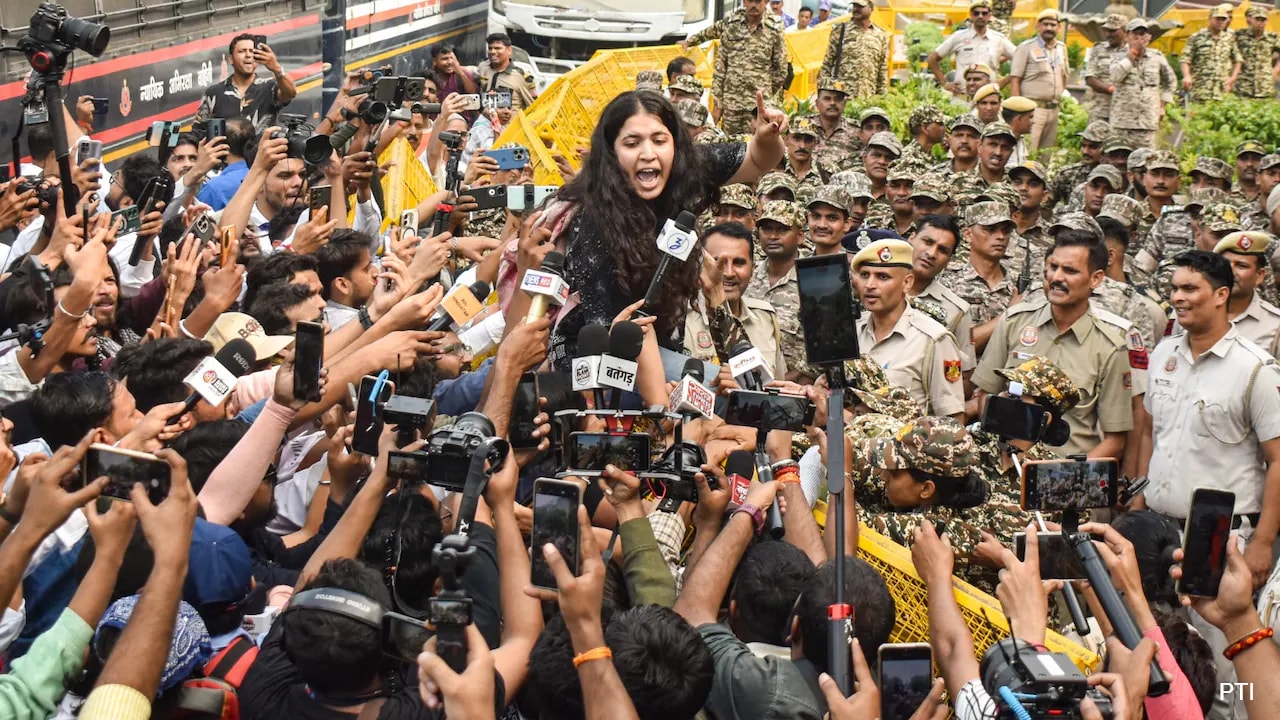
The Supreme Court has said that it "becomes difficult" to protect reporters accredited to credible news organisations when everyone claims to be a journalist under the right to freedom of expression.
A bench of Chief Justice Surya Kant and Justice Joymalya Bagchi was hearing a plea which claimed that several journalists, including women media professionals, were harassed by the police while covering the protests against Chief Election Commissioner Gyanesh Kumar and Special Intensive Revision (SIR) of electoral rolls in Delhi on October 10.
"The difficulty is when everyone claims to be a journalist under the right to freedom of expression," the bench said during the hearing on Thursday.
It also noted the difficulty in drawing clear lines between accredited journalists and others operating in the digital space.
The court indicated that it would have to consider the different "layers of protection" applicable to accredited journalists and demarcate them from influencers and others.
"We would like to lay down guidelines," the bench observed after senior advocate Indira Jaising, appearing for the petitioner, said there has to be a national protocol on this.
The bench also directed that no coercive action be taken against a woman journalist, against whom a case has been filed by a Delhi Police officer alleging casteist remarks and public humiliation against him during a protest near Jantar Mantar.
Jaising argued that the woman journalist was molested by a police officer but no case was lodged to date on her complaint.
Jaising argued that several women journalists, who were performing their duties, were allegedly pushed and assaulted, including by male police officers, during the protests.
The top court called the allegations "very serious", and asked the police to examine the complaint and complete its inquiry on it.
Jaising urged the court to constitute an independent committee to look into the complaints of women journalists.
The bench also observed that the committee could predominantly or exclusively have women members like former retired judges or retired IPS officers and others.
During the hearing, Solicitor General Tushar Mehta told the Supreme Court that many people call themselves freelance journalists just by carrying a mic but only make reels for social media.
"The difficulty is that, in the present era of digital technology, anyone having a mobile is a journalist," the top law officer told the bench.
"Our experience is that there are several people who say they are freelance journalists. What is going on is reel-making in the protests. The problem is we don't know who is a reel-maker and who is an independent journalist," Mehta said.
KioskNews shows a cleaned-up reading view extracted from the publisher’s page — the original always lives on their site, not ours.