Opinion: Toronto’s problem isn’t boomers. It’s ‘us versus them’ politics
In 1992, James Carville put three reminders on a sign inside Bill Clinton’s campaign headquarters. One outlived the election: “The economy, stupid.”
Sign In or Create an Account
It was American campaign shorthand, but Canadians understood the compact. Prosperity was the soil from which much else grew. Work, save, take a risk, start a company, buy a home, raise a family; the expectation held that effort might lead somewhere and that children could inherit better prospects than their parents.
Canadians are losing faith in that compact.

Columnist Jesse Kline keeps you up to date with what’s happening in Israel and the effects of antisemitism on life here in Canada. Friday mornings.
By signing up you consent to receive the above newsletter from Postmedia Network Inc.
A welcome email is on its way. If you don't see it, please check your junk folder.
The next issue of Channel Israel will soon be in your inbox.
We encountered an issue signing you up. Please try again
An October 2026 Fraser Institute economic comparison of Canadian provinces and U.S. states ranked Ontario 51st among 60 jurisdictions for GDP per person in 2024. Seven Canadian provinces occupied the bottom 10 positions on that measure. All 10 provinces also ranked below every U.S. state for median employment income in 2024.
Performance like that should be cause to question what Ontario might be doing wrong. Instead, a coarser idea has gained popular currency: blame the boomers.
Maclean’s supplied an unusually revealing example in September. Its cover story, “The Great Generational Rip-Off,” announced that “Boomers are hoarding Canada’s wealth” while “Millennials are fighting for scraps.”
The argument travelled well beyond the headline. Seniors, we were told, had “made out like gangbusters.” Canada had become a “gerontocracy,” which the article defined as “a society in which a fraction of the population hold the lion’s share of wealth, control most wealth creation and wield the political influence that comes with it.” Older Canadians, it suggested, sat atop an economic ladder while younger ones struggled below. The article also claimed that one obstacle to reform had been “seniors themselves.”
This is an odd diagnosis for a country suffering from weak productivity, weak business investment and too little affordable housing.
The article identifies real pain. Younger Canadians face punitive housing costs, weaker wage growth and delayed family formation. Then it converts structural failure into generational culpability and proposes redirecting benefits from seniors to younger people.
Older Canadians did not collectively write restrictive zoning, inflate construction costs or design every tax and regulation now weighing on growth. They did not choose the demographic arithmetic either. Canada built much of its social architecture for a younger population, when many more workers supported each retiree.
Today, fewer working-age Canadians carry a larger senior population. Health spending rises. Pension obligations mount. Turning one generation into the accused improves none of those ratios.
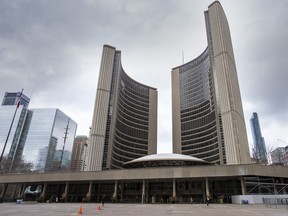
Toronto’s mayoral campaign shows how readily the same appetite for division corrodes municipal politics.
Brad Bradford proposes scrapping Toronto’s municipal land-transfer tax on homes below $1.1 million. Olivia Chow emphasizes renters, public services and affordable housing. These are substantive differences. Voters can judge them.
Around the campaign, however, some of Chow’s organized supporters use a vocabulary in which disagreement easily devolves into moral sorting.
Progress Toronto warns that a Bradford victory would put progressives “back on the defence” and return City Hall to “delivering for developers and corporate insiders.” Its anti-Bradford campaign calls him “a threat to our city and the progress we’ve made.”
The Toronto and York Region Labour Council, which backs Chow, offers a similar grammar. It says, “the economy is failing us” and “the rich just keep getting richer.”
Campaigners campaign. Yet, “us versus them” language leaves a residue. Developers transmogrify into adversaries. Homeowners and corporations provoke suspicion. Add age to that grammar and boomers become the next convenient defendant.
Toronto has harder work waiting.
City Hall controls permitting, inspections, zoning, commercial space, employment lands, road coordination and procurement. These prosaic functions influence whether capital stays, employers hire and ideas become companies.
A 28-year-old founder and a 68-year-old proprietor share more economic interests than these politics admit. One may bring technology and appetite for risk; the other capital, judgment, customers and contacts accumulated over decades. Toronto gains when those assets meet.
The city should cut approval times, simplify business formation, preserve employment space, open municipal procurement to smaller firms and move people and goods more reliably. It should measure success in businesses formed, jobs created, housing completed, investment attracted and productive hours recovered.
That is where the intergenerational argument should lead. A younger entrepreneur needs customers, capital and room to grow. An older business owner needs successors, workers and confidence that the city remains worth investing in. Renters need wages that rise. Homeowners need neighbourhoods that remain safe, productive and economically alive. Employers need people who can afford to live near the jobs they create.
The best intergenerational policy is a city in which each generation has something worth building, investing in and handing on. A city that cannot spirit enough opportunity will eventually fight over who already has it. Toronto should create more of it.
It’s about prosperity, stupid.
National Post
Karen Stintz is a former Toronto city councillor and former chair of the TTC, and the author of Beyond Good Enough: Toronto and the Crisis of Urban Complacency.
Neil Seeman is an entrepreneur, publisher and University of Toronto professor and health systems researcher.
Join the Conversation
This website uses cookies to personalize your content (including ads), and allows us to analyze our traffic. Read more about cookies here. By continuing to use our site, you agree to our Terms of Use and Privacy Policy.
KioskNews shows a cleaned-up reading view extracted from the publisher’s page — the original always lives on their site, not ours.