Time Team archaeologists uncover ‘mysterious’ grave at Sutton Hoo burial ground
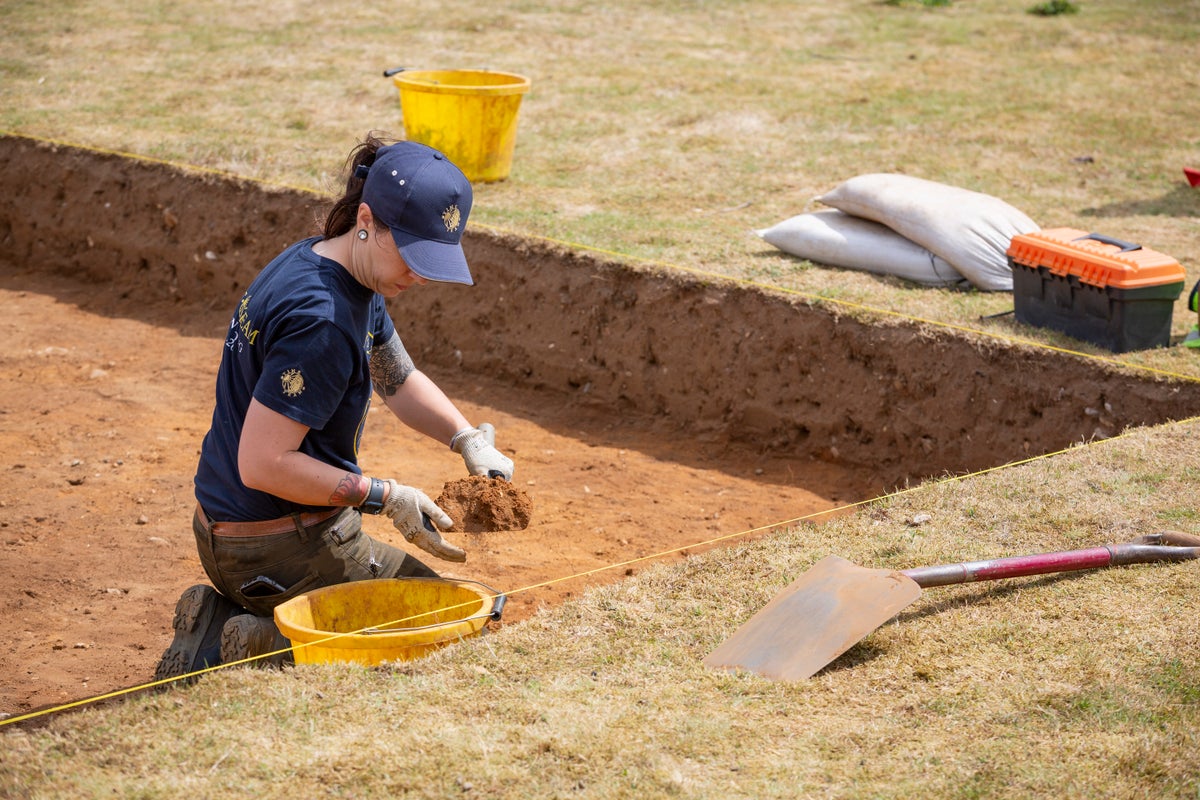
Archaeologists working with the documentary series Time Team have uncovered a "mysterious" grave at Sutton Hoo, the renowned Anglo-Saxon royal burial ground.
The location in Suffolk yielded an uncommon "sand body" alongside a brooch, a knife, tweezers and beads.
These remains decompose to leave a "ghost-like shape" preserved within the surrounding sand, according to the National Trust, which collaborated with Time Team on the excavation.
Findings indicate a second burial may lie beneath the initial discovery, located during a month-long investigation for a new four-part series hosted by actor and TV presenter Sir Tony Robinson.
The dig was conducted in Garden Field, a cemetery distinct from the famous seventh century ship burial grounds and royal mounds at Sutton Hoo.

Angus Wainwright, National Trust archaeologist, said: "Until now, archaeologists have focused on the royal burial mounds.
"Yet these mounds stood in a landscape of significance to the Saxon kings, as well as one familiar to the everyday East Anglians who lived in the villages and farms of the river valley.
"This excavation moves the focus to these people and their ancestors and descendants."
He said: "One of the strangest features of the excavations at Sutton Hoo in the 1980s was the discovery of the ‘sand bodies’.
"These were burials where the bodies and bones had dissolved away in the acid soil, replaced by hard sand which held the form of the person not unlike some of the bodies at Pompei.
"It was certainly a high point of this latest dig, to find another of these bodies in the Garden Field cemetery."
The Sutton Hoo site was unearthed in the late 1930s, including a 27-metre oak burial ship, alongside Byzantium silverware and luxurious textiles.
For decades, it was thought those interred at the Anglo-Saxon burial mounds were lavish Kings buried with their riches.
However, last year, a leading Anglo-Saxon expert suggested it might have been the grave of British soldiers who fought for the Byzantine Empire in the 6th century AD.
KioskNews shows a cleaned-up reading view extracted from the publisher’s page — the original always lives on their site, not ours.