Alzheimer's warning signs could emerge years before memory loss, study finds

Dr. Jeremy Koppel, co-director of the Litwin-Zucker Center, discusses a new blood test capable of predicting Alzheimer's risk up to 10 years in advance. The test identifies elevated levels of a tau protein biomarker, P-tau217, indicating a higher likelihood of cognitive decline. Koppel highlights its potential for early diagnosis and understanding Alzheimer's progression.
NEWYou can now listen to Fox News articles!
Small changes in how parts of the brain communicate with one another can help predict a person’s likelihood of developing Alzheimer’s disease years before any memory lapses appear, according to a study published in Science Advances.
Stanford Medicine researchers used brain scans and a computer model to look for early clues about why some older adults develop memory and thinking problems while others stay sharp.
Investigators examined resting brain scans from two opposing groups: patients diagnosed with Alzheimer’s disease and older individuals known as "super agers," whose memory capabilities match people decades younger.
SUBTLE CHANGE IN HOW YOU SPEAK COULD BE EARLY SIGN OF DEMENTIA RISK, NEW RESEARCH SUGGESTS
Instead of looking for physical hallmarks like amyloid plaque accumulation or brain shrinkage, the researchers studied how different parts of the brain communicate with one another.
By comparing the two groups’ brain activity patterns, the researchers calculated a measurement called the Alzheimer’s resilience-vulnerability connectome score, or ARC score, that distinguishes super agers from people with Alzheimer’s with about 85% accuracy.
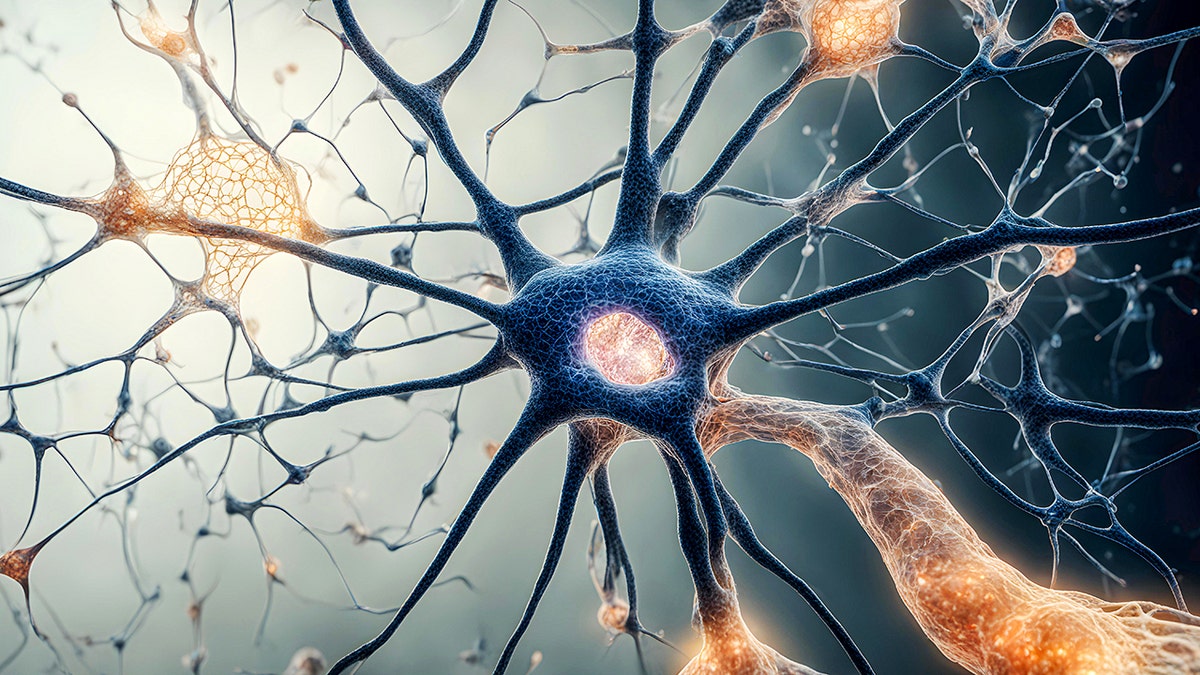
Researchers developed a brain activity scoring model, the ARC score, which can predict Alzheimer’s disease risk years before noticeable memory lapses occur. (iStock)
"I'm excited we established a signature that can help us better understand the difference between people who can maintain excellent cognitive performance and people who show cognitive decline," Yu Zhang, the study's senior author and an assistant professor of psychiatry and behavioral sciences at Stanford Medicine, said in a press release.
DEMENTIA RISK MAY BE LINKED TO SEEMINGLY HARMLESS DAILY HABIT, NEW RESEARCH SUGGESTS
Next, the scientists applied the scoring model to more than 1,300 cognitively unimpaired adults aged 55 to 70.
Although all the adults scored normally on memory tests, their brain scans showed differences: Some had activity patterns similar to super agers, while others had patterns more like those seen in people with Alzheimer’s.
CLICK HERE FOR MORE HEALTH STORIES
Over follow-up periods of up to 12 years, with most participants tracked for five to six years, those whose brain activity more closely resembled Alzheimer’s patterns showed faster declines in memory and thinking, developed more amyloid plaques and were more likely to be diagnosed with the disease, the researchers found.

The model successfully differentiated between the two extreme cognitive groups with approximately 85% accuracy. (Saul Loeb/AFP/Getty Images)
The team found that the ARC score matched or outperformed standard risk measures, including amyloid and tau biomarkers as well as genetic testing, in spotting early decline.
"We compared the ARC score with existing biomarkers in predicting people converting to Alzheimer's disease," lead author Kanhao Zhao, a postdoctoral scholar in psychiatry at Stanford Medicine, said in the release.
CLICK HERE TO SIGN UP FOR OUR HEALTH NEWSLETTER
"Our model shows comparable or better prediction ability, and it can do so at an earlier time point. And if we combine our score with the existing biomarkers, the prediction performance improves."
TEST YOURSELF WITH OUR LATEST LIFESTYLE QUIZ
Alzheimer’s disease affects millions of older adults worldwide, according to major health institutions.
A central challenge in treating the disease is that physical damage often begins decades before patients notice memory lapses, at which point treatments offer limited benefit.

Across follow-up periods spanning up to 12 years, individuals with Alzheimer’s-like brain patterns experienced faster cognitive decline and higher diagnosis rates. (iStock)
Researchers stressed that the brain scan method is not yet ready for doctors to use on its own to diagnose Alzheimer’s. More studies are needed to confirm its accuracy and compare it with other new tests.
However, understanding how brain activity differs between healthy aging and neurodegeneration could help researchers test future treatments, including techniques that stimulate the brain without surgery.
CLICK HERE TO DOWNLOAD THE FOX NEWS APP
"There are two main components: One is to know which part of the brain to target. The other is how we should change it," Zhang said.
"That's why identifying the super ager brain resilience pattern is a critical component — so we know what a good pattern should be."
Khloe Quill is a lifestyle writer with Fox News Digital. She and the lifestyle team cover a range of story topics including food and drink, travel, and health.
KioskNews shows a cleaned-up reading view extracted from the publisher’s page — the original always lives on their site, not ours.