Why hotel towels have stripes: The real reason behind the design


Image Credit- Canva Ai
Walk into almost any hotel bathroom and there is one small detail you are likely to notice on the towels. Whether they are fluffy white bath towels, hand towels or face towels, many of them have one or more horizontal stripes woven into them, usually close to the edges.
At first, these stripes may look like nothing more than a decorative touch. After all, hotels are known for their neat, minimalist white linen, and the stripes add an extra texture without making the towel look colourful or flashy.But there is actually more to this than just aesthetics.These horizontal bands are often called dobby borders or dobby stripes, referring to the weaving technique used to create them. While the exact pattern can vary from manufacturer to manufacturer, and, hotel to hotel, the design has several practical purposes as well.
It is not just decoration
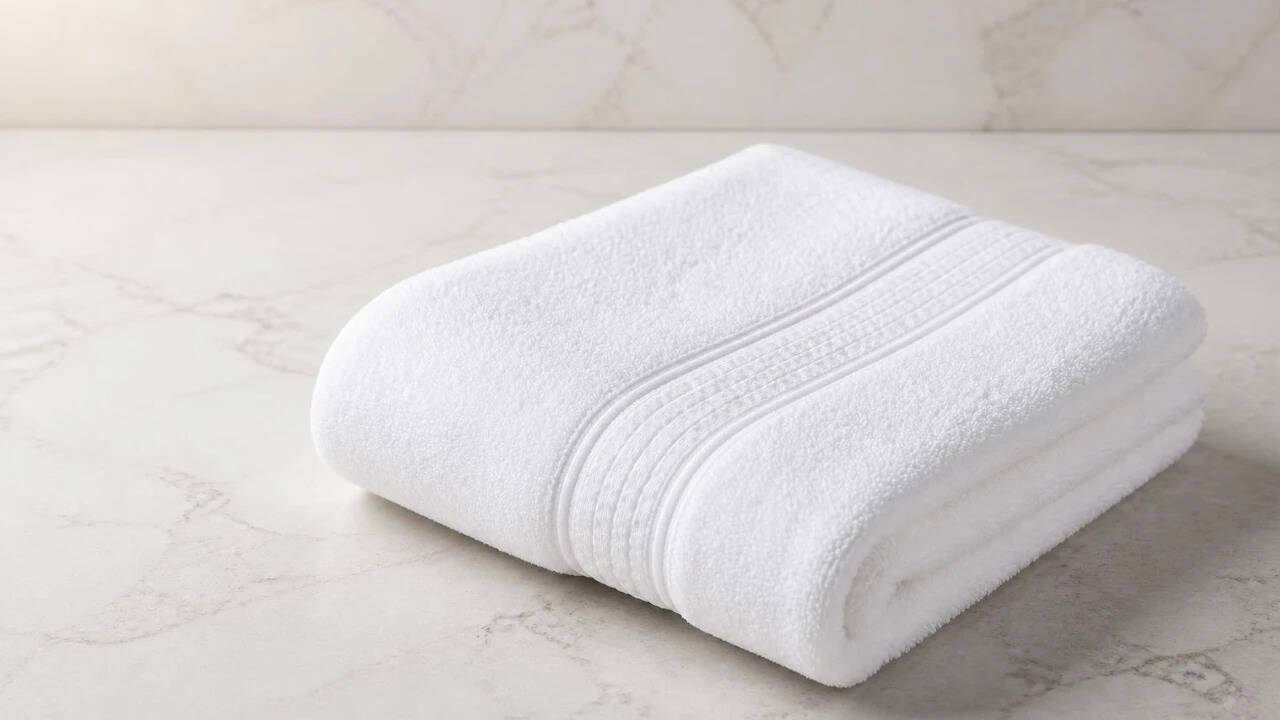
Image credit- Canva Ai
The most obvious reason for the stripe is to give the otherwise plain towel some visual definition. Hotel towels are generally white because white linen gives a clean, uniform appearance and can be washed at high temperatures and treated with bleach when appropriate.A completely plain white towel, however, can look rather indistinguishable from another. The woven border creates a simple visual break and gives the towel a more finished appearance without compromising the clean look hotels prefer.
Unlike printed designs, these stripes are woven into the fabric itself. This means there is no separate coloured layer sitting on top of the towel that could fade or peel away with repeated washing.
The stripes also mark the construction of the towel
Image Credit- Canva Ai
Most towels are made from absorbent loops of yarn, commonly cotton, that form the familiar soft, fluffy surface. The area near the edge needs to be constructed differently because the towel has to be finished in a way that prevents the fabric from continuing to unravel.The woven border creates a denser, flatter section at the end of the towel. In other words, the stripe helps separate the main absorbent body of the towel from its finished edge.That does not mean the stripe alone is responsible for stopping a towel from fraying. The hem and the way the towel is woven and stitched are important too. But the border is part of the towel's overall construction and helps create a neat transition between the looped pile and the edge.
Why is the stripe usually near the borders of the towel?
The middle of a towel is where maximum absorbency and softness are needed. Putting a denser woven pattern through the centre would mean replacing some of those absorbent loops with a flatter weave.The border, on the other hand, is an area where absorbency is less important. Placing the tighter weave close to the edge therefore allows manufacturers to add structure and visual detailing without taking too much away from the towel's main purpose.This is also why you will often see the stripe running horizontally across the towel rather than covering a large portion of it.
It can make folding and presentation easier
Image credit- Canva AI
Hotels deal with enormous quantities of towels every day. A towel may be washed, dried, folded, stacked, transported and placed in a bathroom many times over its life.The border provides an easy visual reference when folding the towel. Housekeeping staff can use the woven band as a rough guide to create a consistent fold, helping stacks of towels look uniform.This is particularly useful in hotels where presentation matters. A pile of identically folded white towels gives a bathroom that crisp, organised appearance that is difficult to achieve when every towel is folded differently.Of course, modern housekeeping does not depend on the stripe to fold towels correctly. It is simply a convenient feature of a design that already serves other purposes.
Are the stripes actually more hygienic?
Not really. You may have come across claims that the horizontal stripe has some special hygienic function, but there is no general rule that the stripe itself makes a towel cleaner or more sanitary.The hygiene of a hotel towel depends much more on how it is washed, dried, stored and handled. The woven border is primarily a construction and design feature.So, if you have ever wondered whether the stripe is somehow a separate antibacterial section of the towel, the answer is no. It is not a secret hygiene technology hidden in your hotel bathroom.
Why do luxury hotels specifically use them too?
Interestingly, the design has survived even as hotel interiors have become more sophisticated.Luxury hotels often use extremely thick, high-quality towels, but the basic design remains remarkably familiar. That is because the border combines several things hotels value: a clean appearance, durability, easy presentation and a subtle decorative element.It also fits into the broader visual language of hospitality. White towels with a simple woven border look polished without appearing overly designed.The next time you pick up a hotel towel and notice those horizontal stripes, therefore, it is worth looking at them a little differently. They are not merely an attempt to make a plain towel look fancy. They are part of the way the towel is woven and finished, while also giving it a neat visual identity.And like many ordinary objects in a hotel room, that tiny detail is a reminder that even something as simple as a towel has been designed around appearance, function and the realities of being washed and used hundreds of times.
KioskNews shows a cleaned-up reading view extracted from the publisher’s page — the original always lives on their site, not ours.