HCMC aims to rank among world's 100 most livable cities by 2030
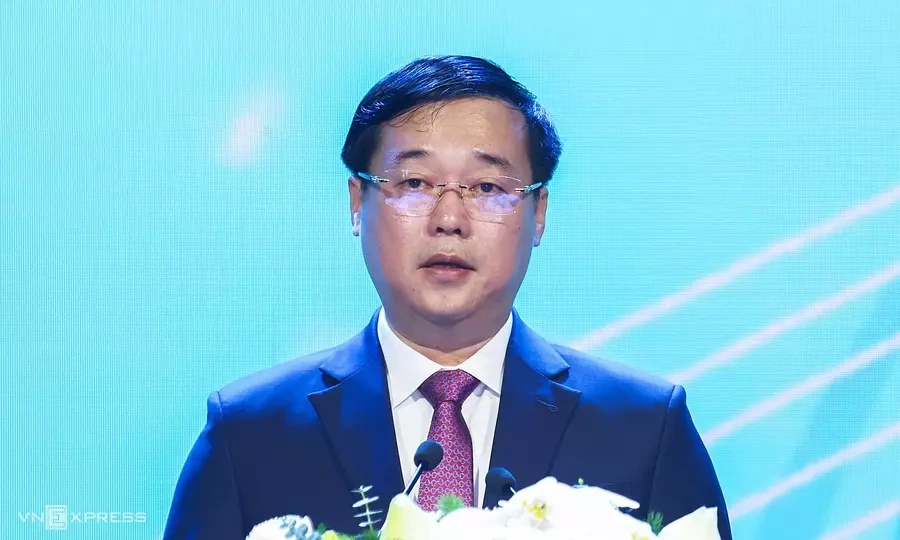
Ho Chi Minh City aims to become one of the world's 100 most livable cities by 2030 and build a world-leading innovation ecosystem under its new master plan, according to its chairman.
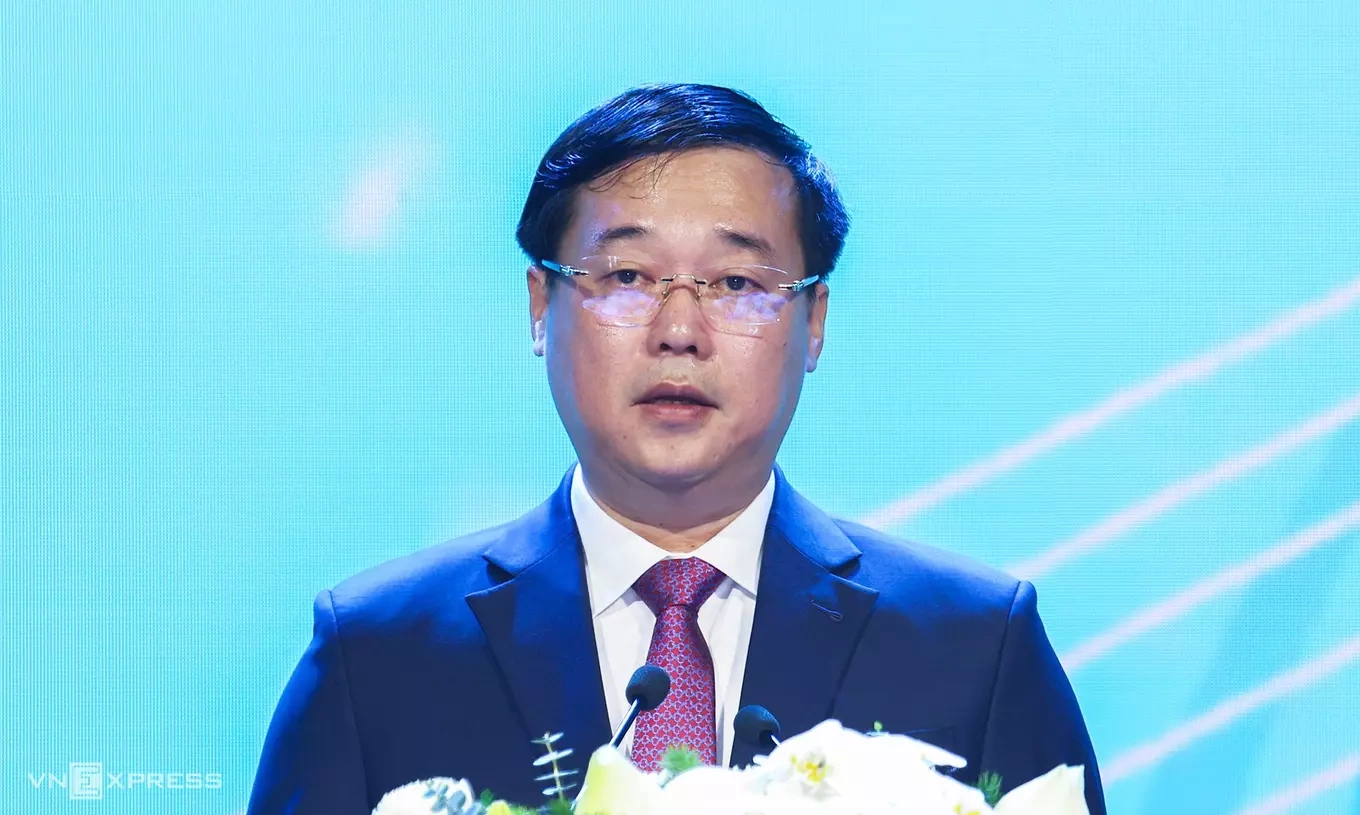
The targets were outlined by Le Quoc Phong, chairman of the HCMC People's Committee, at a conference on the city's 2025-2050 master plan, with a 100-year vision, on Monday.
 |
|
Le Quoc Phong, chairman of the HCMC People's Committee, speaks at the conference announcing the city's master plan. Photo by VnExpress/Quynh Tran |
The merger has expanded HCMC's development area, bringing together strengths in urban development, industry, seaports, logistics, and tourism, Phong said.
The 100-year master plan will guide socioeconomic development, infrastructure, and national defense while strengthening the city's role in southeastern Vietnam and the wider region.
It establishes a growth model centered on science and technology, the digital, green, circular, and maritime economies. The megacity will be organized around five growth poles, five satellite centers, five strategic linkage systems, and 10 development management zones.
By 2030, HCMC aims to become a modern, dynamic, and innovative city and a major center for the economy, finance, culture, science and technology, logistics, and international integration. It also seeks to strengthen its position in Southeast Asia and enter the world's 100 most livable cities.
By 2045, the city plans to become an international economic and financial center and an Asian hub for science, technology, and innovation, with sustainable, climate-resilient development and a high quality of life. From 2075 onward, it aspires to become a smart global metropolis comparable to cities in developed countries.
Phong said the master plan would be made accessible to residents across all wards and neighborhoods, providing information on population, land use, development zones, and planned projects to build public support for implementation.
The city will also review and update urban, rural, and sectoral plans to ensure consistency, while mobilizing public, private, and international investment and leveraging special policy mechanisms to develop strategic infrastructure, transport networks, urban spaces, and its international financial center.
Priority projects include national and interregional transport infrastructure, stalled developments requiring resolution of obstacles, green and digital transformation, social welfare, environmental protection, disaster prevention, and climate adaptation. Land clearance, resettlement, land development, and social housing are also priorities.
"The 100-year vision is a vision for many generations. Today's generation has a responsibility to lay a solid foundation so that future generations can continue building, improving, and taking pride in their city," Phong said.
He called on government agencies, businesses, and residents to work together to turn the master plan into concrete results.
 |
|
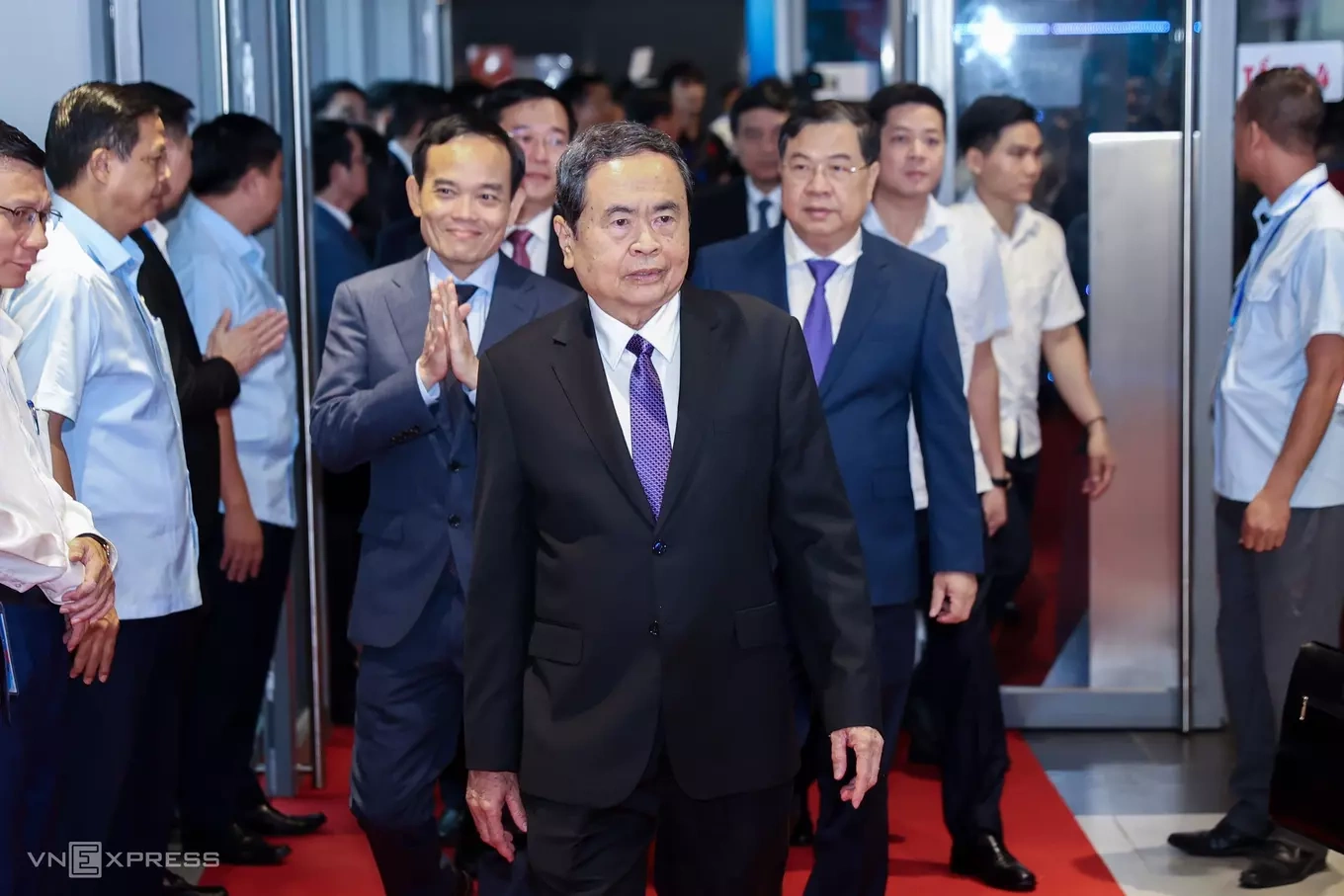
National Assembly Chairman Tran Thanh Man, Permanent Deputy Prime Minister Pham Gia Tuc, and HCMC Party Secretary Tran Luu Quang attend the conference. Photo by VnExpress/Quynh Tran |
National Assembly Chairman Tran Thanh Man said the master plan was important not only for HCMC but also for the southeastern region and the country.
He urged the city to use special policy mechanisms effectively to mobilize resources, promote transit-oriented development (TOD), attract strategic investors, and advance its international financial center, Can Gio international transshipment port, high-tech parks, and innovation centers.
He also called for greener urban development that meets housing needs while addressing infrastructure bottlenecks, particularly interregional transport links, flooding, climate change, and pollution.
Improving living standards for the city's more than 14 million residents should remain a priority, he said, adding that the central government would continue supporting HCMC through special policies and greater autonomy.
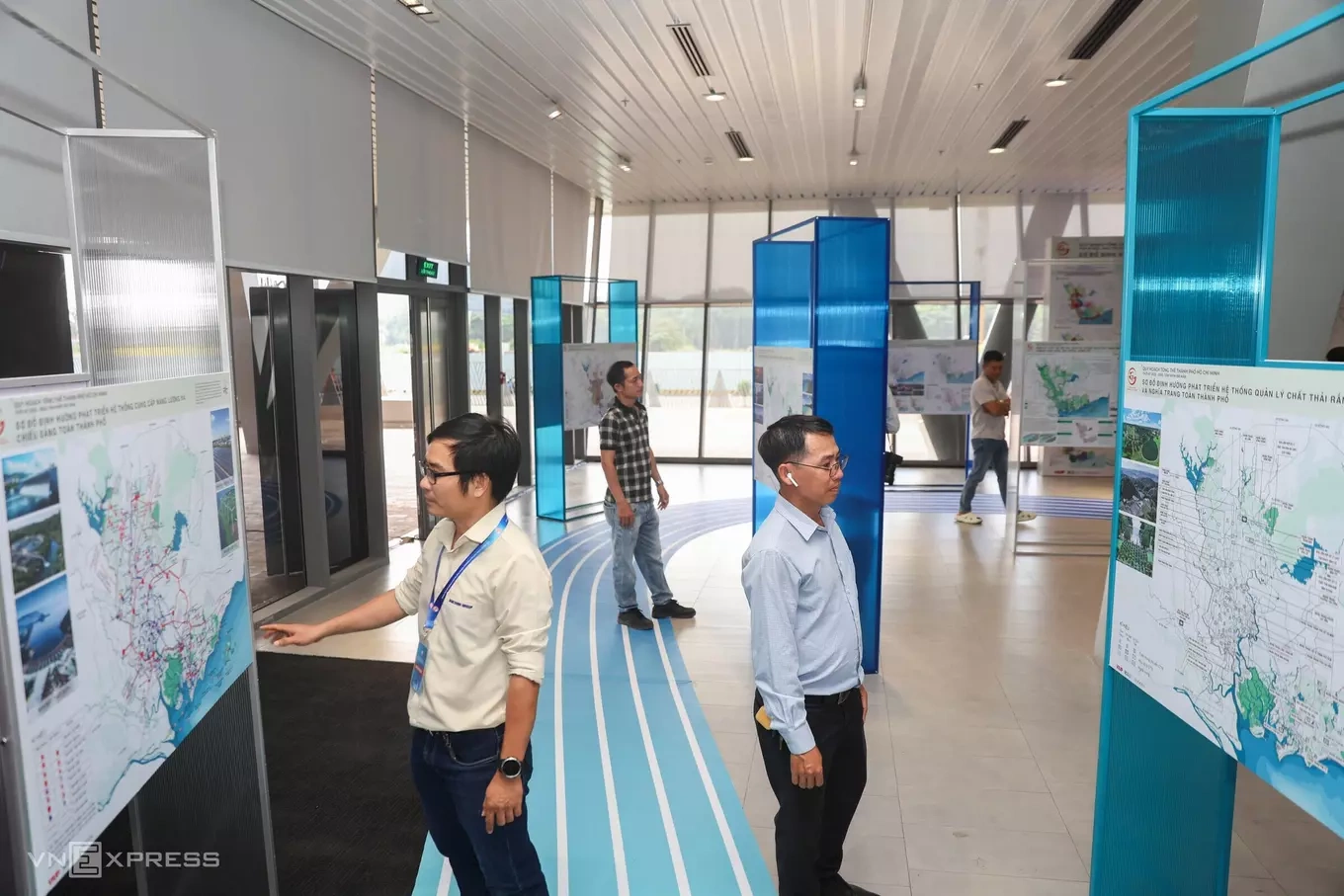
Following the conference, the city opened an exhibition of the master plan at the City Planning Exhibition Center in the Thu Thiem New Urban Area, An Khanh Ward, for public viewing.
 |
|
Residents view HCMC's master plan on display at the City Planning Exhibition Center. Photo by VnExpress/Quynh Tran |
KioskNews shows a cleaned-up reading view extracted from the publisher’s page — the original always lives on their site, not ours.