NDTV Indo-Japan Summit: Japanese Odissi Dancer, Indian Entrepreneur On Feeling Of Belongingness
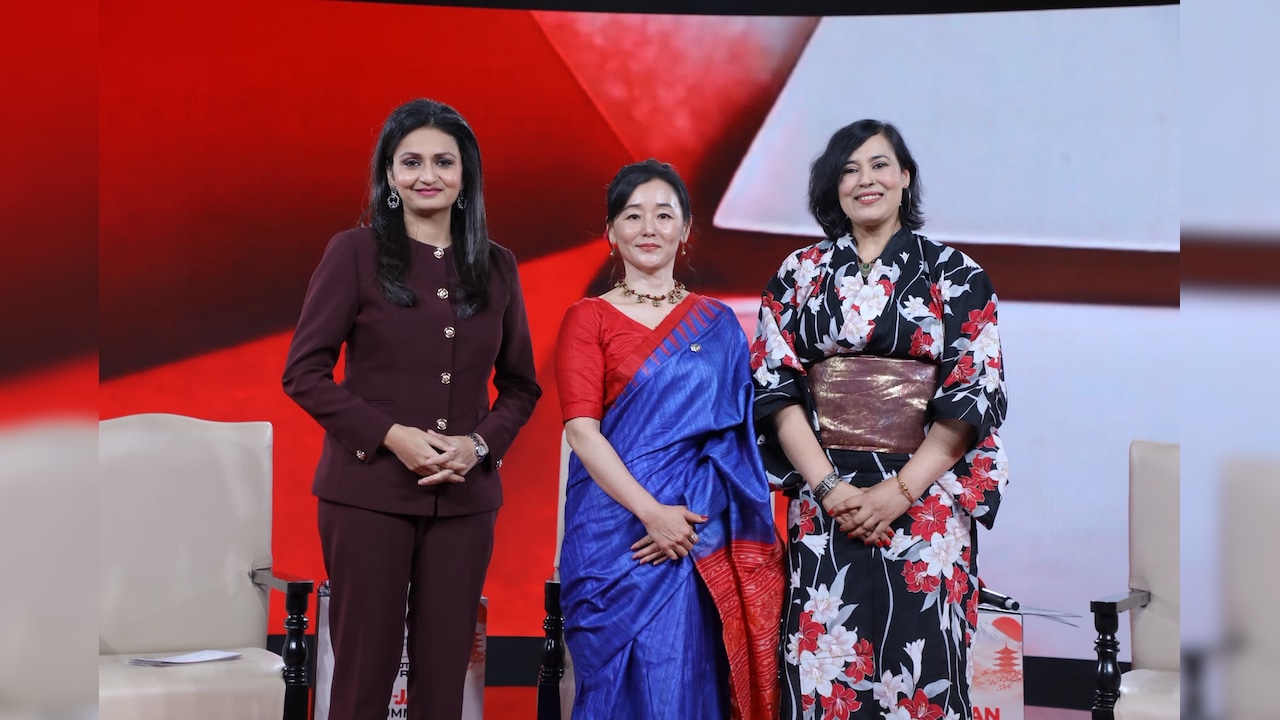
One is a Japanese dancer who has lived in India for around 15 years. The other is an Indian who has spent 24 years in Japan. At an NDTV Indo-Japan Summit session titled "Life, Culture and Belonging in India and Japan", Kaori Naka, an Odissi dancer, and Nupur Tewari, founder of Connect India Japan, spoke about what it means to belong in a country other than the one they were born in.
Naka said Odissi is her life. She also spoke about her early doubts. "Odissi is my life, but I have already known that I'm not Indian or Oriya, so I always struggled the feeling that, oh, I never dance like them, because I'm Japanese and my eyes are too small to express Abhinaya," she said. She added that she has since accepted who she is.
Asked whether audiences and teachers had accepted her, Naka said dance has its own language. "I believe the dance has a own language. So, when we learn the same language together, I believe that nationality really doesn't matter," she said.
She added, "When it comes to passion, when it comes to taking to a particular art form, nationality and in fact language also, art doesn't restrict itself to a particular language. Anybody who surrenders to an art form is the one who actually becomes the best or the ultimate artist."
She has lived in India for around 15 years. She also cooks Indian food every day, and plain dosa is her favourite dish.
Tewari has spent 24 years in Japan. She said her journey was different from that of many Indians there, because she did not start in Tokyo or another big city. She landed in Shikoku, and later lived in Matsuyama. She said she felt she belonged from the moment she arrived, even though she did not know how to greet anyone in Japanese.
She said Japan accepted her as she was. She also said the country changed how she saw her own. "Japan made me fall in love with my own culture," she said. "I discovered my own country being in Japan."
Tewari shared a small memory from a trip to Yamaguchi. She was waiting at a very small station with only two trains a day when an elderly woman asked where she was from. The woman then gave her a pear. "These are the small, small things," Tewari said.
READ | "Shinzo Abe Had Many Plans For World": Wife Breaks Down At NDTV Summit
She said that gesture now shapes her work. "Because they gave me one Nasi, I want to give five Nasi," she said. She described her work connecting the two countries as her way of giving back.
Tewari told Indian students living in Japan to "get out of their comfort zone" and spend time with local people instead of staying within the Indian community. She said they should join local festivals and visit shrines and temples. She also said understanding Japan matters more than learning the language. "Tokyo is very different from what Japan is," she said, adding that the countryside and smaller cities show the country better.
Asked what she would say to young Japanese artists thinking of studying in India, Naka said young people should learn their own culture. She said many young Indians do not know their traditional art forms, especially the classical dances. She also told Japanese students to be proud of their country while understanding other cultures.
Tewari added, "Your tradition, you have a civilisation of like 5,000 years." She told both Indian and Japanese youth to respect what their own countries have, and to build on it. "You don't appreciate only other culture, appreciate your own culture too," she said.
KioskNews shows a cleaned-up reading view extracted from the publisher’s page — the original always lives on their site, not ours.