Delhi’s air quality worsens; crackers still account for 7% of pollution load
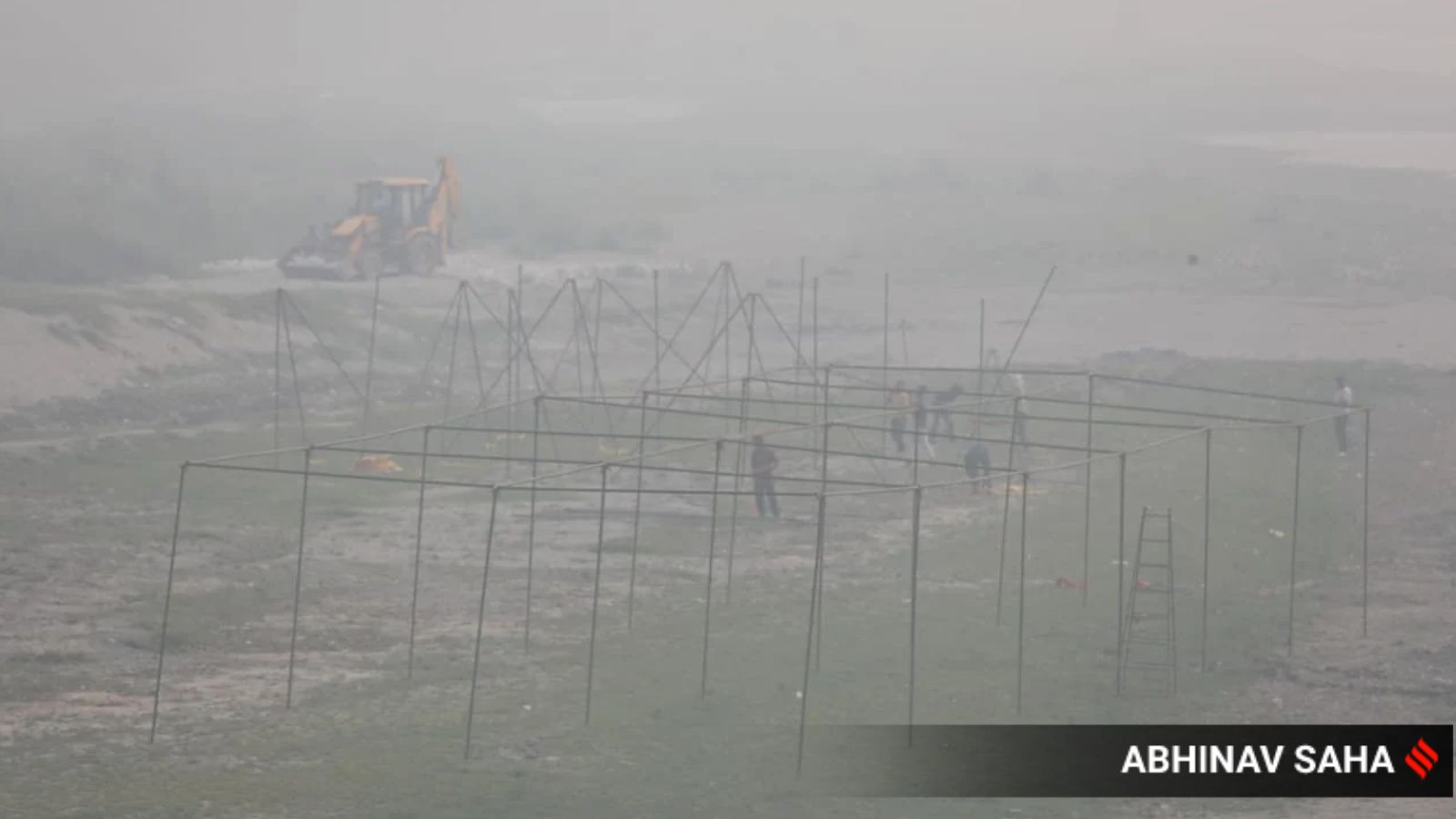
Even four days post-Diwali, Delhi continued to choke with the air quality deteriorating further into the ‘Very Poor’ category on Thursday. Capital’s Air Quality Index (AQI) increased to 350 on Thursday, up from 313 the day before. Meanwhile, Gurugram and Noida logged an AQI of 320 and 311 respectively on Thursday.
The Indian Institute of Tropical Meteorology (IITM), which tracks pollution sources in near real time, estimated that firecrackers contributed about 7% of Delhi’s fine particulate matter (PM2.5) on Thursday, four days after Diwali on 8 November. Firecracker smoke is an aerosolized mix of heavy metals, sulfur dioxide, and carbon-based fine particulate matter that can remain suspended in the atmosphere for days.
According to IITM, biomass burning and secondary organic aerosols each accounted for about 25% of Delhi’s PM2.5 on Thursday. Secondary organic aerosols are not emitted directly. They form in the air when gases from vehicles, fires, and other sources react with sunlight over hours, which is why they can build up over a day or two. Vehicles contributed about 17%, and mixed combustion, including small industries and household burning, added about 11%.
Meanwhile, as per the Indian Agricultural Research Institute (IARI) stubble burning in neighbouring states were detected totalling 339 burning events across six states on Thursday. They were recorded as 182 in Madhya Pradesh, 68 in Uttar Pradesh, 54 in Punjab, 31 in Rajasthan, and 4 in Haryana. Delhi recorded none. On Thursday IARI said, “Cloud cover over parts of Uttarakhand, Punjab, Haryana, northwest UP, and Delhi-NCR is obstructing the satellite detection of crop residue burning”.
Across all seven regions monitored, total detected paddy residue burning events between September 15 and November 12 this season stood at 10,805 — the lowest cumulative count since monitoring began, representing a 24.3% drop from 2025 (14,279) and an 88.8% from 2020 (96,622). However, Punjab remained the sole outlier. The state reported 5,571 fires, which is 19.5% higher than last year (4,662 in 2025).
Both maximum and minimum temperatures at 30°C and 16.5°C remained close to normal on Thursday, the IMD said.
The India Meteorological Department (IMD) expects a broadly similar pattern for the next few days. From 13 to 15 November, skies will be partly cloudy, with mist or shallow fog in most places during the mornings, it said. In its forecast for next week, IMD predicts mainly clear skies with mist or shallow fog in the mornings and northwest winds of 10 to 20 km/hr. Night temperatures are expected to rise by about 2°C over the next two days, then fall by 3 to 5°C between 16 and 19 November, with nighttime lows reaching about 13 to 15°C by 18 November, it added.
KioskNews shows a cleaned-up reading view extracted from the publisher’s page — the original always lives on their site, not ours.