Modi lists blue, green economy as saptadhara; pushes for deep-sea explorations
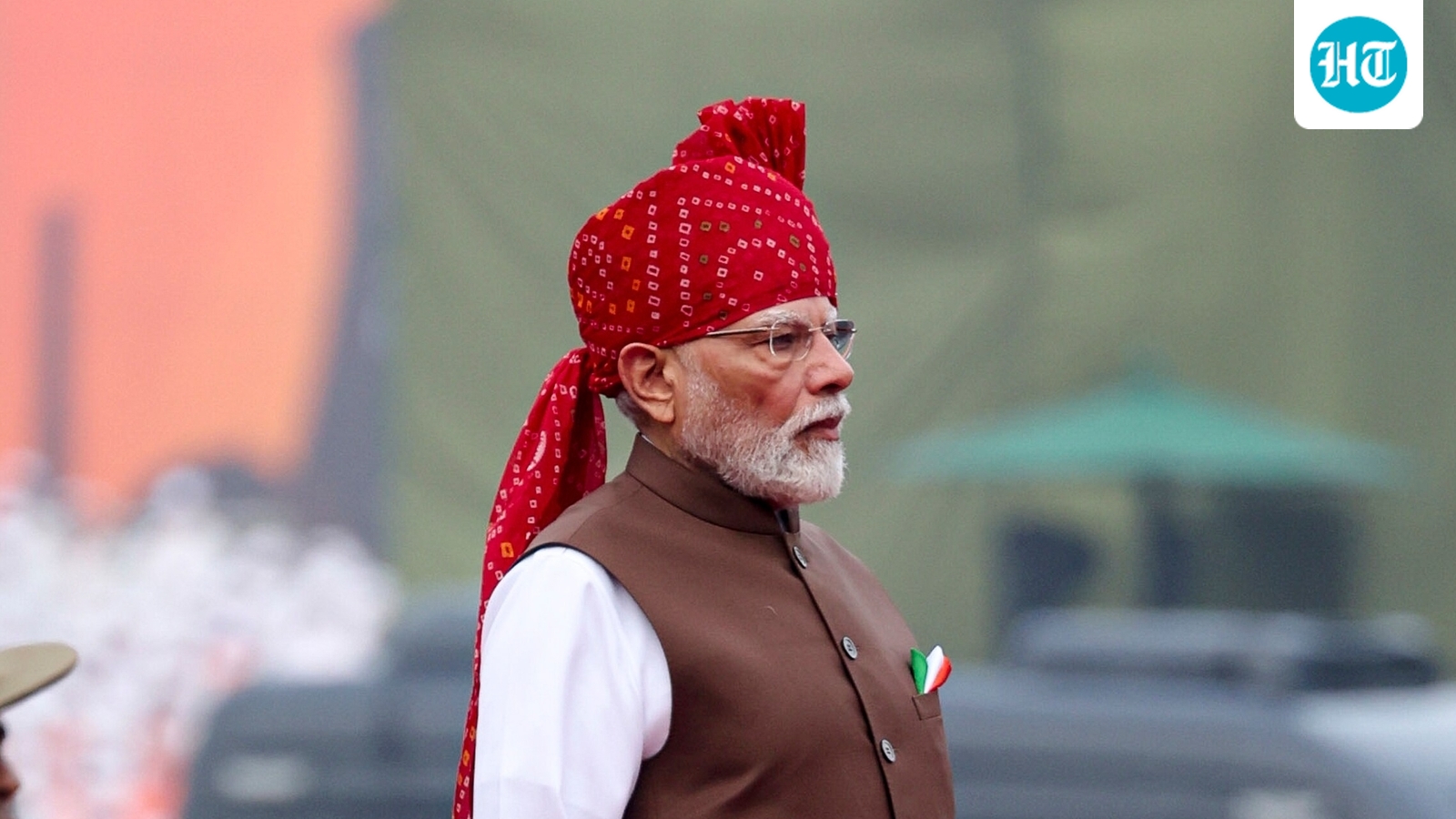
Prime Minister Narendra Modi on Saturday listed a Green and Blue economy among the country’s seven saptadharas (seven streams of strength), underscoring the vision for India to become a global leader in green hydrogen, renewable energy generation and storage, and deep-sea exploration. In his Independence Day speech from Delhi’s Red Fort, he also spoke about more opportunities for coastal tourism and ocean technology.
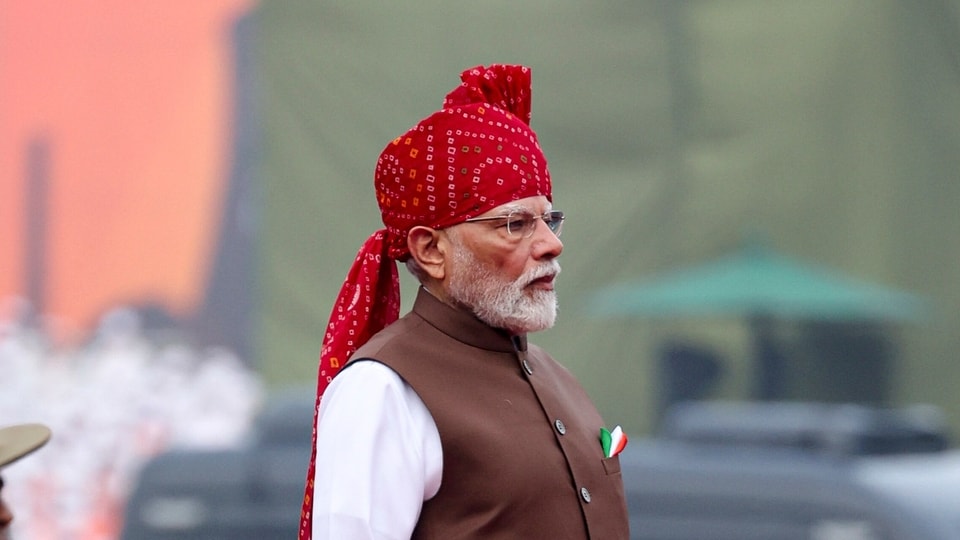
Modi said the government has taken steps in this direction, including a change in mindset, which has now made previously “no-go” areas in India’s coastal waters into “go-ahead” areas, providing access to key resources beyond coastlines.
“India must achieve global leadership in green hydrogen, renewable energy and energy storage, while continuing to provide solutions to global challenges. The blue economy, too, offers immense opportunities in fisheries, coastal tourism and ocean technology, opening new pathways for India’s growth,” Modi said from the ramparts of the Red Fort. He said a previously “flawed” mindset had stopped India’s exploration of the seas.
“Today, the country has to remain dependent on crude oil; this is due to our flawed thinking. You will be surprised to know that we declared 99% of our coastline as a no-go area. We ourselves had decided not to go into the ocean for exploration. This was poverty of thought. We have now opened up these areas as go-ahead areas,” he said.
The Union Cabinet on July 31 approved the Samudra Manthan (National Offshore Exploration) Scheme with a budget of ₹84,084 crore. The plan for the fiscal year 2030 aims to boost deepwater oil and gas drilling, secure long-term energy supplies, and increase domestic fuel production.
Modi stressed the need for energy security, stating India was making moves in this area with a vision for a developed India by 2047.
“Our trains are running on electricity, and our environment is benefiting. We have not stopped here. We do not want to remain behind the world. You may have heard the news recently. India has entered a new field of fuel as well. The country has started its first hydrogen-powered train. ...It is the world’s longest and most powerful hydrogen train, and India has also made its mark in the field of hydrogen trains,” he said.
Modi added that before 2014, only around 70 cities in the country had piped gas distribution. “In 12 years, we have increased this number from 70 cities to 700 cities. This is what speed and expansion look like. Before 2014, piped gas reached barely two–2.2 million households. Today, work is underway to provide piped gas to nearly 17.5 million households,” said Modi.
He said India’s solar targets had picked up rapidly. “Twelve years ago, the country’s solar energy capacity was only 2 GW. Just 2 GW. Today, it is 160 GW,” he said.
On August 9, the government said India’s installed non-fossil capacity had crossed 300 GW, 60% of the target of 500 GW by 2030. This was led by over 160 GW from solar energy.
KioskNews shows a cleaned-up reading view extracted from the publisher’s page — the original always lives on their site, not ours.