8 Best Psychological Thriller Films of the 2020s So Far, Ranked


Michael Block is a 14 time GLAM Award nominated writer, producer, and host of the podcast Block Talk. Throughout his time in the entertainment industry, he has worked on and off Broadway as a stage manager, written several produced plays, critiqued hundreds of theatrical performances, drag and cabaret shows, and has produced events randing from drag competitoons to variety concerts!
On Block Talk, he interviews nightlife personalities, covers the wide world of entertainment through features, ranking episodes, and recaps ALL of Drag Race, as well as Dragula and Survivor. He has interviewed hundreds of RuGirls that span the globe at DragCon NYC, DragCon LA, and DragCon UK.
In his free time, he makes one-of-a-kind jewelry and gift baskets with his mom. He is a proud member of the LGBTQ+ community.
Sign in to your Collider account
We turn to films for a chance to escape reality, but sometimes we seek out movies to mess with our minds. Enter the psychological thriller. The subgenre is defined by its innate ability to build suspense, tension, and dread by focusing on the unstable mental and emotional states of its characters. These films blur the line between sanity and madness, leaving everyone unsure what is real and what is an illusion.
Countless incredible psychological thrillers have shaped cinema history, and the 2020s have been no exception. From mind games in the Vatican to an instant horror classic, these eight 2020s psychological thrillers have pushed us to the brink. Though there are certainly some other strong contenders, these eight are simply great.
8 'The Black Phone' (2022)

With a terrifying premise and brilliant atmospheric world-building, The Black Phone emerged as a hidden gem that went viral. Directed by Scott Derrickson, the film, set in 1978 in suburban Denver, Colorado, tells the story of Finney Blake (Mason Thames), who is snatched in broad daylight by a masked, sadistic serial child killer known as The Grabber (Ethan Hawke). Trapped in a soundproof basement, Finney answers a disconnected phone where the ghosts of The Grabber’s previous victims share their failed escape attempts, offering tactical advice and giving him tools to fight back. The Black Phone subverted horror and supernatural tropes by centering on a victim-focused narrative.
Unlike many true-crime stories or horror films that glorify or build a dark mythos around the serial killer, the film centers tightly on Finney, making him the reason to believe. The emotional core is anchored by Finney and his clairvoyant sister Gwen (Madeleine McGraw), whose fierce bond, psychic dreams, and navigation of a traumatic, abusive household ground the story in humanity. The film establishes distinct supernatural rules that aren’t gimmicky but a steadfast narrative mechanic. Thames is great, but Hawke is otherworldly. He delivers a deeply unsettling performance, utilizing expression-shifting masks to amplify his reign of terror. A masterful period thriller, The Black Phone will mess with your mind. Good thing there’s a sequel!
7 'Last Night in Soho' (2021)

In Edgar Wright’s stylish psychological thriller Last Night in Soho, Ellie (Thomasin McKenzie), a naive and aspiring fashion designer moves from the countryside to London to attend fashion school where she rents a room from an elderly landlady, Ms. Collins (Diana Riggs). When she sleeps, she is mysteriously transported in vivid dreams to 1960s London, following Sandie (Anya Taylor-Joy), a glamorous, ambitious young singer who is manipulated and forced into prostitution by a sleazy manager named Jack (Matt Smith). What starts as a romanticized look back at the Swinging Sixties slowly turns into a terrifying nightmare. Last Night in Soho explores the dark underbelly of the entertainment industry and the lasting physical and psychological scars of abuse through the romanticization of a dangerous social reality.
Wright’s stylish visual craftsmanship, thematic deconstruction of nostalgia, and dual-timeline narrative provide one of the most thrilling viewings of the decade thus far. The narrative strips away the glitz to expose the dark, predatory exploitation and systemic abuse women faced during the Swinging Sixties, forcing the audience to remove the rose-colored glasses of yore. With a kinetic visual style, visceral neon-drenched imagery, and a masterfully curated soundtrack, everything operates as a rightly placed sensory overstimulation. Last Night in Soho is a stimulating rollercoaster that will leave you gasping at its extraordinary twist that requires a second watch to truly catch the clues.

Directed by Mark Mylod and written by Seth Reiss, the black comedy thriller The Menu put the hoity-toity were out on blast. The film follows a group of ultra-wealthy elites, food critics, and obsessed foodies who pay an exorbitant amount of money to travel to a remote, private island for an exclusive, multi-course dining experience at a high-end restaurant called Hawthorn, run by the tyrannical and world-renowned Chef Julian Slowik (Ralph Fiennes), who treats his culinary art like a lethal, rigid doctrine. Tyler (Nicholas Hoult), an obnoxious, overly pretentious foodie, and his date, Margot (Anya Taylor-Joy), who doesn't fit into the elite demographic, embark on a twisted evening where Slowik has designed the menu to punish his patrons, exposing their exploitation, pretension, corruption, and ruin of the culinary arts. The Menu is a sharp satire that targets the stark divide between artists and the wealthy class that consumes and devalues their work, while mocking foodie culture.
The Menu is a high-stakes, single-setting, claustrophobic nightmare that’s a delicious watch. The terror builds through Chef Julian’s psychological control over his guests and the slow-dawning realization that no one can escape the island. The film targets the pretentiousness of ultra-wealthy culture, celebrity chef worship, and the commodification of art, turning the story into a striking morality play. For those in the service industry, the film provides a cathartic pleasure in watching the high and mighty get their comeuppance. Fiennes is chilling as the brilliant mastermind, while Hoult and Taylor-Joy capture the stark ends of the consumer spectrum. The Menu will most certainly change how you view your food.
5 'Conclave' (2024)

You’ll never view any sort of election quite the same after you watch Conclave. Directed by Edward Berger and written by Peter Straughan, the film tracks the high-stakes, secretive process of electing a new Pope inside the Vatican. After the sudden, unexpected death of a beloved Pope, Cardinal Thomas Lawrence (Ralph Fiennes) is tasked with organizing the papal conclave, where Catholic Church leaders from around the world are locked away in total isolation until they reach a consensus. Beneath the pious exterior, major candidates engage in intense political maneuvering, ambition, and backstabbing to secure votes, culminating in a crisis of faith. Based on Robert Harris' novel, Conclave’s ecclesiastical politics reframe the power of psychological mind games.
Conclave pulls the curtains back as it traps the College of Cardinals inside the Vatican in total seclusion, turning a sacred ritual into a tense chess match of suspicion, leaking, and surveillance. The film portrays the papal election like a modern secular political campaign filled with smear tactics, ideological clashes, and unadulterated ambition. The narrative subverts expectations through late-breaking scandals and a controversial final-act revelation that forces characters and audiences to re-evaluate institutional power and identity. Fiennes is fine as Cardinal Lawrence, but it’s Isabella Rossellini as Sister Agnes that steals the screen. Conclave is a powerhouse film.
Collider Exclusive · Oscar Best Picture Quiz
Which Oscar Best Picture
Is Your Perfect Movie?
Parasite · Everything Everywhere · Oppenheimer · Birdman · No Country
Five Oscar Best Picture winners. Five completely different visions of what cinema can be — and what it can do to you. One of them is the film that was made for the way your mind works. Ten questions will figure out which one.
🪜Parasite
🌀Everything Everywhere
☢️Oppenheimer
🐦Birdman
🪙No Country for Old Men
01
What kind of film experience do you actually want? The best movies don't just entertain — they leave something behind.
02
Which idea grabs you most in a film? Great films are driven by a central obsession. What's yours?
03
How do you like your story told? Form is content. The way a story is shaped changes what it means.
04
What makes a truly great antagonist? The opposition defines the protagonist. What kind of opposition fascinates you?
05
What do you want from a film's ending? The final note is the one that lingers. What do you want it to sound like?
06
Which setting pulls you in most? Where a film takes place shapes everything — mood, stakes, what's even possible.
07
What cinematic craft impresses you most? Every great film has a signature — a technical or artistic element that makes it unmistakable.
08
What kind of main character do you root for? The protagonist is the lens. Who you choose to follow says something about you.
09
How do you feel about a film that takes its time? Pace is a choice. Some films sprint; others let tension accumulate slowly, deliberately.
10
What do you want to feel walking out of the cinema? The best films leave a mark. What kind of mark do you want?
The Academy Has Decided Your Perfect Film Is…
Your answers have pointed to one Oscar Best Picture winner above all others. This is the film that was made for the way your mind works.
Parasite
You are drawn to films that operate on multiple levels simultaneously — that begin in one genre and quietly, brilliantly migrate into another. Bong Joon-ho's Parasite is a film about class, desire, and the architecture of inequality that manages to be darkly funny, deeply suspenseful, and genuinely shocking across a single extraordinary running time. Your instinct is for cinema that hides its true intentions until the moment it's ready to reveal them. Parasite is exactly that — a film that rewards close attention and punishes assumptions, right up to its devastating final image.
Everything Everywhere All at Once
You want it all — and this film gives you all of it. The Daniels' Everything Everywhere All at Once is one of the most maximalist films ever made: action comedy, multiverse sci-fi, family drama, existential crisis, and a genuinely earned emotional core that sneaks up on you amid the chaos. You are someone who responds to ambition, who doesn't want cinema to choose between being entertaining and being meaningful. This film refuses that choice entirely. It is overwhelming by design, and its overwhelming nature is precisely the point — because the feeling of being crushed by infinite possibility is exactly what it's about.
Oppenheimer
You are drawn to cinema on a grand scale — films that understand history not as a backdrop but as a force, and that place their characters inside that force and watch what happens. Christopher Nolan's Oppenheimer is a film about the terrifying gap between what we can do and what we should do, told with the full weight of one of the most consequential moments in human history behind it. You want your films to feel important without feeling self-important — to earn their ambition through sheer craft and the gravity of their subject. Oppenheimer does exactly that. It is enormous, complicated, and refuses easy comfort.
Birdman
You are drawn to films that foreground their own construction — that make the how of the filmmaking part of the what it's about. Alejandro González Iñárritu's Birdman, shot to appear as a single continuous take, is cinema examining itself through the cracked mirror of a fading actor's ego. You respond to formal daring, to the feeling that a film is doing something that probably shouldn't be possible. Michael Keaton's performance and Emmanuel Lubezki's restless camera create something genuinely unlike anything else — a film that is simultaneously about creativity, relevance, self-destruction, and the impossibility of ever truly knowing if your work means anything at all.
No Country for Old Men
You are drawn to cinema that trusts silence, that refuses to explain itself, and that treats dread as a form of meaning. The Coen Brothers' No Country for Old Men is a film about the arrival of a new kind of evil — implacable, arbitrary, and utterly indifferent to the moral frameworks we use to make sense of the world. It is one of the most formally controlled films ever made, and its controlled restraint is what makes it so terrifying. You want your films to haunt you, not comfort you. You are not interested in resolution if resolution would be dishonest. No Country for Old Men is honest in a way that most cinema never dares to be.
4 'The Invisible Man' (2020)
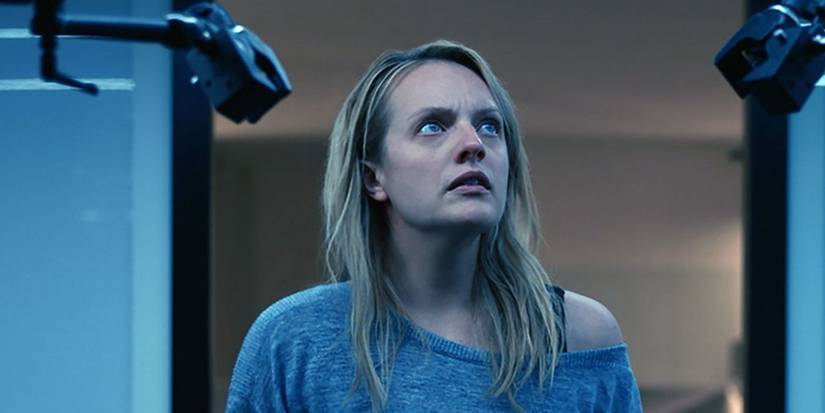
H.G. Wells' masterpiece was completely reinvented in Leigh Whannell's masterpiece The Invisible Man. Using the classic text to tell a modern nightmare, the film follows Cee Kass (Elisabeth Moss), a woman terrorized and gaslit by her wealthy, abusive ex-boyfriend, Adrian Griffin (Oliver Jackson-Cohen), after he fakes his suicide and invents an invisibility suit. As strange and violent events begin to occur, no one believes her claims as the stalking is ramped up. All she can do is fight back and hope she can dismantle the conspiracy. The Invisible Man stands out as a premier psychological thriller by turning a classic monster movie into a harrowing metaphor for domestic abuse and gaslighting.
Between Whannell's masterful direction and Moss' tour-de-force performance, The Invisible Man is a worthy watch. Whannell uses the camera to make empty rooms feel like active threats, panning across long hallways and empty corners to train the audience to feel the claustrophobic dread of an unseen presence. He could be anywhere in the room. The story is modernized in a brilliant manner to mirror the isolation of surviving an abusive relationship. The world writes Cee off as unstable, capturing the terrifying reality of social disbelief. You can't help but want to jump through the screen and help her out. Moss is as good, if not better, than she is in The Handmaid's Tale. This film should have been the reason the Universal Monsters film franchise was born.
3 'Anatomy of a Fall' (2023)
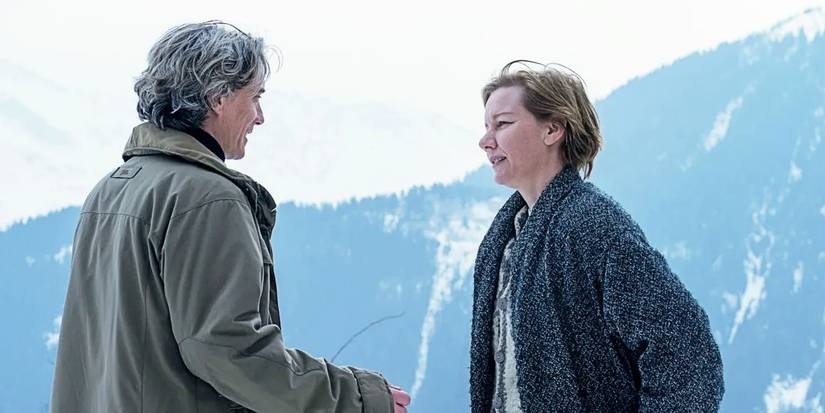
If awards mean success, then Anatomy of a Fall is just that. Directed by Justine Triet, the story begins once Samuel Maleski (Samuel Theis) is found dead in the snow outside his and his wife’s, Sandra Voyter (Sandra Hüller), isolated chalet in the French Alps, having fallen from an attic window. He is discovered by his 11-year-old visually impaired son, Daniel (Milo Machado-Graner). Because authorities cannot determine if Samuel was murdered, committed suicide, or suffered a fatal accident, Sandra is indicted for murder. The courtroom battle dissects every detail of Sandra and Samuel's marriage, focusing on the relationship's slow-motion collapse and the subjectivity of truth. Anatomy of a Fall flips the traditional psychological thriller on its head through its terrifyingly realistic nightmare, the ambiguity, and the fragility of perception.
Most thrillers focus on what happened, but Anatomy of a Fall is entirely consumed by how we interpret what happened. Anatomy of a Fall shifts from a standard whodunit to a profound psychological study. The audience is forced to constantly shift allegiance, analyzing Sandra’s every blink, tone adjustment, and defensive statement to figure out if she is a grieving widow or a cold-blooded killer. The film skips the melodrama and instead goes balls to the wall. She plays Sandra with an unsettling calmness and emotional guardedness. In turn, it challenges the audience on how we weaponize a grieving widow. The film is a masterclass in language. Words are used as a weapon, showcasing the bitter resentment of two creative minds suffocating under mutual jealousy, language barriers, and parental guilt. Anatomy of a Fall smashes your illusion of the justice system, as it’s not a mission of innocence but an indictment of character.
2 'If I Had Legs I'd Kick You' (2025)

There may not be a more stressful film than If I Had Legs I’d Kick You. Written and directed by Mary Bronstein, the black-comedy psychological thriller centers on Linda (Rose Byrne), a psychotherapist and mother trying to balance her chaotic life. She deals with an absent husband, Charles (Christian Slater), trying to care for her young daughter (Delaney Quinn), who suffers from a severe pediatric feeding disorder requiring a tube, a ceiling collapse and flooding in their apartment that forces them into a seedy motel, demanding clients, sleep deprivation, and a cold, hostile therapist (Conan O’Brien). Linda spirals into a mental breakdown, and rightly so. If I Had Legs I’d Kick You serves as an intense, surreal, and anxiety-inducing look at maternal isolation, unacknowledged emotional labor, and the limits of a person's patience and sanity.
If I Had Legs I’d Kick You is burnout personified. To capture the intensity, the camera stays tightly fixed on Linda's perspective, mirroring her claustrophobia and mental fraying. Perhaps the most brilliant touch is never showing her daughter, forcing the audience to hear the constant nagging as a burden without seeing a reason to empathize. By turning the invisible, grinding anxieties of motherhood and caregiving into an agonizing, visceral horror experience, the film skews close to a raw, unrelenting panic attack. Byrne is at the top of her game as Linda. You see her unravel in a manner that you can’t help but feel for her. Even though she makes some morally questionable decisions, she remains a steadfast hero who you’re willing to embark on this disturbing journey with.
1 'Obsession' (2026)

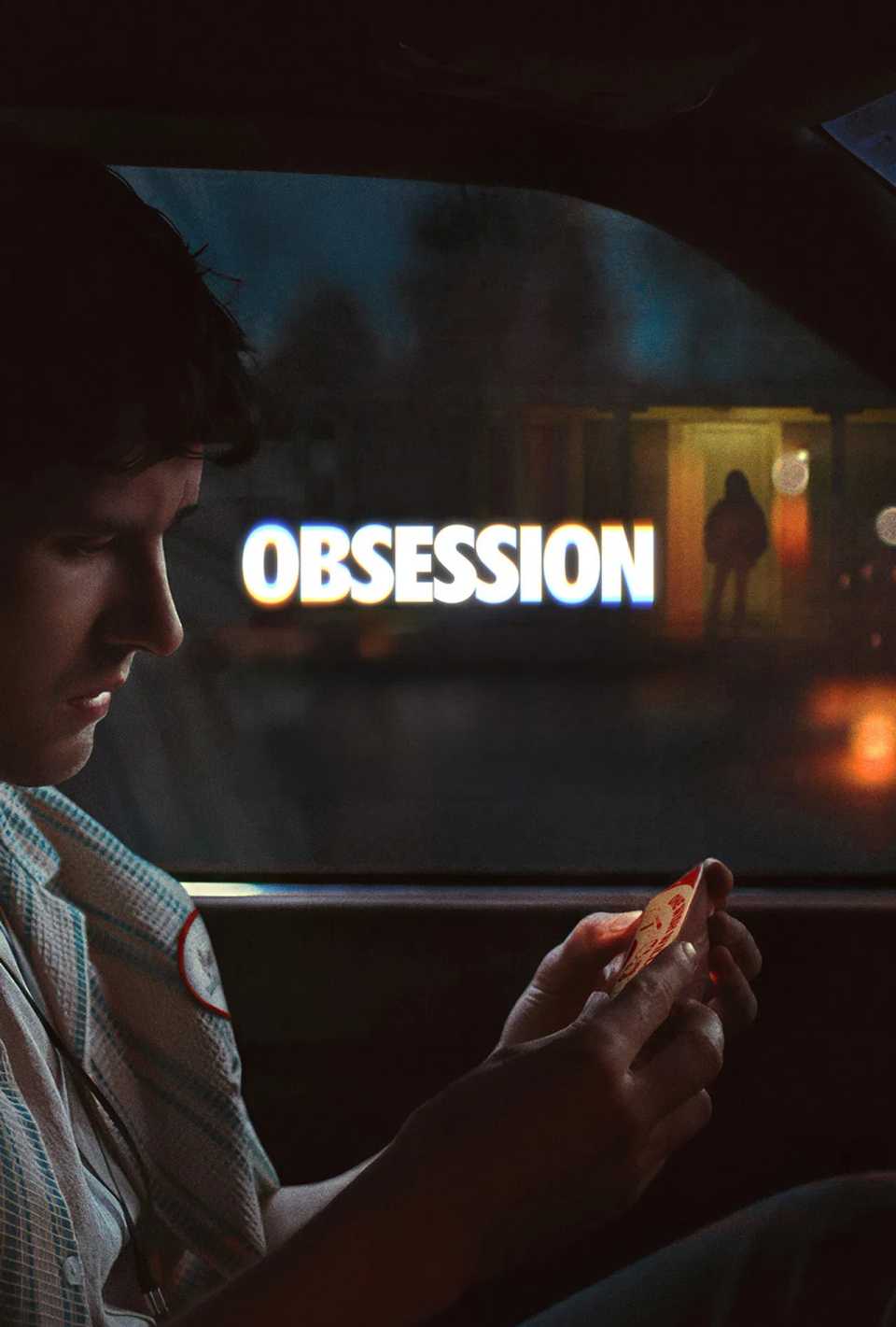
2026 is the year of Obsession. The low-budget horror thriller reshaped the horror genre once again. Written and directed by Curry Barker, the story centers on Baron "Bear" Bailey (Michael Johnston), a socially awkward music store clerk who harbors a one-sided infatuation with his coworker, Nikki Freeman (Inde Navarrette). After struggling to confess his feelings, Bear finds a supernatural charm called the One Wish Willow and breaks it while wishing for Nikki to love him above all else. Unfortunately, the wish traps the real Nikki’s consciousness inside her own mind as her physical body is hijacked by a violent, possessive entity that acts out Bear's darkest fantasy. Engineering a massive word-of-mouth cultural phenomenon, Obsession struck the perfect balance between laugh-out-loud absurdity and sudden, grotesque acts of raw violence.
Obsession’s masterstroke comes in its minimalist approach, using heavy shadows, tight camera blocking, and a deeply unsettling sound design. The movie holds its gaze with lingering, uncomfortable shots that let the horror breathe. What keeps viewers on their toes is the inability to predict whether a scene will end in a punchline or a bloodbath. The film features two career-making performances by Johnson and Navarrette. Johnson’s Bear subverts the typical nice-guy archetype, turning him into a deeply grey, complex villain whose desperate need for validation becomes a tragic nightmare. For her part, Navarrette crafts an uncanny creature with bone-chilling facial contortions and precise physical acting. She embodies a tragic duality, leaving a lasting visual impression that haunts you long after the credits roll. Obsession has rightly become our latest obsession.
Obsession
- Release Date
- May 15, 2026
- Runtime
- 108 minutes
- Director
- Curry Barker
- Writers
- Curry Barker
-

Michael Johnston
Bear
-

Inde Navarrette
Nikki
-

Cooper Tomlinson
Ian
-
Megan Lawless
Sarah
KioskNews shows a cleaned-up reading view extracted from the publisher’s page — the original always lives on their site, not ours.