BOCA hack caused by contractor error: minister
By Jonathan Chin / Staff writer, with CNA


Human error by a contractor during a system upgrade created vulnerabilities that enabled hackers to steal more than 70,000 passport photos from the Bureau of Consular Affairs (BOCA), Minister of Digital Affairs Lin Yi-jing (林宜敬) said yesterday.
He made the comments during a legislative hearing in response to requests by Chinese Nationalist Party (KMT) Legislator Wan Mei-ling (萬美玲) to clarify details about the cyberattack on the bureau’s systems earlier this month.
The government’s investigation suggested that a private contractor tasked with updating the bureau’s Web sites made a mistake in the settings, which created a new vulnerability, Lin said.
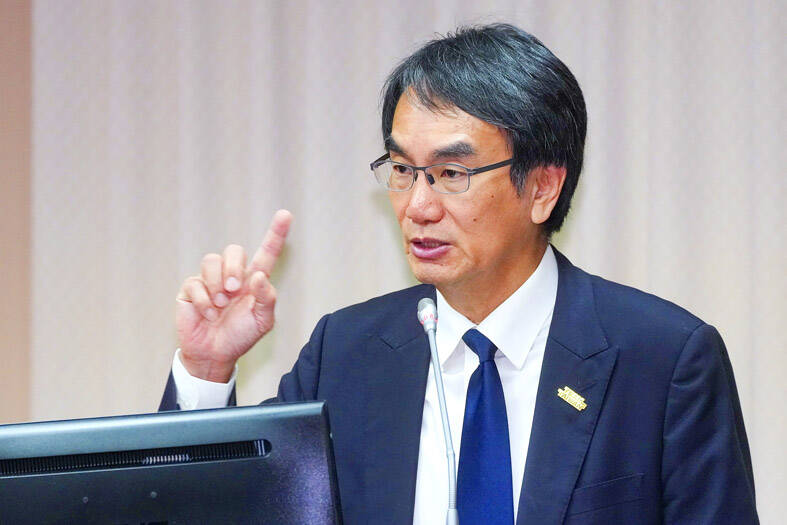
Minister of Digital Affairs Lin Yi-ching speaks at a legislative meeting on Oct.14.
Photo: CNA
The hackers behind the cyberattack identified and exploited the weakness by using an artificial intelligence scanning tool on the government’s systems, he said.
The vulnerability affected the bureau’s Web sites and not the Ministry of Foreign Affairs’ systems, Lin added.
The data breach compromised headshots for passports, more than 26,000 scanned authorization letters and data from more than 700 APEC Business Travel Card applications, the foreign ministry said in a report to the legislature.
It said it is to adopt a five-tier audit system, External Attack Surface Management and dark Web monitoring tools to bolster cybersecurity, and mandate security training for personnel, it said.
Physical computer isolation, enhanced protocols to ensure air-gapped computers remain unplugged from external networks and a ban on storing classified documents on connected devices have been implemented, it said.
Meanwhile, the Executive Yuan yesterday said that it had instructed ministries to enhance oversight of agencies under their supervision and ensure that affected parties are notified in the event of data breaches.
It urged the public to be vigilant against fraud amid a recent spate of incidents.
Under the Personal Data Protection Act (個人資料保護法), businesses and institutions are required to notify people affected by personal data breaches. The Cabinet in a news release suggested that they post prominent notices warning the public about common fraud tactics and associated risks.
More than 10 businesses and organizations have suffered major data breaches recently, resulting in the leak of about 8 million records, the Cabinet said.
Those affected include online travel agency ezTravel, Bank SinoPac and the Bureau of Consular Affairs, it said.
The Cabinet urged members of the public to be alert even when callers or message senders cite personal information such as national identification numbers, dates of birth and home addresses.
People should not panic, and should immediately end suspicious calls and contact the 165 anti-fraud hotline, it said.
Members of the public should also monitor official Web sites, apps and physical outlets of businesses for announcements about data breaches and take precautions to protect their personal information and property, it added.
KioskNews shows a cleaned-up reading view extracted from the publisher’s page — the original always lives on their site, not ours.