KAM Vice Chair Mary-Ann Musangi Calls for Private Sector to Drive AfCFTA at Unstoppable Africa 2026 Forum In New York
NAIROBI, Kenya, Sep 28 – Kenya Association of Manufacturers (KAM) Board Vice Chairperson Mary-Ann Musangi has called for greater involvement of Africa’s private sector in implementing the African Continental Free Trade Area (AfCFTA), saying businesses must be at the centre of efforts to transform the agreement into a functioning continental market.
Speaking at the Unstoppable Africa 2026 forum in New York, on the sidelines of the 81st United Nations General Assembly, Mary-Ann said Africa had moved beyond negotiating the framework and should now focus on making AfCFTA deliver tangible economic benefits to businesses and citizens.
Her remarks came during a session themed “Tools and Architects: Putting Africa’s Private Sector in the AfCFTA Driver’s Seat.”
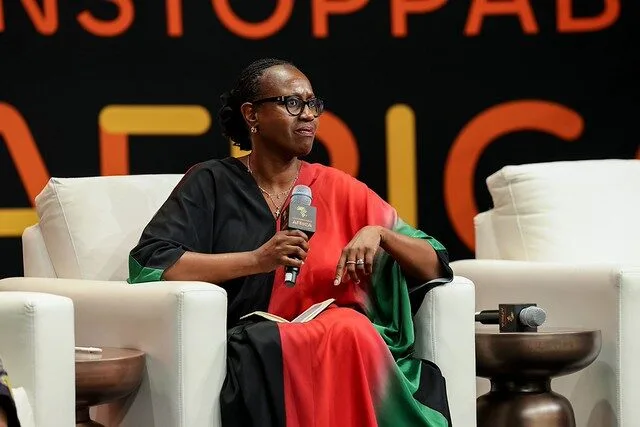
The central question, she argued, is no longer whether Africa has established a continental free trade framework, but whether that framework can enable African businesses to produce, invest, trade, scale and compete across borders.
AfCFTA is the culmination of a decades-long African ambition for economic integration, dating back to the founding of the Organisation of African Unity in 1963.
The agreement seeks to create a single market for goods and services, deepen economic integration, promote industrialisation and enable African economies to make better use of their resources and markets.
Mary-Ann noted that the institutional architecture is now substantially in place, shifting the priority from negotiations to implementation.
The success of AfCFTA, she maintained, should therefore be measured by what happens in the real economy rather than by the number of protocols signed, meetings held or institutions established.
Africa also has a long history of cross-border commerce. From trans-Saharan trade to the Indian Ocean trading networks, African communities and economies have exchanged goods across considerable distances for centuries.
What has changed is the fragmentation of the continent’s economic space, with different regulatory systems, standards, currencies and infrastructure creating barriers to the movement of goods and services.
AfCFTA offers an opportunity to address some of those structural constraints and redesign the economic geography of the continent.
For businesses to take advantage of that opportunity, however, several practical tools are required.
Market access is one of them. Tariff preferences are important, but reducing tariffs alone does not guarantee commercially viable trade. Delays, multiple inspections, inconsistent documentation and costly certification requirements can continue to make cross-border commerce difficult.
Greater convergence of standards, customs procedures, regulatory requirements and conformity-assessment systems will therefore be essential.
Infrastructure is equally important. Roads, railways, ports, border posts, airports, energy networks, warehouses, cold chains and digital connectivity all form part of the infrastructure required to make continental trade work.
Finance is another critical component, particularly for small and medium-sized enterprises that often struggle to access affordable working capital, trade finance and investment.
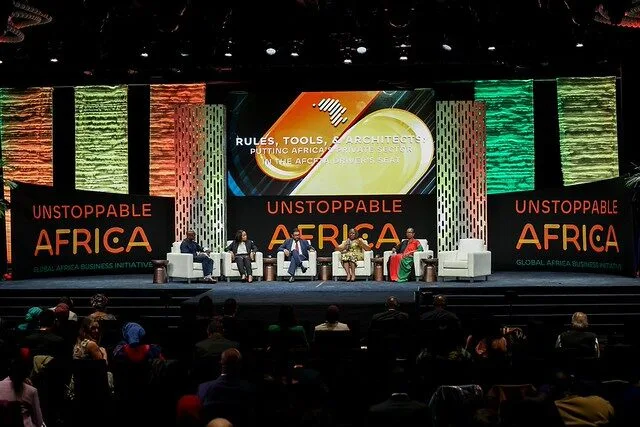
Mary-Ann called for the development of a stronger African trade finance ecosystem capable of supporting manufacturers, exporters and SMEs seeking to expand beyond their domestic markets.
Digital infrastructure could also transform how businesses participate in continental commerce. An African SME should ultimately be able to identify a market, verify requirements, obtain certification, secure finance, arrange logistics, complete customs procedures and receive payment through increasingly integrated digital systems.
But tools alone will not transform African economies.
The implementation of AfCFTA requires what Mary-Ann described as “architects” across the continent’s economic ecosystem. These include governments, the African Union, the AfCFTA Secretariat, regional economic communities, financial institutions, regulators and, critically, the private sector.
Manufacturers, farmers, traders, financial institutions, technology companies, logistics providers and SMEs are not simply beneficiaries of the continental market. They are also its co-architects.
This is where industry associations such as the Kenya Association of Manufacturers play an important role by connecting businesses with policymakers and translating practical experiences into policy recommendations.
KAM has been involved in Kenya’s AfCFTA policy and implementation processes through the State Department for Trade, including private sector input into negotiations on rules of origin and tariff offers.
The association is also part of the national AfCFTA implementation committee, which brings together government agencies and other stakeholders to support the operationalisation of the agreement.
Through the Guided Trade Initiative, Kenyan businesses have exported products including tea, batteries, textiles, confectionery, electric mobility products, plastic products, electric cables and leather goods.
More than 400 consignments have been exported from Kenya under AfCFTA, providing practical evidence that continental trade is possible while also highlighting the work that remains.
KAM has also provided manufacturers with advisory support on rules of origin, tariff offers and customs procedures, while linking businesses with relevant trade facilitation agencies.
Its two-year Bringing AfCFTA Home programme with GIZ provided trade advisory and sensitisation support to 14 sectors and 53 subsectors across KAM’s seven regions, including focused engagements with the tea sector in Kericho and the agricultural sector in Nyandarua.
The next phase, Mary-Ann argued, should focus increasingly on building African value chains.
Rather than each country seeking to produce everything independently, AfCFTA can allow African economies to specialise, collaborate and connect their productive capacities.
Inputs can come from one country, processing can take place in another, financing can be sourced elsewhere on the continent, while logistics networks connect the different stages before the final product reaches African and global markets.
That model could help Africa move towards a more integrated production network and strengthen value addition, industrialisation and economic diversification.
For Mary-Ann, inclusivity must remain central to that ambition.
AfCFTA cannot become an arrangement accessible only to large corporations with the resources to navigate complex regulatory and logistical systems. SMEs require market information, affordable certification, export-readiness programmes, trade finance, digital platforms and simplified customs procedures.
The objective, she said, should go beyond simply trading in Africa.
“It should be Made in Africa, for Africa and for the world.”
That ambition will require coordinated action. Governments must provide the policy framework and political leadership, while the African Union and AfCFTA Secretariat provide continental coordination.
Regional Economic Communities must strengthen the link between regional and continental integration, while development and financial institutions help address infrastructure and financing gaps.
Businesses, meanwhile, must invest, innovate, build value chains and provide policymakers with the evidence needed to improve the trading environment.
For Mary-Ann, AfCFTA represents an opportunity to turn decades of discussions about African integration into tangible economic opportunities.
The challenge now is to ensure that the continental market works not only on paper, but in the factories, farms, businesses and trading corridors that make up Africa’s real economy.
KioskNews shows a cleaned-up reading view extracted from the publisher’s page — the original always lives on their site, not ours.